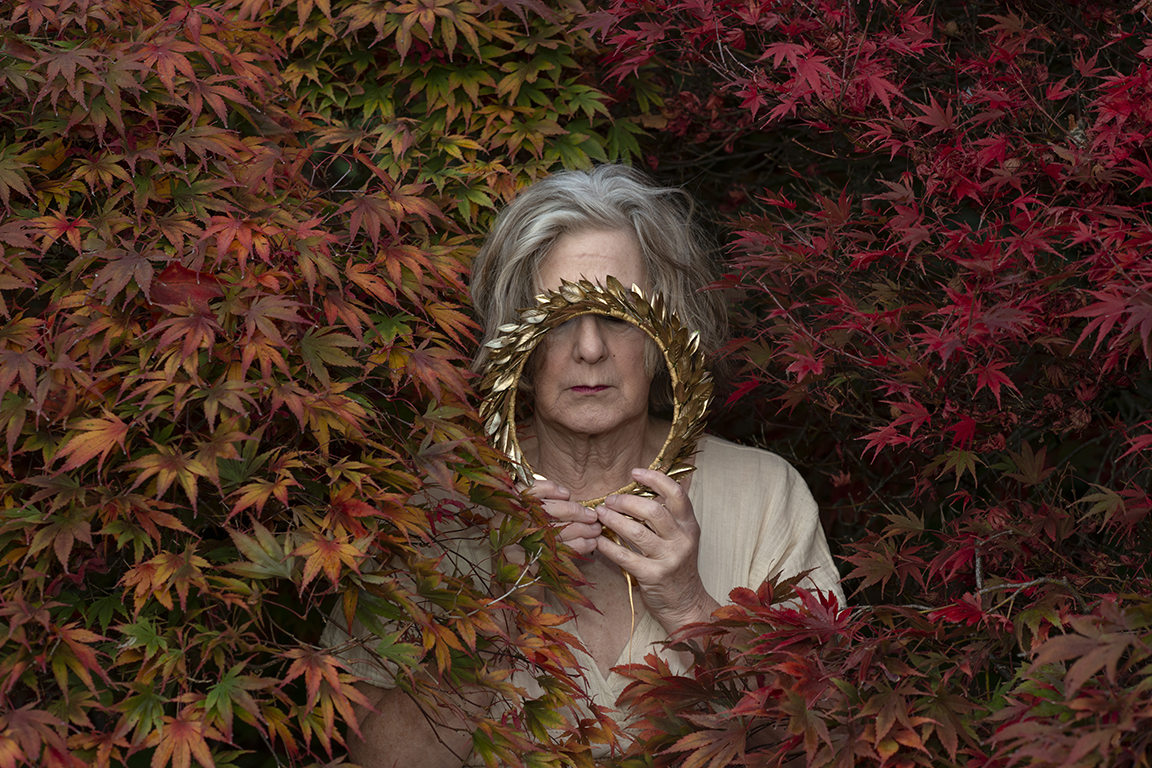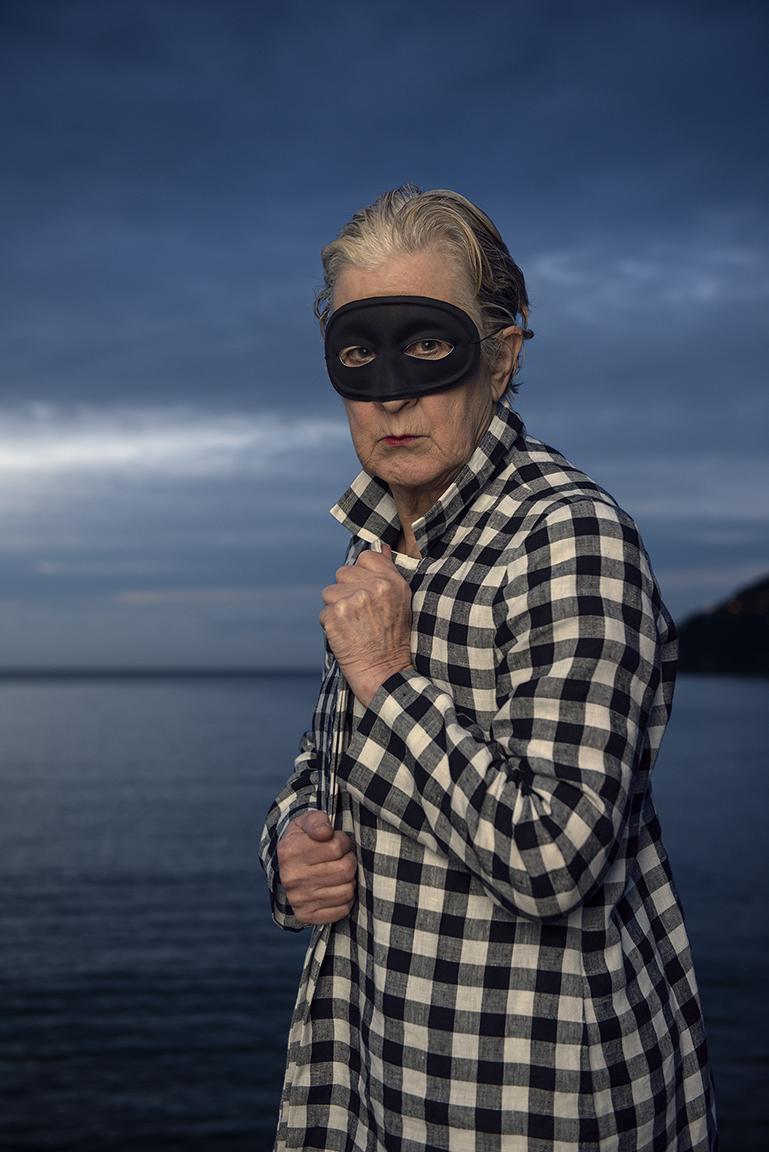
Part One – Pilgrimage to Jersey (and to Claude Cahun and Marcel Moore) – Introduction and Jersey Before the War, posted in Boulder, CO. January 19th, 2026

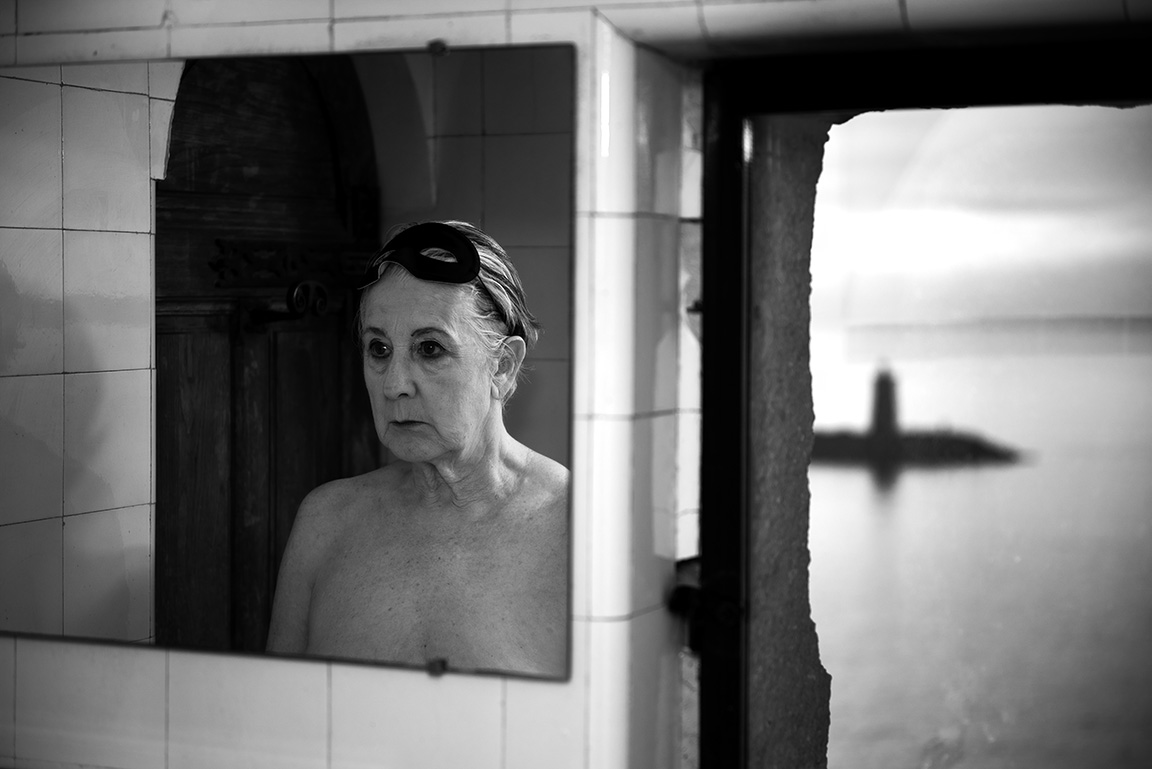
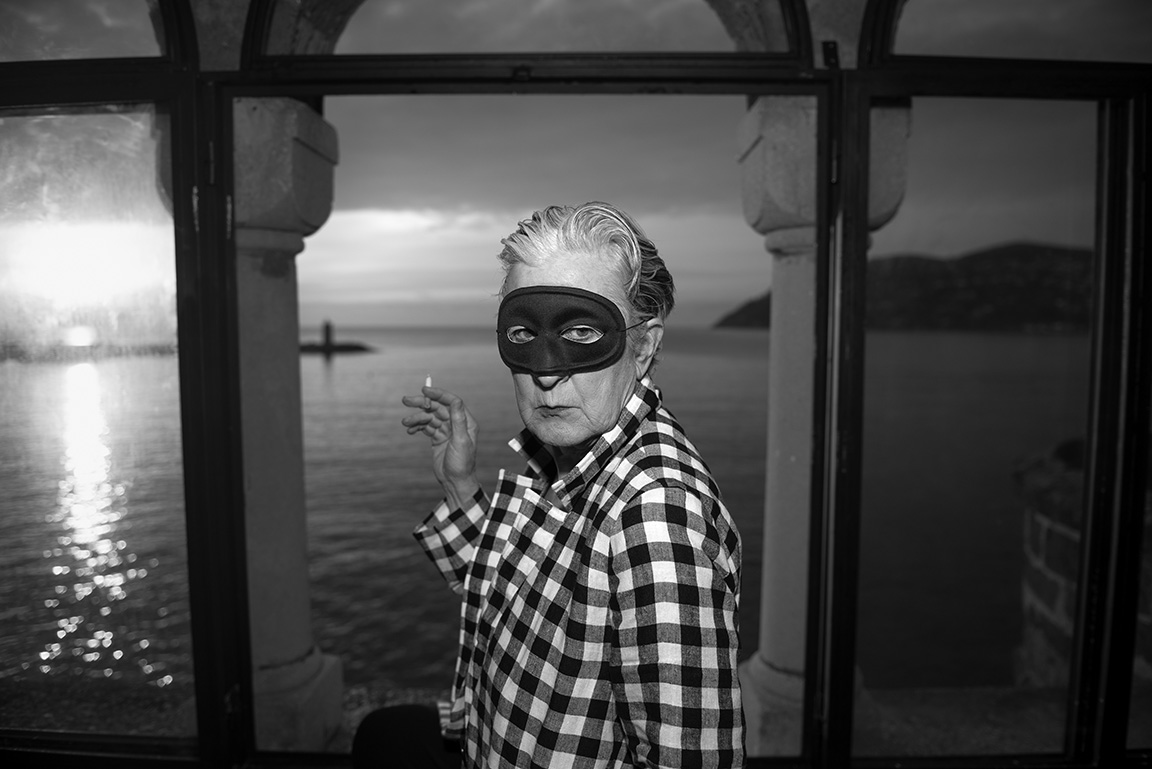
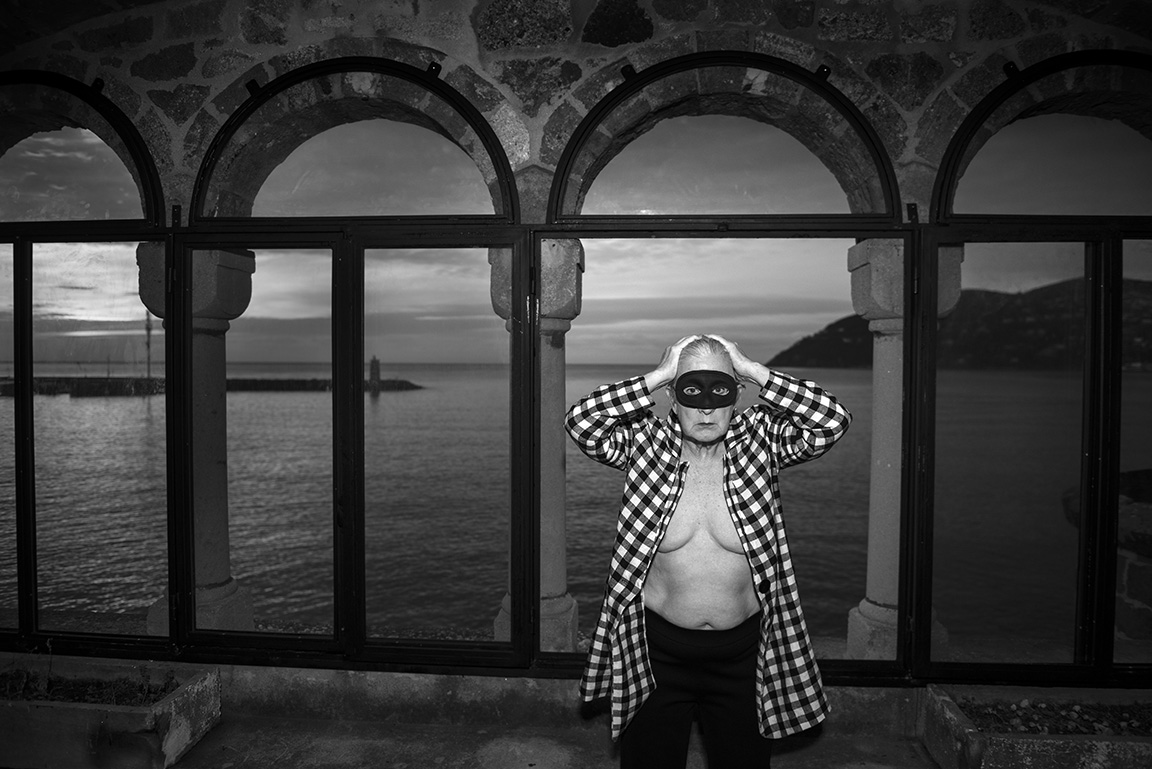
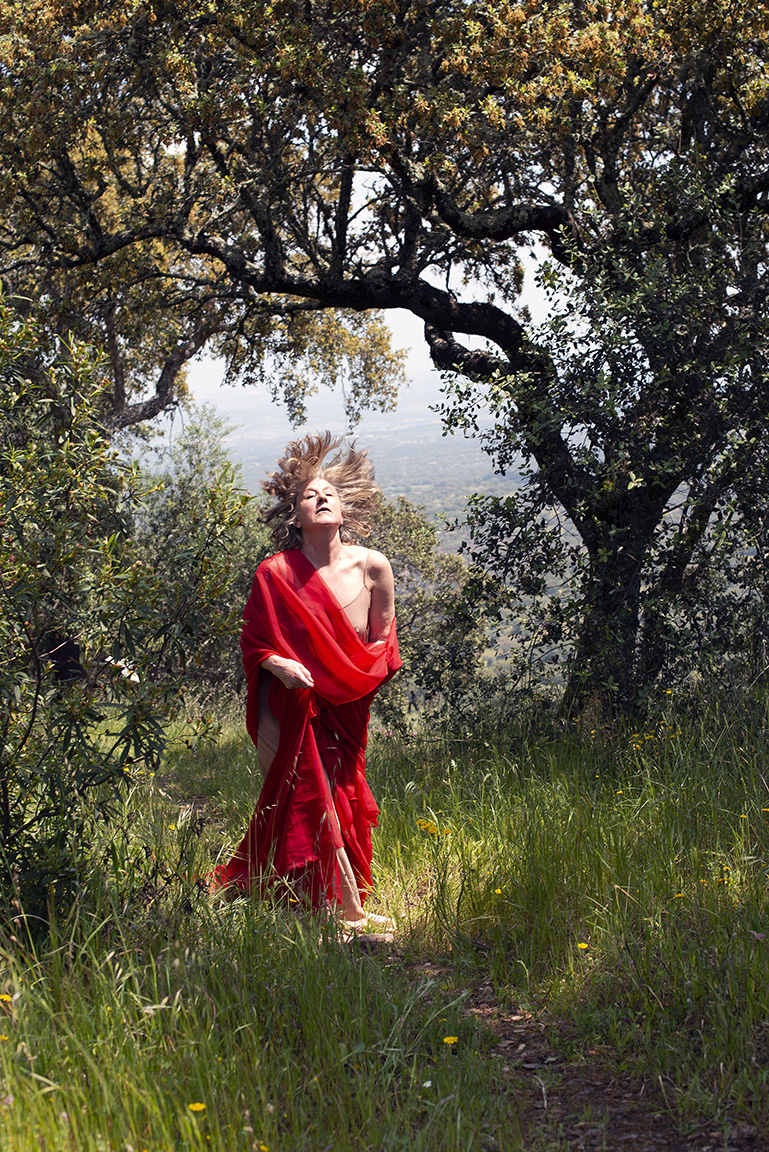
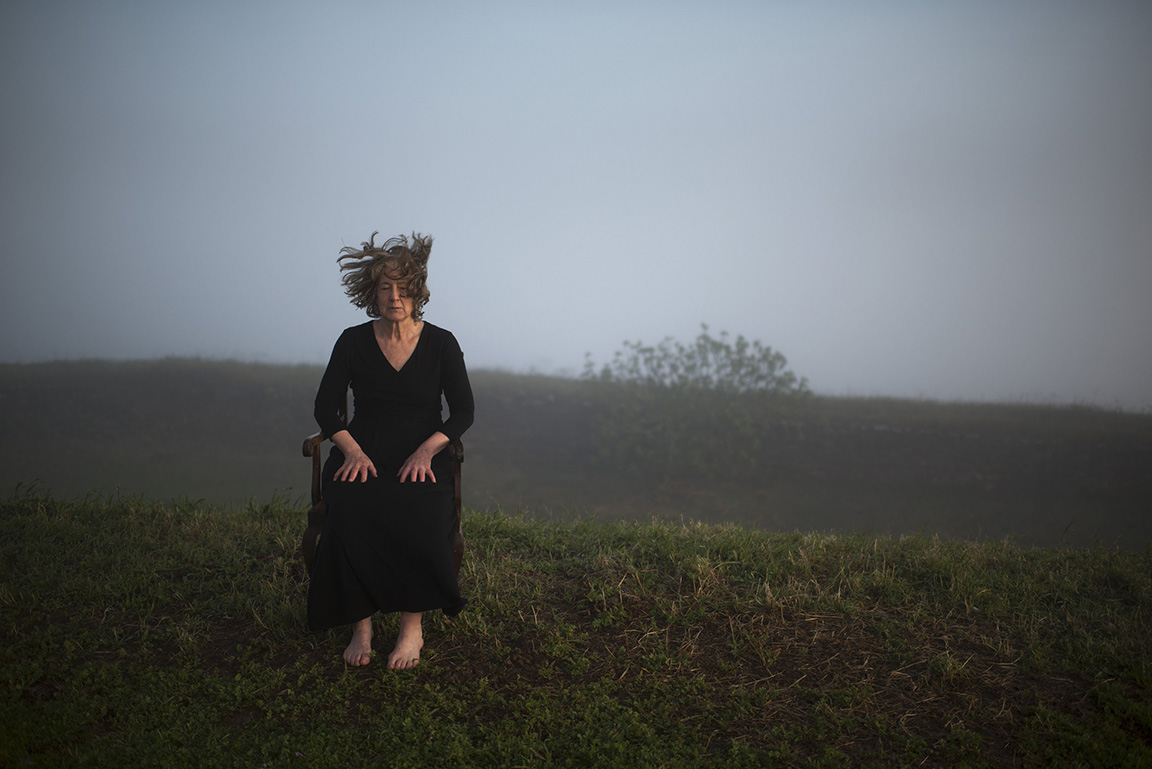
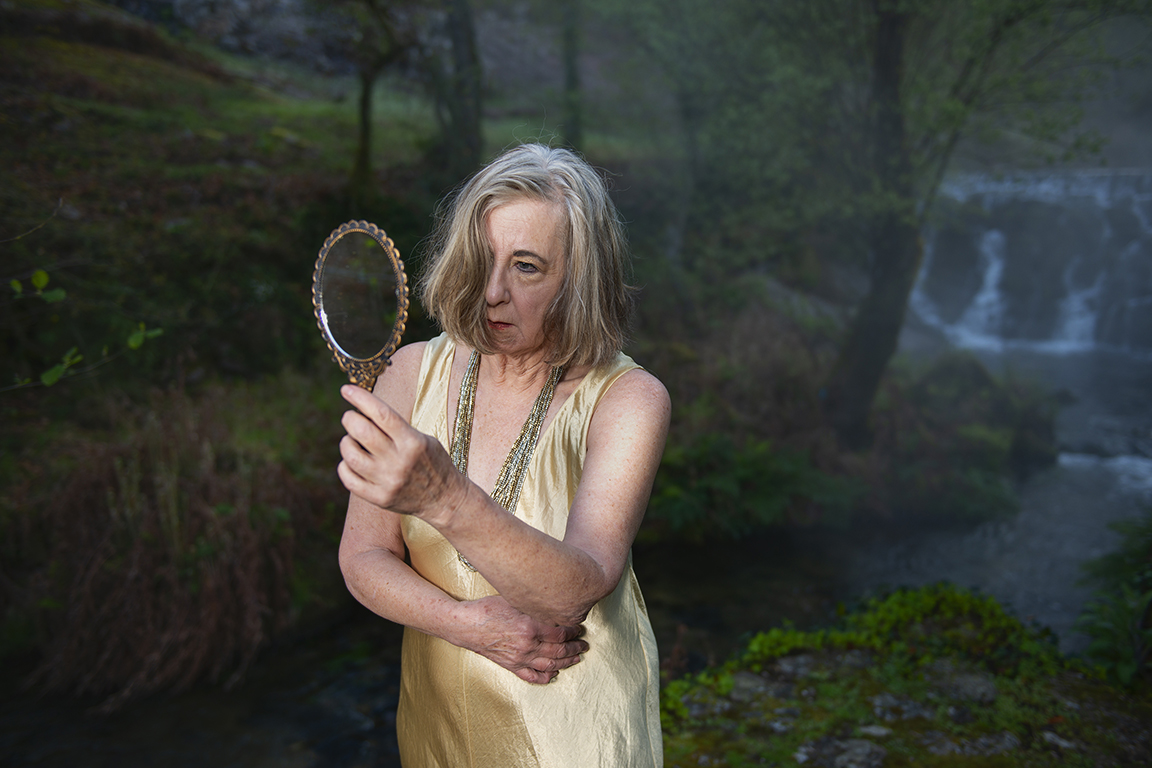
I’ve been thinking about Claude Cahun, Sherry Wiggins and LuÍs Branco, 2025.

Introduction

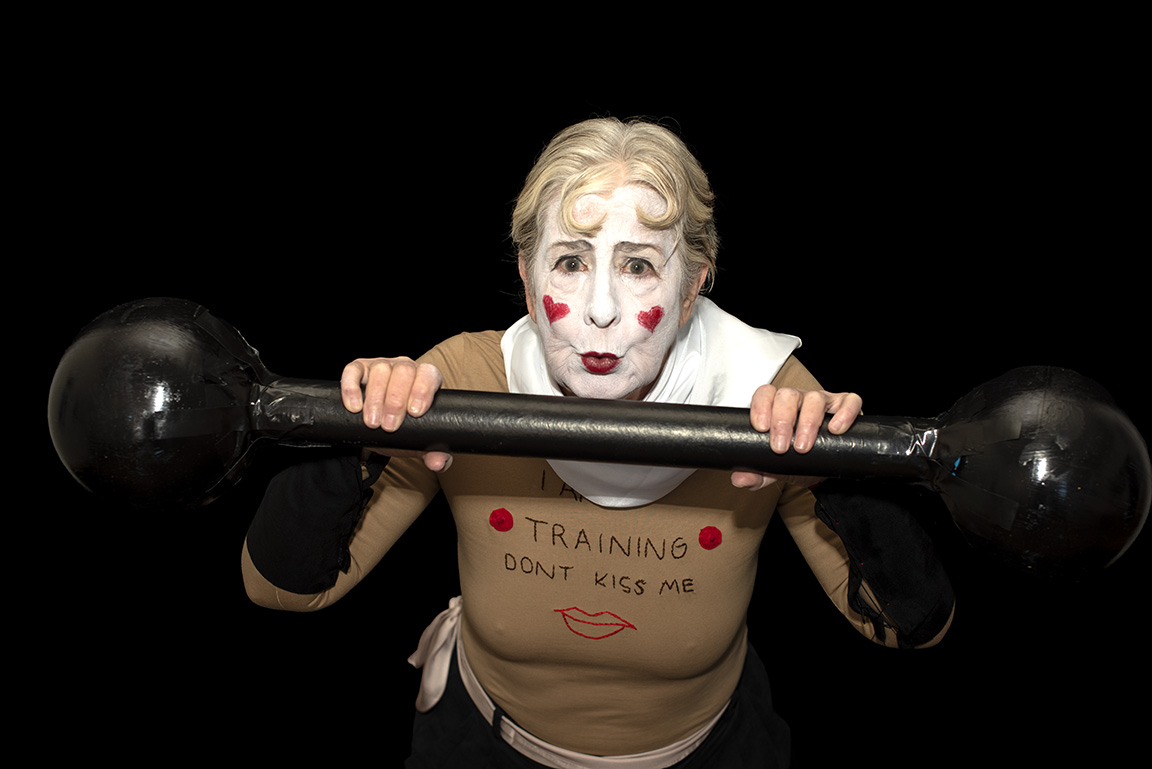
French artist, photographer and writer Claude Cahun (1894-1954) and her partner in art and life, artist Marcel Moore (1892 -1972), have been on my mind (and part of my art practice) for several years. Luís Branco and I shot the image above, as part of the series I’ve been thinking about Claude Cahun, while working at La Napoule Art Foundation on the French Riviera. I am thinking (again) about Claude Cahun and Marcel Moore as I prepare to make a pilgrimage to Jersey Island this February.

Claude Cahun (born Lucy Renée Mathilde Schwob) and Marcel Moore (born Suzanne Alberte Malherbe) lived out the last years of their lives on the island of Jersey, the largest of the Channel Islands, located in the English Channel between England and France. They moved from Paris to Jersey permanently in 1937. The Germans occupied Jersey (and the other Channel Islands) beginning in 1940; Cahun and Moore lived under German occupation from 1940 to 1945. During this period, Cahun and Moore undertook a valiant and creative campaign of resistance to the Nazis, the war and the occupation of Jersey. Four years into the occupation, they were discovered and arrested; they were jailed, tried and sentenced to death. Fortunately, the war ended, and the island was liberated before they were killed. They were released on May 8, 1945.

Jersey Heritage, an organization that protects the island’s culture and heritage, artifacts and archives, houses the largest collection of Cahun and Moore’s artworks, writings, and photographic works. Jersey Heritage also holds their letters and the records of their anti-Nazi, anti-fascist activities. https://www.jerseyheritage.org/history/claude-cahun-and-jersey/

St. Brelade’s Parish Church cemetery, beside the house where Cahun and Moore lived, is their burial ground. In my ongoing homage to and obsession with Cahun and Moore, I am making the trip to Jersey to explore the island where they lived and to make new photographs with my creative partner, photographer Luís Branco.

I will use feminine pronouns for Claude Cahun and Marcel Moore throughout this blog post. The gender-neutral pronouns we utilize today were not in use during their lifetimes. I will also stick, primarily, to the pseudonyms Claude Cahun and Marcel Moore that Lucy Schwob and Suzanne Malherbe adopted early in their lives.

In February of 2025, as artists in residence at La Napoule Art Foundation in France, Luís Branco and I created many new works in direct conversation with Cahun and Moore’s photographic works. These performative photographs reference works that Cahun and Moore made in the 1920s in Paris. Our combined images (both theirs and ours) are theatrical, sometimes campy, serious but not self-serious. I cut my hair short and acted out my more butch and thespian self. You can see many of these works on my website: https://www.sherrywiggins.com/work/m-in-training-with-claude-cahun

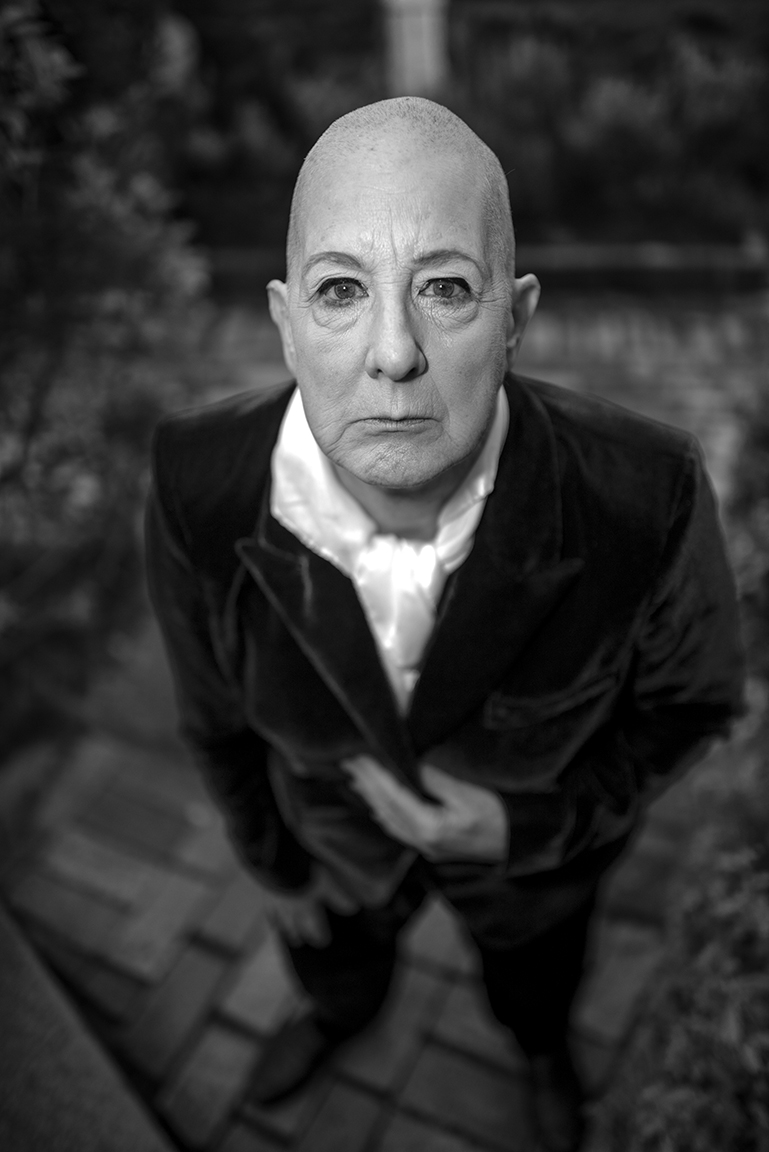
I shaved my head in an act of solidarity with Cahun. Cahun and Moore’s photographic portraits from roughly 100 years ago have been an inspiration for me and for many others. Cahun’s radical resistance to gender identification as either male or female, her fearless portrayal of the fluidity and theatricality of identity is so relevant today.  

On a personal level, Cahun’s work has been a provocation to examine my own cisgender female identity. The haircut was liberating for me: through it I realized that I identify (in current terminology) as a straight femme living in a queer world.
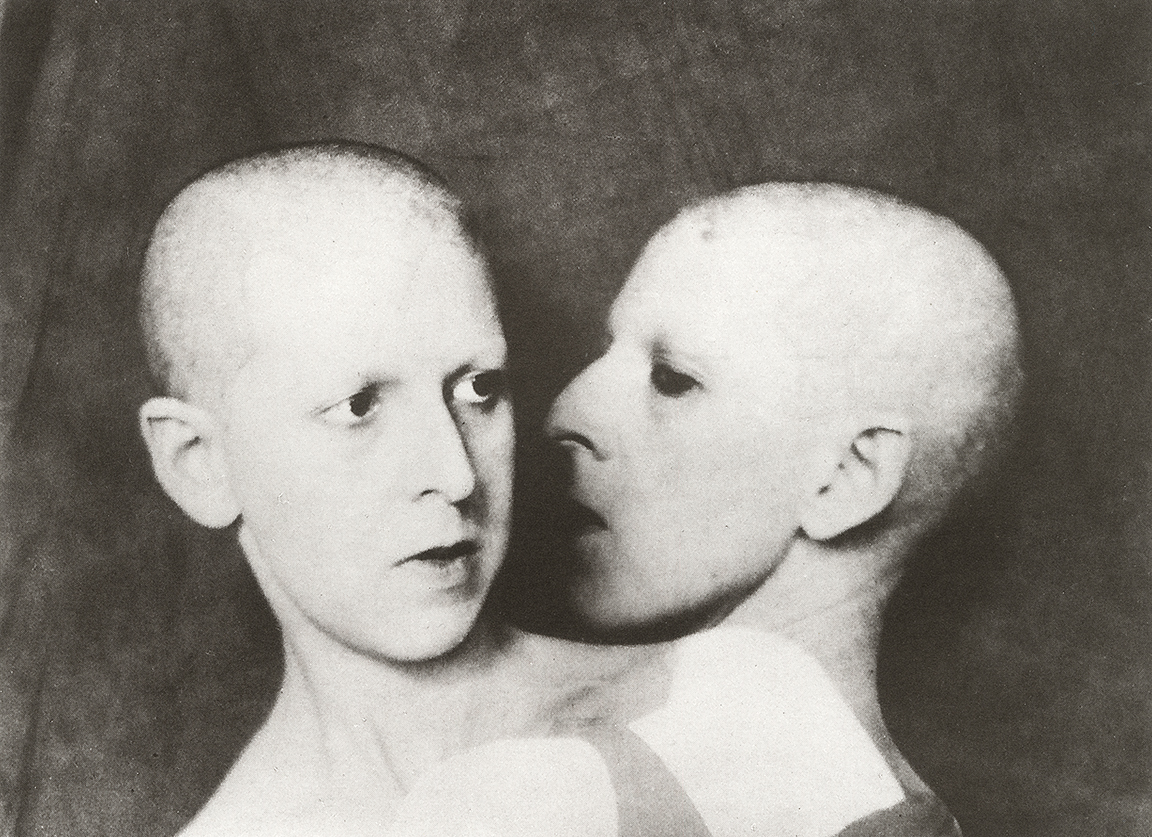
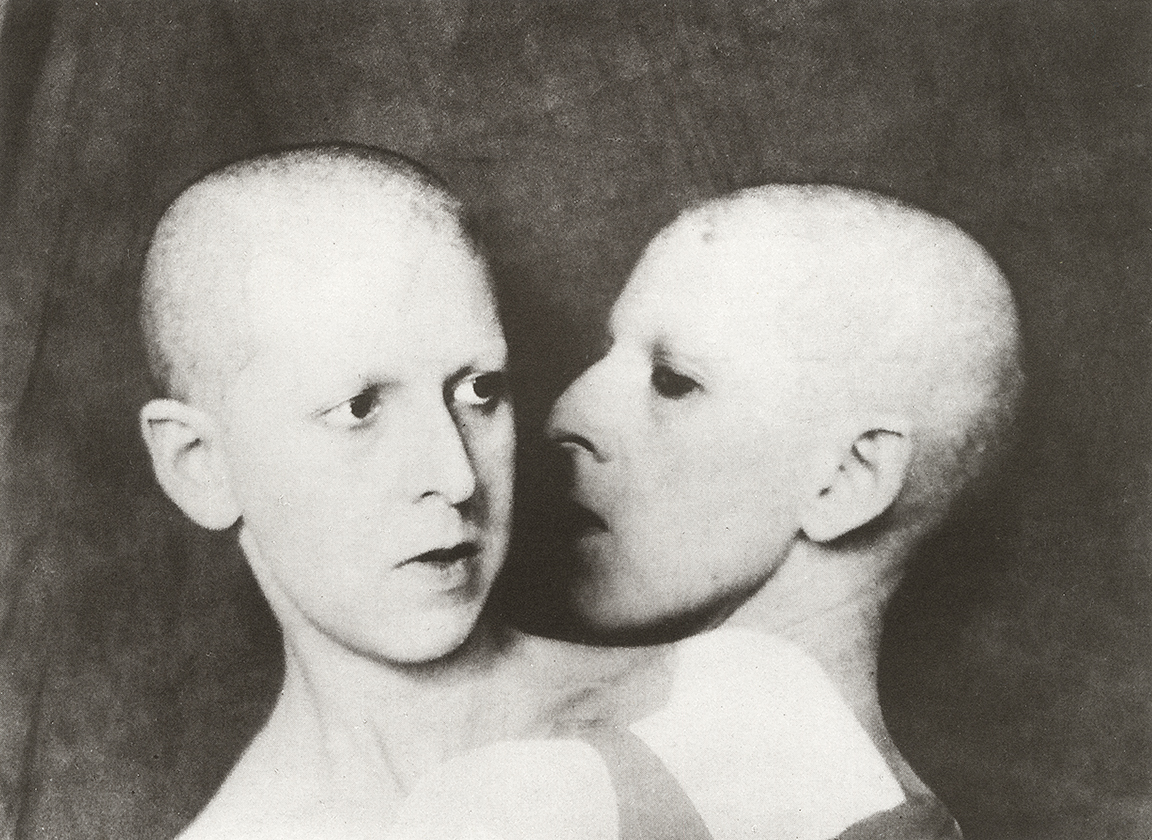
Que me veux tu?, Claude Cahun and Marcel Moore, 1929.

What do you want from me?,  Wiggins and Branco, 2025.

A transmutation occurs in me (a reconfiguring of my own identity) in the act of reinterpreting and re-representing Cahun in photographs. This uneasy but welcome metamorphosis / transfiguration of self that I have established with Cahun has continued to be a catalyst for my work.

Jersey before the War

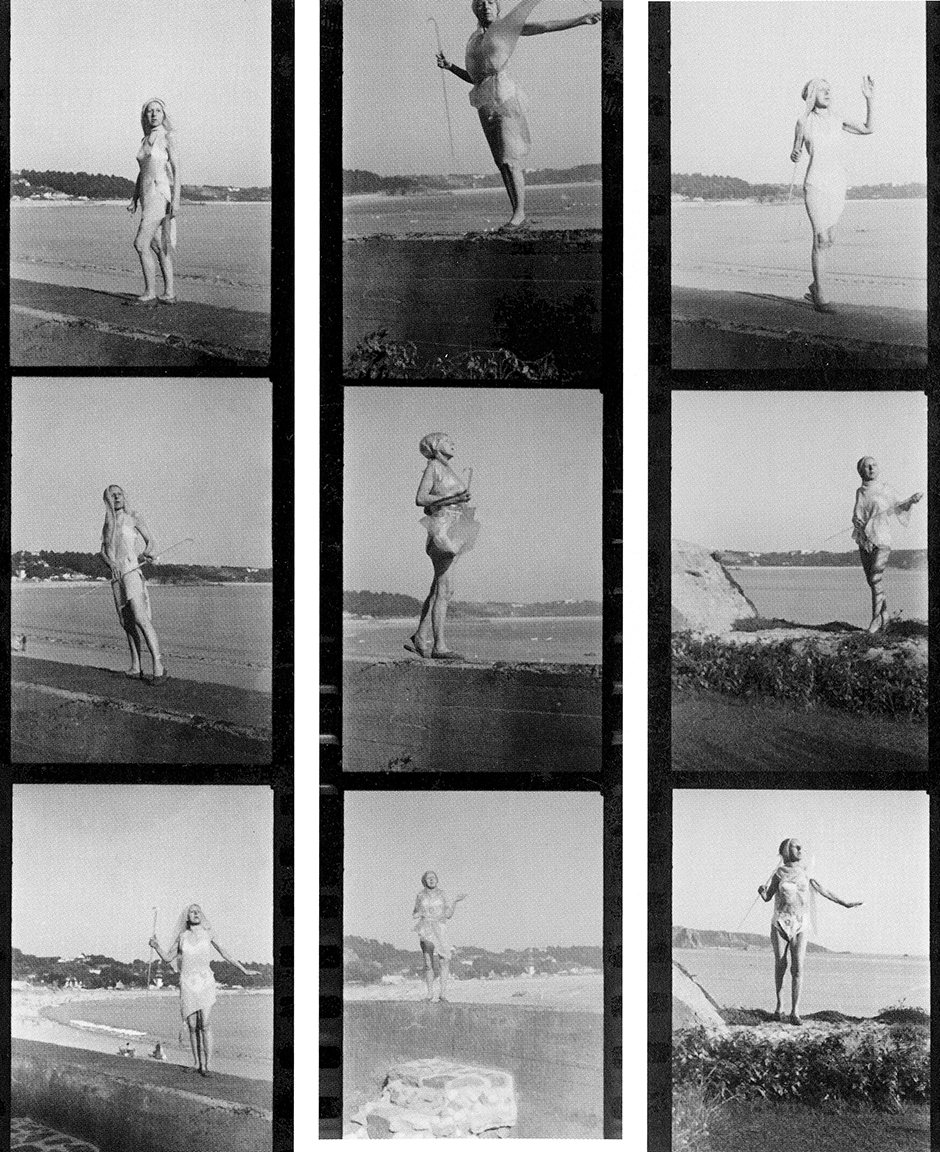
Cahun and Moore vacationed on Jersey during the years before 1937. In contrast to the theatricality and sophistication of the images they made in Paris, the images they made on Jersey communicate a profound connection to the elements and the natural surroundings of Jersey. We see Cahun occupying liminal spaces, between earth and water, body and environment, self and nature.

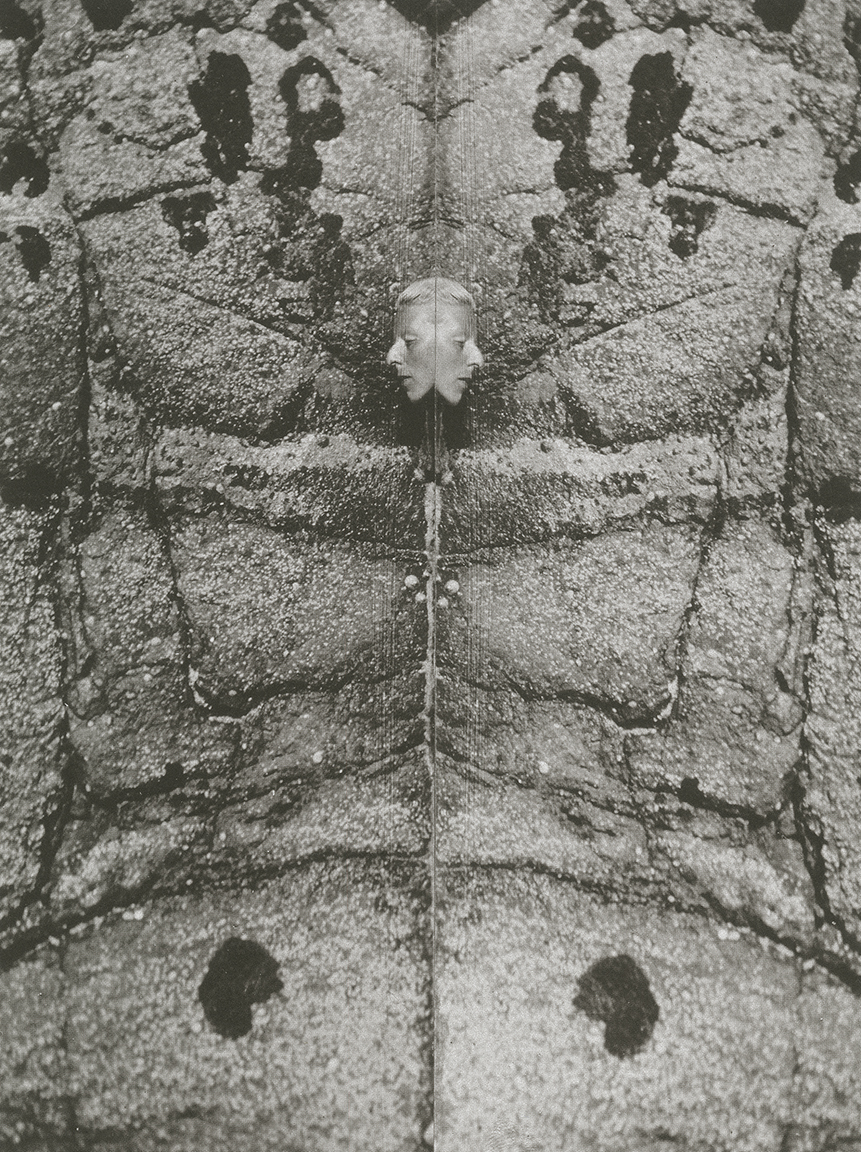
In the first image below, Cahun’s figure is doubled and reversed and swathed in gauzy fabric in waters that border a rocky ground. The profile of Cahun’s golden head is doubled and opposed as her face merges and emerges within the terrestrial surface she faces in the second image. Cahun’s figure is barely visible within the rippled waters in the image En Océanie. In these photographs, Cahun and Moore mirror, double, reverse, mask and reflect concepts of self and identity within the natural surroundings of Jersey. I love these images; they align with many of the photographs that Luís and I have made on land and waterscapes over the last several years.
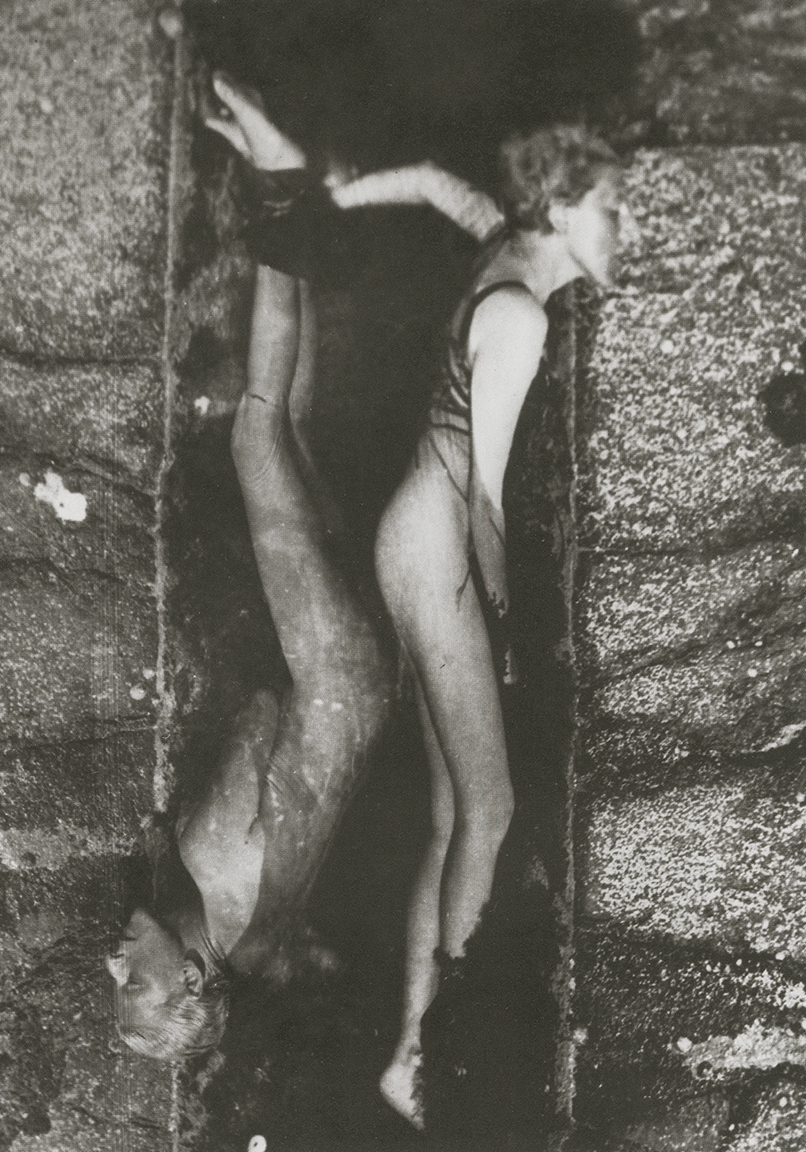
Untitled (Double Body), Claude Cahun and Marcel Moore, 1928.
Untitled (Double Face), Claude Cahun and Marcel Moore, 1928.
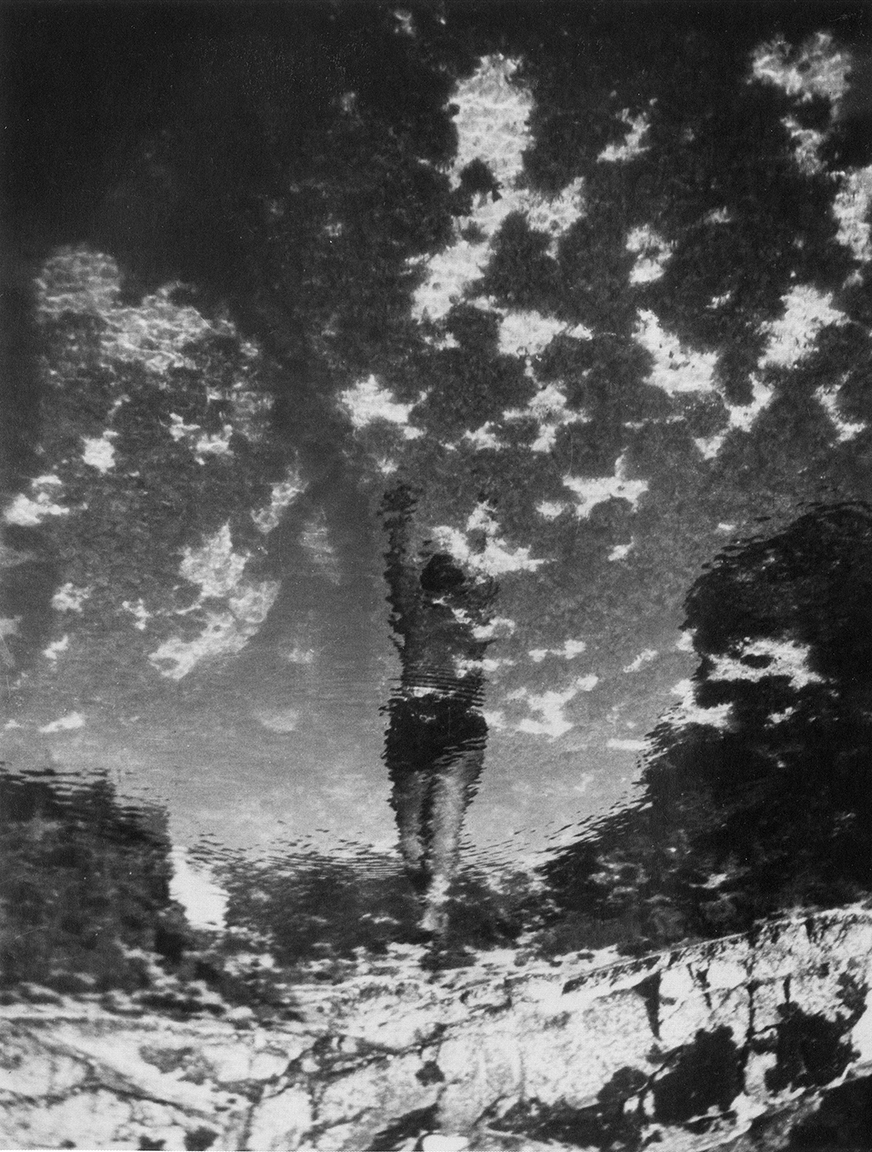
En Océanie, Claude Cahun and Marcel Moore, 1932.

I have recently discovered the work of feminist scholar Amelia Groom. Groom was in Jersey doing research on Cahun and Moore and wrote this:

Something I didn’t understand until I travelled here (Jersey) is that the Channel Islands sit in waters with an extremely dramatic tidal range—one of the most extreme in the world. The island of Jersey is said to double in size at low tide. I suppose you could also say that it halves in size at high tide. Or you could say, more accurately, that it has no fixed size or shape. Like Claude Cahun, this land mass is a continual shapeshifter, always spilling out from itself, and pulling veils up over itself, and calling its own edges into question.

Amelia Groom, In the ARMS of the SEA: CLAUDE CAHUN and MARCEL MOORE at the WATER’S EDGE, 2024.

An essential part of my art practice and process has been to study and research Cahun and Moore’s lives and works in books, catalogues and academic essays.

My Cahun/Moore library

I have been rereading Jennifer L. Shaw’s extensive (and fabulous) 2017 biography, Exist Otherwise: The Life and Works of Claude Cahun, focusing specifically on the chapter titled Spiritual Arms Instead of Firearms: Cahun and Moore on the Isle of Jersey,  which describes Cahun and Moore’s lives on Jersey from the late 1930s onward. Around 1936, Cahun started talking about leaving Paris permanently. Her health was fragile and she was, of course, well aware of rising anti-Semitism in France (Cahun’s father was Jewish) and the onslaught of fascism in Germany and beyond. Here Shaw describes Cahun’s thinking during this time:

She began to talk about a ‘physical and primordial need to live in the countryside’, and wanted to leave Paris. It was as if she felt her work there was done. Their ties to the city were finally torn asunder when Moore’s mother (Cahun’s stepmother) finally passed away. In a letter of 1951, Cahun explained that she felt ‘an extreme malaise, the premonition of danger’ at the end of 1936.

Shaw quotes Cahun:

The idea formed in my head, as soon as the death of my stepmother cut the last family tie. We had friends . . . a stable, comfortable, happy life. Suzanne didn’t want to leave: she didn’t like moving and thought that life in the countryside wouldn’t suit me as well as I imagined. . . . I proposed Jersey, knowing full well that I wouldn’t be able to drag her any further.

Claude Cahun in François Leperlier, Claude Cahun: L’Exotisme Intérier (Paris, 2006), pp. 377-80, in Jennifer L. Shaw’s Exist Otherwise, pp. 199 -200.

In 1937, Cahun and Moore moved to Jersey permanently, leaving their high-profile lives in Paris. They reclaimed their given names, Lucy Schwob and Suzanne Malherbe. (I will continue to use the names Claude Cahun and Marcel Moore throughout this blog for consistency). The fact that they were stepsisters also gave them a ‘cover’ in this more provincial setting. With the death of Marcel’s mother, the Malherbe-Schwob family estate was settled, and they inherited enough money to buy a beautiful (and quite large) stone farmhouse, La Rocquaise, located right on St. Brelade’s Bay.

La Rocquaise, the home of Marcel Moore and Claude Cahun, c. 1938.

During these years prior to the German occupation in 1940, Claude and Marcel enjoyed the ocean, their garden and their lovely house full of artworks, books and family furniture. Several friends came from Paris to stay with them. However, as far as the local population was concerned, Cahun and Moore kept mostly to themselves. The islanders saw the ‘sisters’ as eccentric and bourgeois middle-aged women, who walked their cat, Kid, on a leash and sunbathed naked in their garden.

Cahun later wrote:

The illusion of holiday without end, a garden already in flower. It seemed that the only thing left to do was to become familiar with the trees, the birds, the doors, the windows and pulling from the clothing trunk the appropriate article, short or long, to dive into the sun and the sea.

Claude Cahun, ‘Letter à Gastone Ferdière,’ in Écrits, p. 665, in Jennifer L. Shaw’s Exist Otherwise, p. 203.
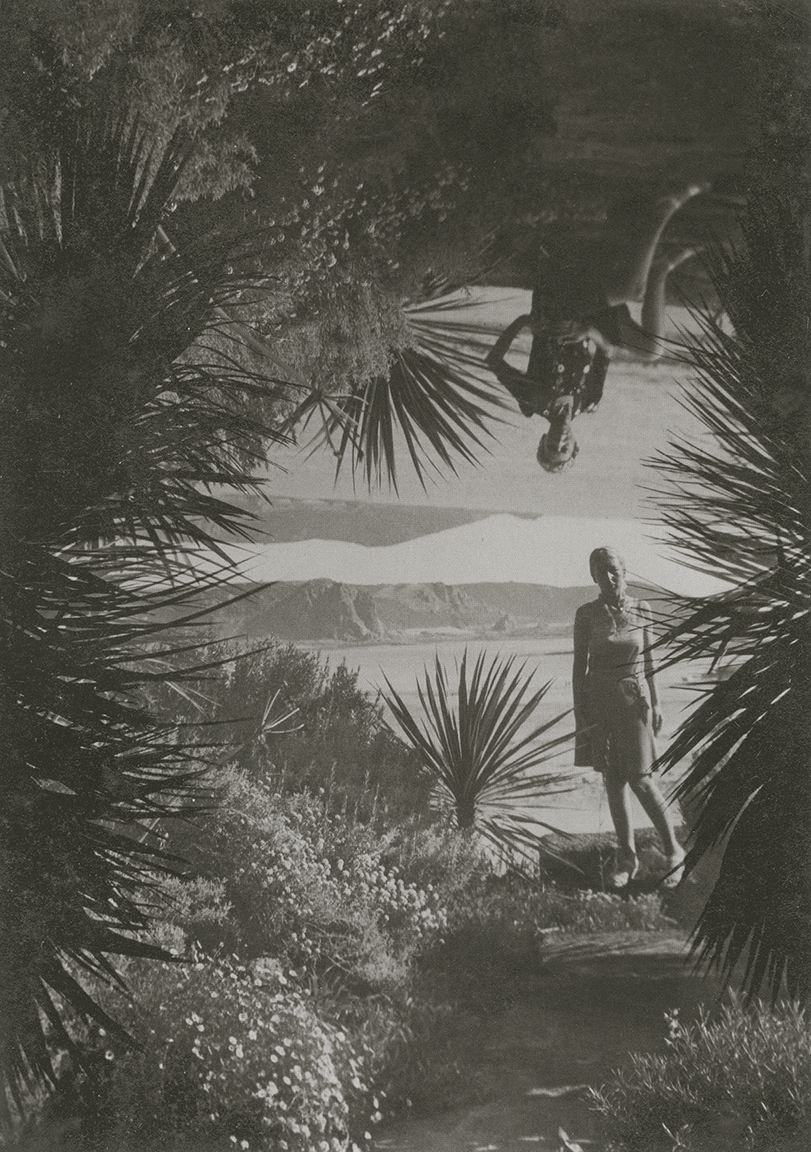
Untitled, Claude Cahun and Marcel Moore, 1939.

Cahun is doubled and reversed (again) on the horizon in the image above taken near La Rocquaise. They continued their photographic practice. Below are a few of my favorites from this period:
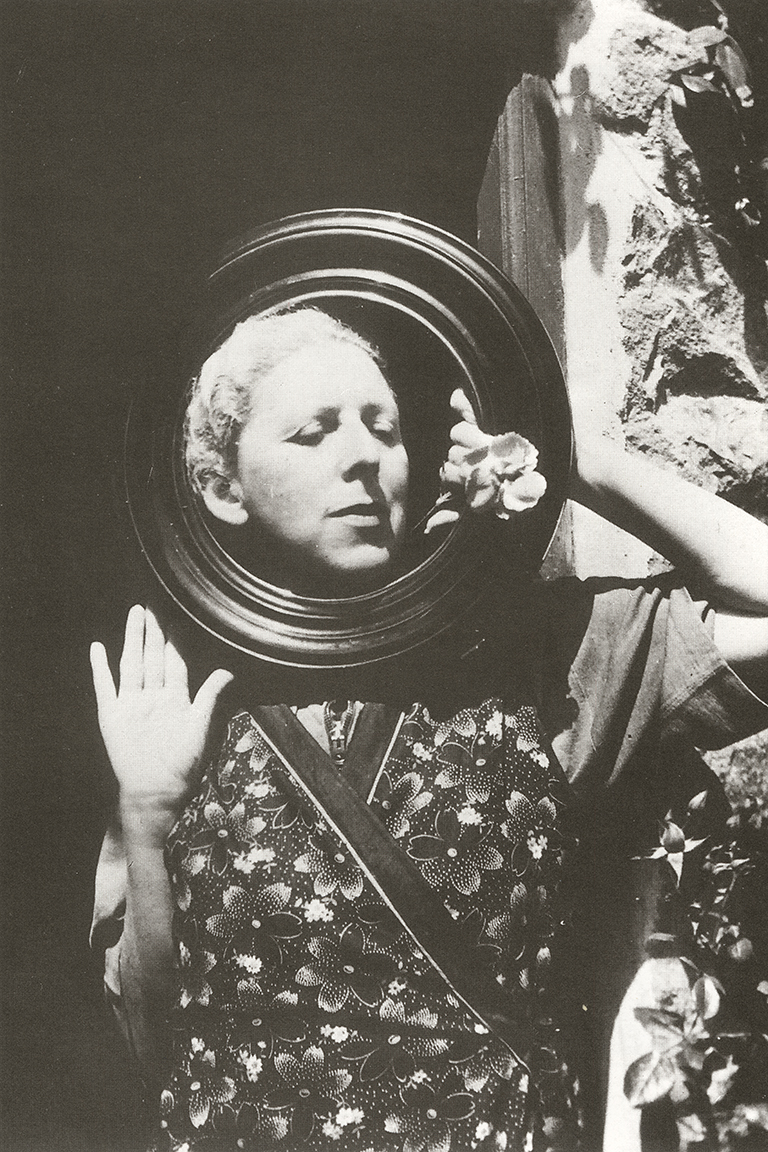
Untitled (Framed Face), Claude Cahun and Marcel Moore, 1938.
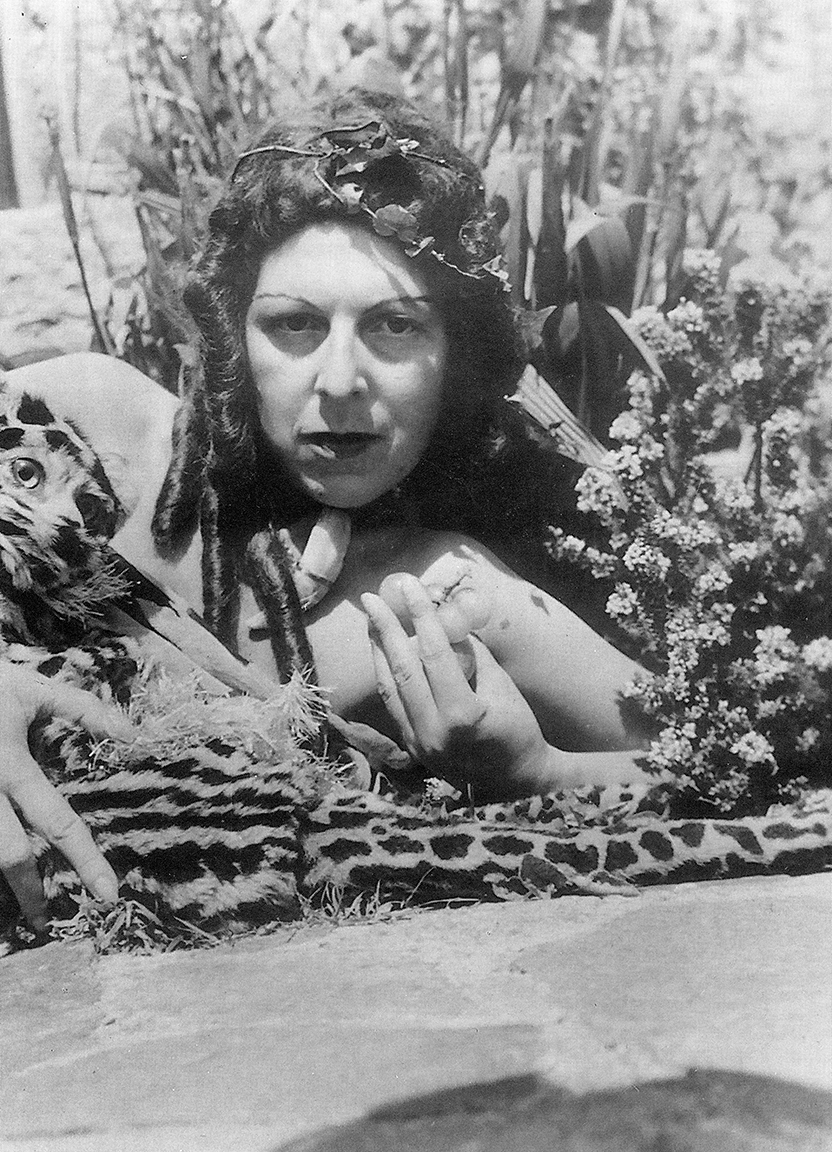
Untitled (Lying in the Garden), Claude Cahun and Marcel Moore, 1939.
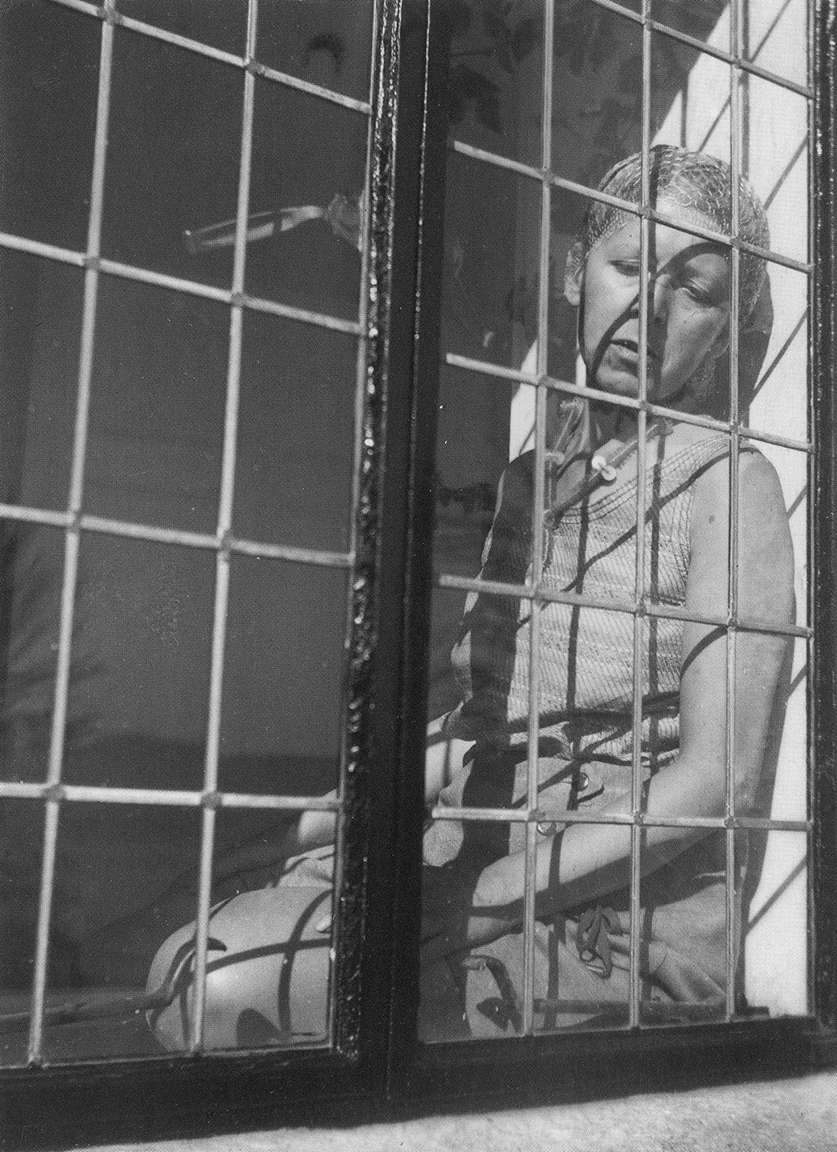
Untitled (the Window), Claude Cahun and Marcel Moore, 1938.

Within this seemingly idyllic life on Jersey, Cahun and Moore were well aware of Hitler’s relentless march across Europe. You can read about Cahun and Moore’s life during WWII and after the war in Part Two: Pilgrimage to Jersey (and to Claude Cahun and Marcel Moore) – Occupation and Resistance, Arrest and Jail, After the War in my blog post:
Part Two – Pilgrimage to Jersey (and to Claude Cahun and Marcel Moore) – Occupation and Resistance, Arrest and Jail, After the War – posted in Boulder, CO. January 19th , 2026

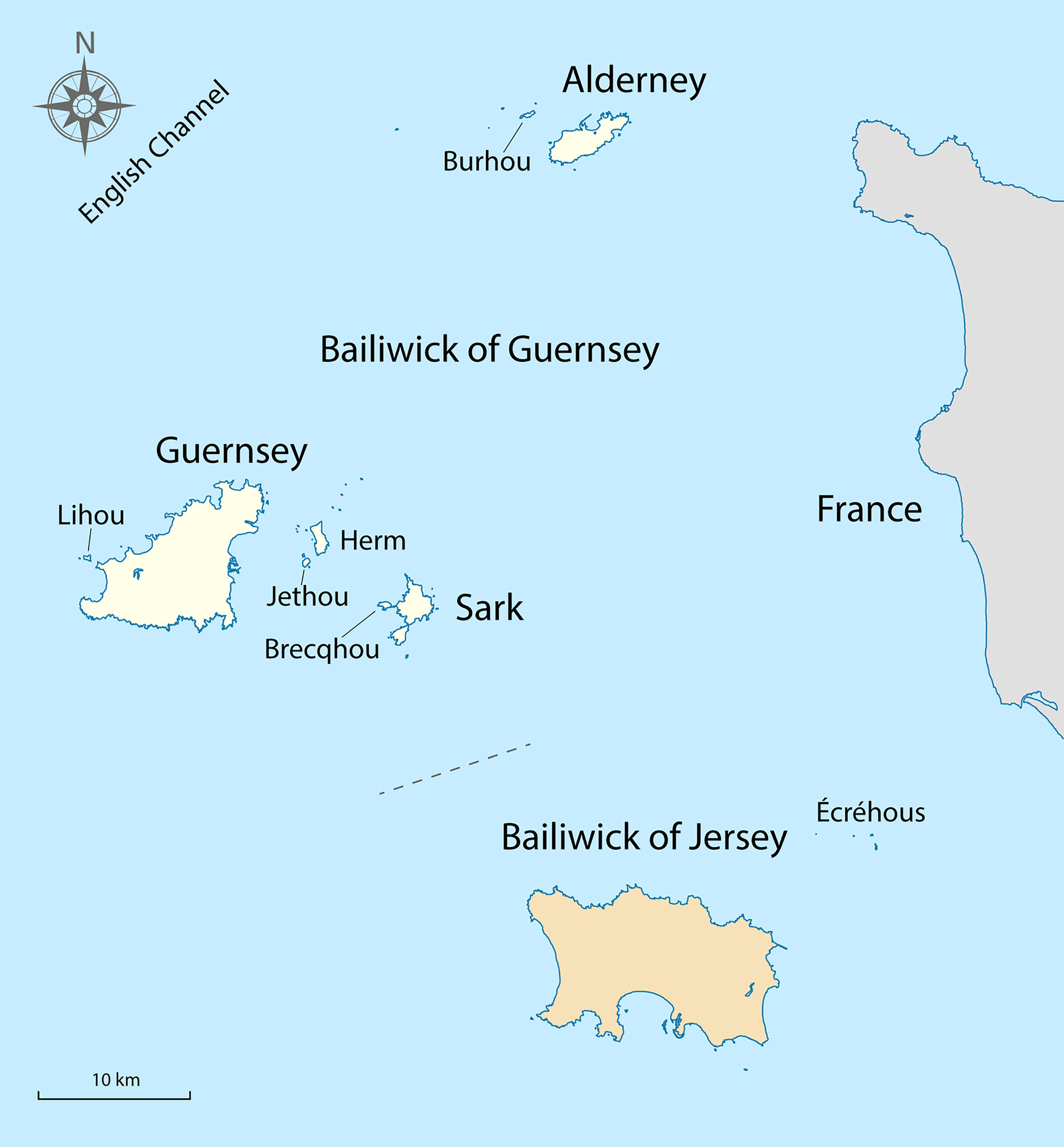
Map of the Channel Islands

In June of 1940, as German forces advanced through France and the rest of Europe, the British government deemed the Channel Islands indefensible. Consequently, they withdrew all military forces from the islands and disbanded the Royal Militias of Jersey, Guernsey, Alderney and Sark. The British hastily organized evacuations for the citizens of the islands. The evacuations prioritized women and children. Somewhere between 25,000 and 30,000 people were evacuated. About one fifth of the population of Jersey was evacuated, roughly 6,500 citizens. Claude and Marcel decided to stay on Jersey.

On June 28, 1940, the Germans bombed St. Helier Harbor and La Roque Harbor on Jersey and St. Peter Port on Guernsey. The Germans began their occupation of Jersey, Guernsey, Alderney and Sark on June 30 and stayed until liberation in May of 1945.

Occupation and Resistance

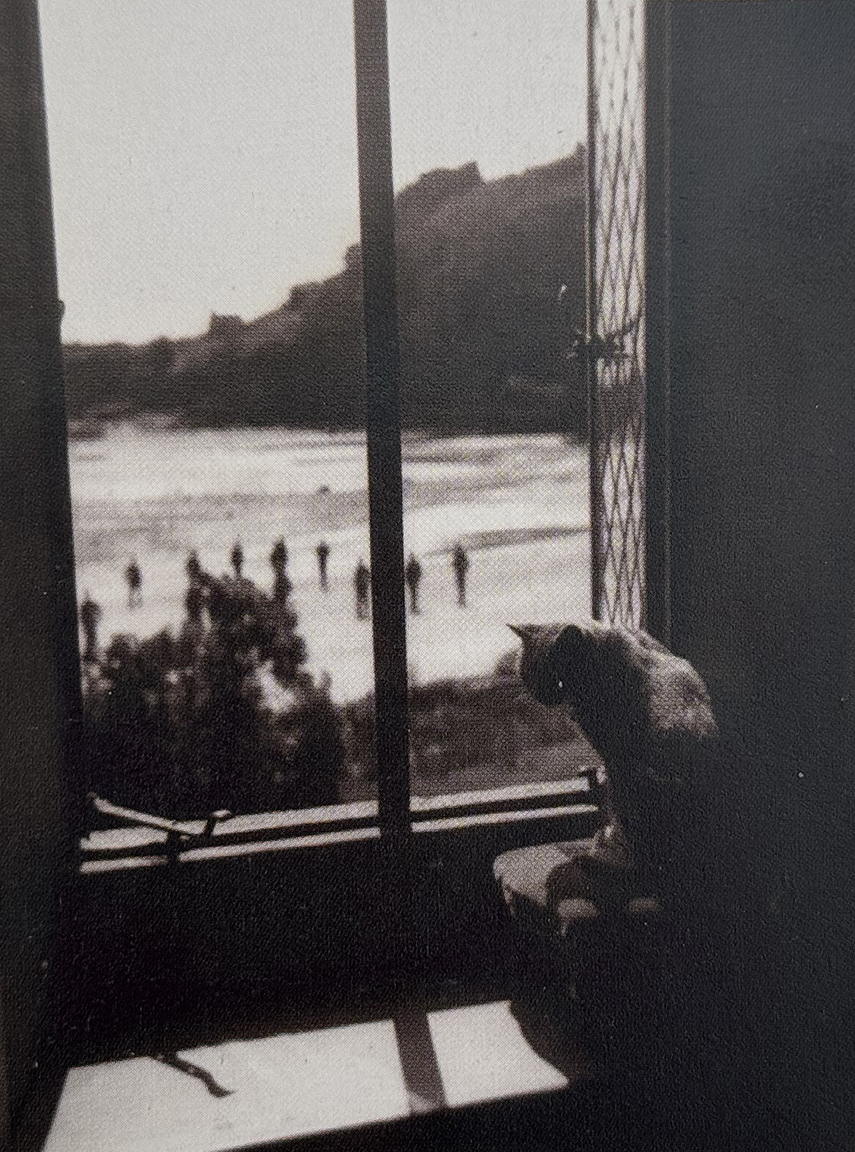
German soldiers on the beach from the window of La Rocquaise (with Kid the cat), Claude Cahun and Marcel Moore, 1940.

Claude was forty-five and Marcel was forty-seven when the German occupation began in Jersey. Their intent had been to retire to a quiet life on the island. However, with the German military literally at their front and back doors, they could not give up their ideals, sense of justice and humanity and their anti-fascist, anti-Nazi beliefs. Together, they undertook a unique campaign of resistance.

I have been rereading Claire Follain’s well-researched and excellent essay “Lucy Schwob and Suzanne Malherbe: Résistantes” in don’t kiss me: the art of Claude Cahun & Marcel Moore, a major catalogue produced by the Jersey Heritage Trust.

Follain describes some of Cahun and Marcel’s methodologies and their manufacture of anti-Nazi propaganda:

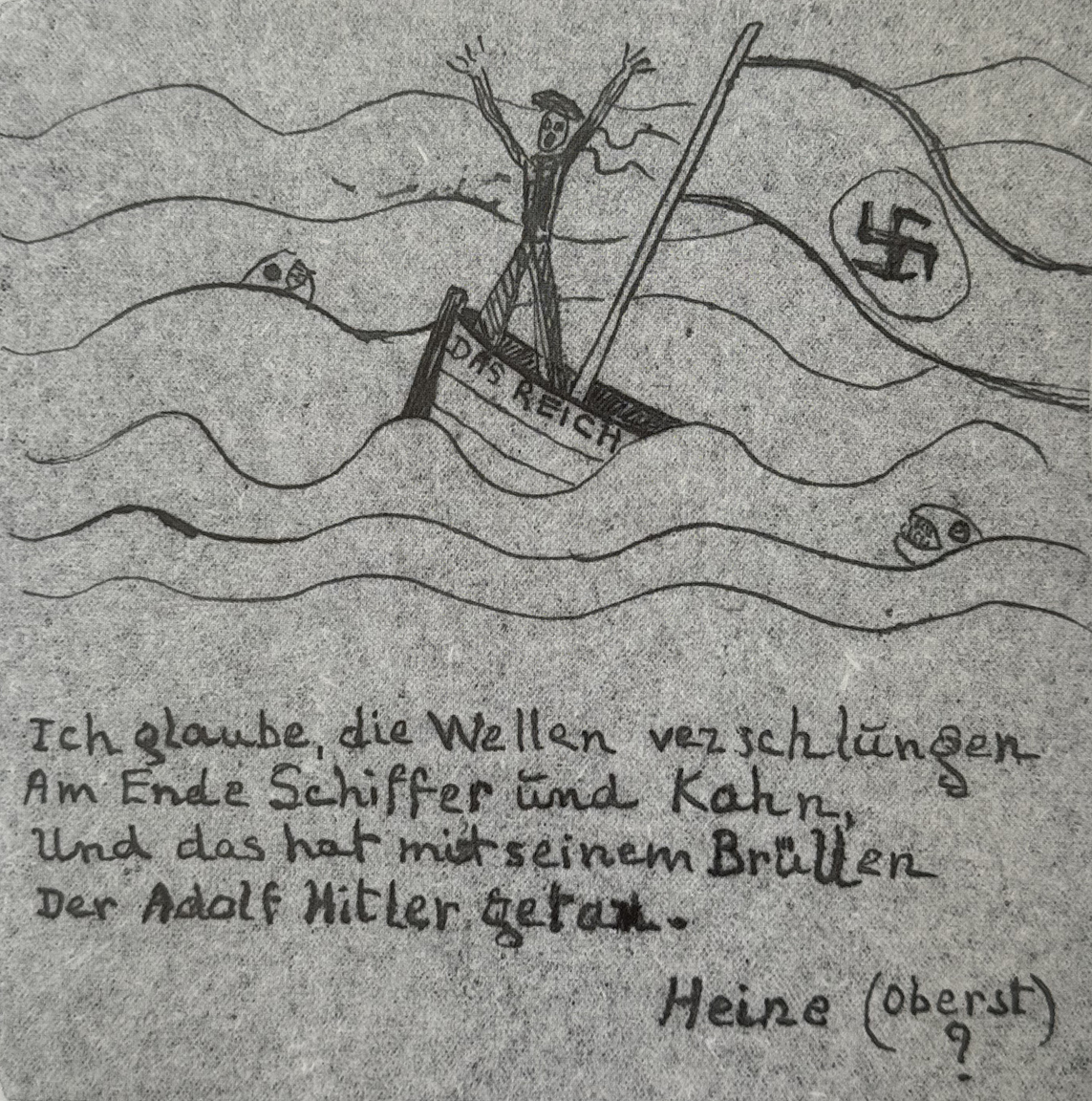
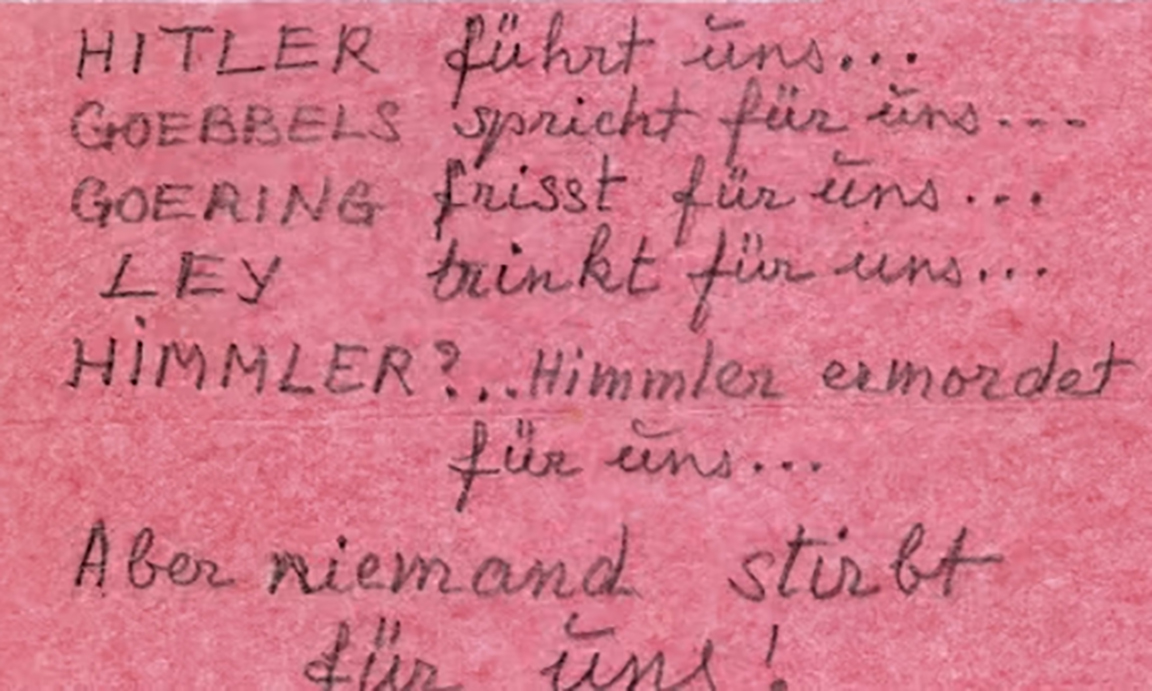
Malherbe utilized her fluency in German language to translate news taken from BBC radio broadcasts. Schwob converted the news to rhyme, conversation or other literary formats. These words were typed or handwritten onto one sheet of paper of approximately A5 or smaller. Over time, the tracts evolved in their style and presentation. Schwob used different colored inks and/or paper when it was available. Malherbe used her graphic art skills to add illustrations to Schwob’s words. Above all the format was altered to maintain interest. Schwob and Malherbe referred to these tracts as ‘unsere Zeitung’ (our newspaper). The intended implication was that these notes were written by an anti-Nazi German officer from within the occupying force. The notes showed evidence of education and were signed ‘der Soldat ohne Namen’ (‘the Soldier with no Name’). The style of language and occasional grammatical error over the years eventually gave the reader the clue (as it did the Geheime  Feldpolizei, the Secret Field Police) that the authors were not native German speakers.

Claire Follain in “Lucy Schwob and Suzanne Malherbe:  Résistantes,” pp. 84-85, in don’t kiss me: the art of Claude Cahun & Marcel Moore.

Propaganda tract and drawing, Claude Cahun and Marcel Moore, 1942.

 English translation of the German text on the drawing:

I believe in the end the waves
Devoured both sailor and boat
And that was brought about
By Adolf Hitler with his screaming

Most of these tracts and drawings were destroyed by the Germans. The Jersey archive holds some fifty of them. Cahun later recounted that she and Moore had made thousands of these messages over the four-year period, including carbon copies they could produce by the dozen.

Propaganda tract, Claude Cahun and Marcel Moore.

English translation of the German text on the tract:
Hitler leads us …

Goebbels speaks for us …

Göring eats for us …

Ley drinks for us …

Himmler? Himmler murders for us …

But nobody dies for us!

Cahun and Moore were surrounded by the German military. Their home was in view of the St. Brelade’s Bay Hotel, which was requisitioned by the Germans for use as a barracks and recreation center for German soldiers. German soldiers were frequently buried in the cemetery on the other side of La Rocquaise. In front of their home, along St. Brelade’s Bay, the Germans used the forced labor of POWs imported from the continent to build heavy fortifications as part of Hitler’s infamous Atlantic Wall.

Claude and Marcel assembled their DIY anti-Nazi propaganda materials in the dead of night in their upstairs bedrooms. They hid their (illegal) radio, their typewriter and all their writing materials in various locked cabinets upstairs. Even their housekeeper, Edna, was unaware of their activities. Cahun and Moore developed various strategies for distribution of their messages, meant for the German soldiers. They would take the bus into St. Helier, armed with shopping bags and ‘disguised’ as the two middle-aged ladies they were. They would place their anti-Nazi propaganda in cafés, on car windshields, and even in soldiers’ pockets. In newsstands and shops, they inserted their leaflets and messages in German magazines and newspapers. As the occupation wore on and tobacco was in short supply, they tucked messages in empty cigarette packets. The tracts often contained the phrase ‘Bitte verbreite,’ meaning ‘Please spread the word.’

Cahun later recounted:

We could not have been less remarkable: no hats; old beige walking shorts called jodhpurs, on the feet rubber boots called Wellingtons; a blouse of cotton or wool shirt, depending on the temperature, a semi-masculine jacket. When out walking or in town, a raincoat on top (a Burberry, thus a large number of pockets for our tracts); a scarf wrapped around the head . . . wool gloves in winter— and the shopping bag (as an alibi). We were peasants—and also daughters and wives of the bourgeoisie of the gentleman farmer type . . . my appearance and Suzanne’s differed little from the look of the majority of inhabitants of the island.

Claude Cahun, ‘Le Muet dans la melée,’ in Écrits, p. 627, in Jennifer L. Shaw’s Exist Otherwise, p. 212.

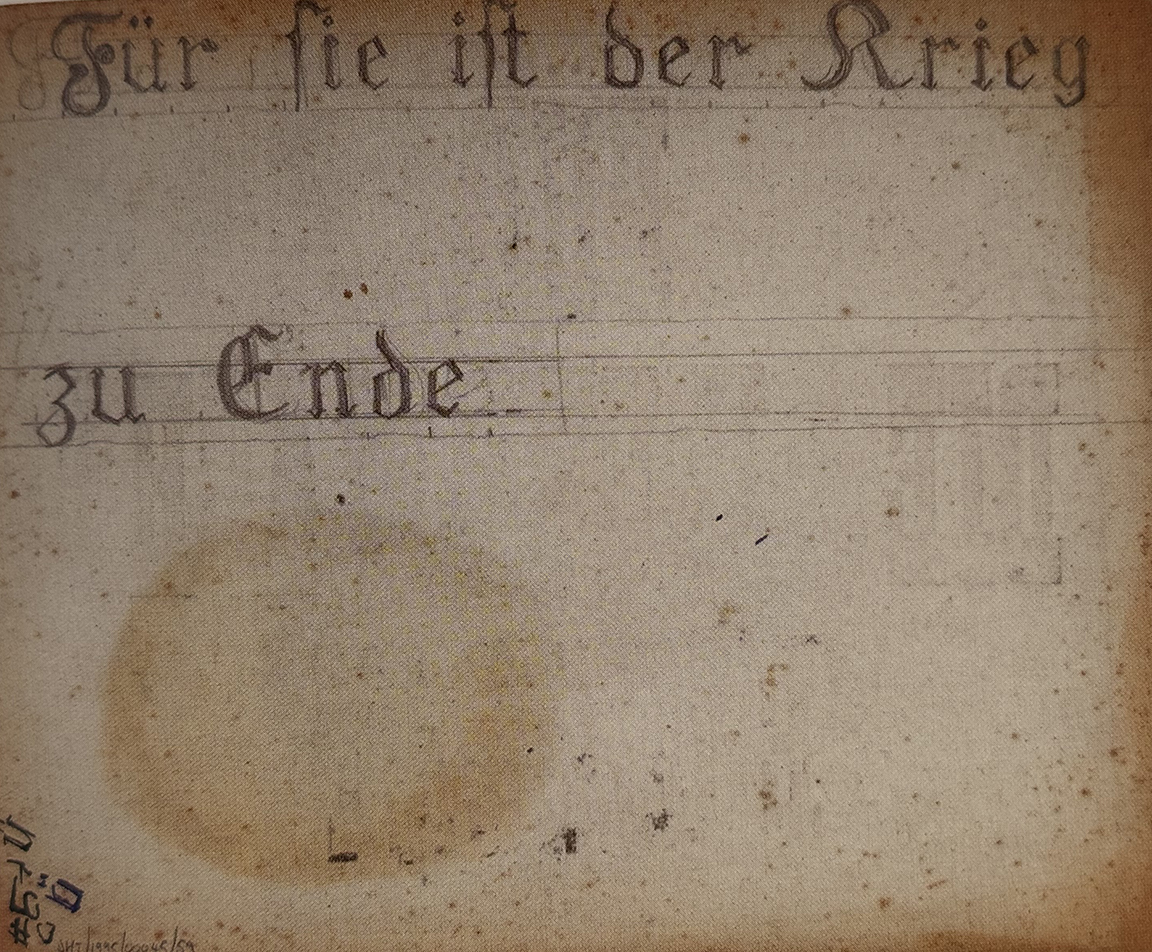
Cahun and Moore also took advantage of the fact that the cemetery was located beside their home. During the funerals for German soldiers, they would place their messages in German staff cars parked near their house. When Oberleutnant Zepernick was buried in 1943, Lucy and Suzanne waited for nightfall and placed a homemade cross on his grave with the words ‘Für sie ist der Kreig zu Ende,’ or ‘For him the War is Over,’ inscribed in Gothic lettering.

‘Für sie ist der Kreig zu Ende’ design, Claude Cahun and Marcel Moore, 1943.

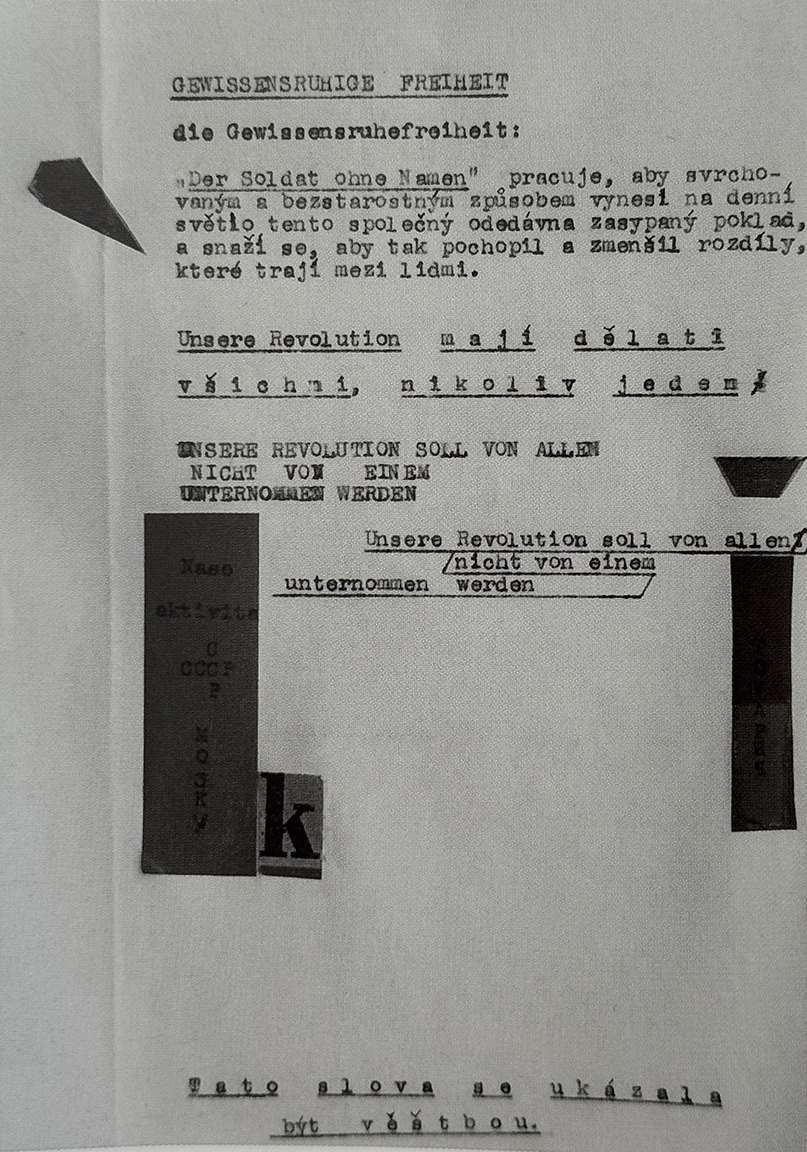
Their messages took different forms. I particularly like the design of the typewritten tract below which begins with ‘Gewissensruhige Freiheit,’ or ‘Freedom with a Clear Conscience,’ followed by, “The Soldier Without a Name” works to bring this long-buried treasure to light in a calm and carefree manner, striving to understand and reduce the differences that exist between people.’ And goes on to say,  ‘Our revolution should be undertaken by everyone not just one person.’

Tract, Claude Cahun and Marcel Moore, 1944.

Cahun and Moore’s messages and interventions were intended as incitements for the German soldiers, encouraging them to contemplate their part in an unjust war. The signature ‘der Soldat ohne Namen’ (The Soldier Without a Name) was not just a signature, for Cahun believed that she must take on the persona and thoughts of a German soldier who was resisting the war and occupation from within the ranks of the German military. After the war and occupation ended, Moore photographed Cahun as The Soldier Without a Name.

Cahun as The Soldier Without a Name, Claude Cahun and Marcel Moore, 1947.

In Exist Otherwise, Jennifer L. Shaw writes:

What I find most striking about Cahun and Moore’s resistance work is that it is so consistent with the ideas and strategies that Cahun had used all throughout her artistic and literary career. Cahun refused to take an ‘us’ versus ‘them’ approach. Rather than seeing all Germans as enemies, she imagined that each individual soldier had the potential to reconsider his actions. She even realized this conviction by inhabiting the position of the enemy in the form of the ‘Soldier Without a Name,’ and spoke from that position, encouraging others to lay down their arms and join the resistance. This strong belief in a person’s ability to challenge and analyze one’s own actions, combined with Cahun’s and Moore’s wit and poetry, formed the basis of their activities. Like Cahun’s previous work, the guiding principles for these resistance activities were anti-hierarchical and anti-authoritarian, aimed at defying binary thinking. (pp. 249-250)

For four long years, Marcel and Claude carried out their extremely risky mission, wholeheartedly and with great conviction, under the severe conditions of the German occupation. They understood the danger into which they had placed themselves and assumed they would be caught at some point. They had pledged to each other to commit suicide when and if caught and had collected large amounts of barbiturates for this purpose. They feared death less than the punishment of deportation to the camps in Continental Europe.

Arrest and Jail

On June 6, 1944, or ‘D-Day,’ the main Allied Forces carried out the largest seaborn invasion in history, landing in Normandy. This attack, in combination with airborne operations, began the liberation of France and Western Europe from the German forces and laid the ground for the victory of the Allied Forces and Germany’s surrender on May 8, 1945.

German military morale on Jersey (and elsewhere) was necessarily at a low point in the summer of 1944. Cahun and Moore kept up their resistance activities. On July 25, 1944, Claude and Marcel had spent the day in St. Helier distributing their anti-war propaganda. They were at home that evening when five German secret police officers, members of the Geheime Feldpoizei (GFP), came to search their house. The GFP officers found the (illegal) radio and the portable typewriter used to create the tracts, as well as some of the materials Cahun and Moore had been distributing earlier that day. Cahun and Moore were arrested and taken to Gloucester Street Prison in St. Helier. They managed to take the barbiturates they had stockpiled. They were both found unconscious in their cells and taken to the hospital. The dosage did not work.

Taken back to prison, Cahun and Moore endured more than nine months of incarceration in Gloucester Street Prison. They were kept in solitary confinement in separate cells. The conditions were difficult. Claude’s health, already fragile, suffered under these conditions. Marcel and Claude still feared the possibility of deportation to the camps more than they feared death by execution for their ‘crimes.’

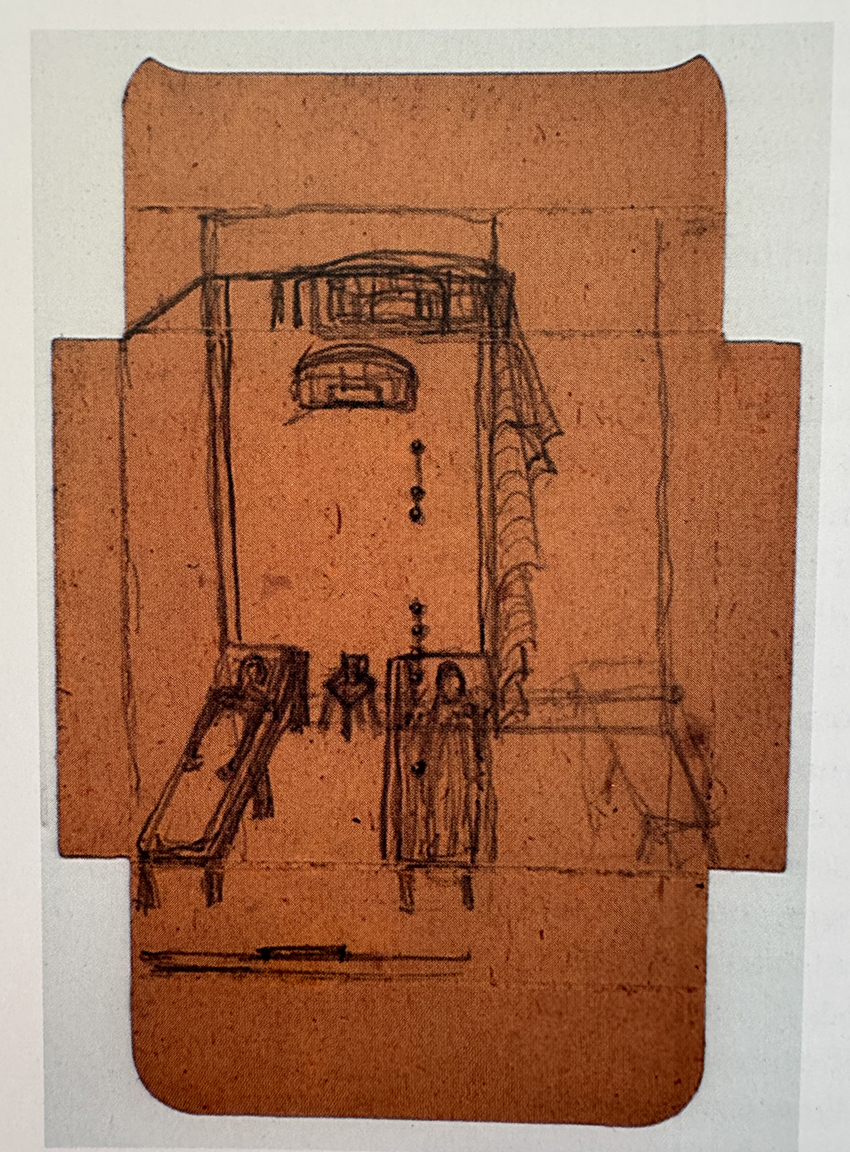
Cahun and Moore were able to communicate with each other by passing notes through a secret system that the other prisoners had devised. The cells were divided by thick walls with ventilation tunnels connecting the cells. The prisoners were able to send notes through these tunnels attached to strings. This was a coordinated system, which shows the efforts and a certain amount of comradery amongst the inmates. Other materials were shared and passed around such as books, cigarettes and writing materials.

Sketch of the prison cell showing the ventilation ducts, Marcel Moore, 1944.

Cahun and Moore were interrogated by the GFP; they cooperated and provided details of their resistance activities and actions over the four years. As it turned out, the GFP had been collecting their tracts and resistance materials for a long time. However, the GFP did not think that these two middle-aged women were acting alone. The GFP were hoping that, through interrogation, they could identify the resistance organization or group behind these anti-Nazi tracts. Cahun later wrote:

In fact, the Gestapo searched in vain for four years. We had been able to avoid every search. It was so sudden. They would never have believed, despite their informers, that it had anything to do with us. Even with the proof in their hands, they couldn’t believe their eyes. They remained persuaded that we couldn’t have been anything more than accomplices . . . of X. In order to get them to stop interrogating us about our hypothetical affiliations with . . . X, or with the Intelligence Service (!!!), it was necessary to demonstrate to them that we were fully aware of and capable of our . . . ‘crimes.’

Cahun, ‘Le Muet dans la melée,’ p. 631, in Shaw’s Exist Otherwise, p. 226.

Cahun and Moore’s trial was on November 16, 1944. This was the first time that Cahun and Moore had been in the same room for any length of time since their capture in July. If nothing else, they were happy to be together in a warm room in comfortable chairs. The trial took five hours. There were three judges presiding, a prosecutor and a defense lawyer. The trial was conducted mostly in German. At one point Moore stated: ‘The defense is much more bitter against us than the prosecution.’

The GFP had found more incriminating materials at La Rocquaise to use for the trial. In addition to the radio and typewriter, they brought personal papers, anarchist pamphlets, anti-German books written by Cahun’s father and art works that Cahun and Moore had hidden. They also brought a revolver and camera equipment they had found.

During the trial, the court revealed excerpts from the tracts and works of resistance that the ‘Soldier Without a Name’ had produced and the GFP had collected (and which Cahun and Moore had already confessed to producing when interrogated).

After the trial, Cahun composed a testimony of what had taken place. Here she paraphrases what the judge, Oberst Samson, had stated at the trial:

You are francs-tireurs [partisans] … even though you used spiritual arms instead of firearms. It is indeed a more serious crime. With firearms, one knows at once what damage has been done, but with spiritual arms, one cannot tell how far-reaching it may be.

In Claire Follain’s “Lucy Schwob and Suzanne Malherbe: Réistantes,” p. 89, in don’t kiss me: the art of Claude Cahun & Marcel Moore.

Oberst Samson had inadvertently complimented Claude and Marcel by using the term ‘spiritual arms’ to describe their brave and thoughtful resistance activities.

Cahun and Moore were convicted of creating propaganda ‘undermining the morale of the German forces’ and sentenced to death. They refused to sign letters of appeal to reverse their execution order and were sent back to prison. From November 16, 1944 until February 20, 1945, Cahun and Moore lived (in prison) under the threat of their imminent execution (and continued to refuse to make an appeal to their sentence, perhaps still fearing deportation to a camp more than death).

On February 20, 1945 Cahun and Moore were informed that the German High Command had granted a reprieve to their stay of execution. The French consulate and the Jersey bailiff had made appeals on their behalf. From that day until their release on May 8, 1945, Claude and Marcel were reunited (they were overjoyed) and shared a cell in the prison. Once reunited Claude and Marcel shared the secret notes they had both created on whatever materials they could muster (toilet paper, book pages, etc.). They sewed these notes in the lining of a coat which a friend smuggled out of the prison. Cahun later used these notes for the letters and accounts she wrote later to document their lives during the occupation.

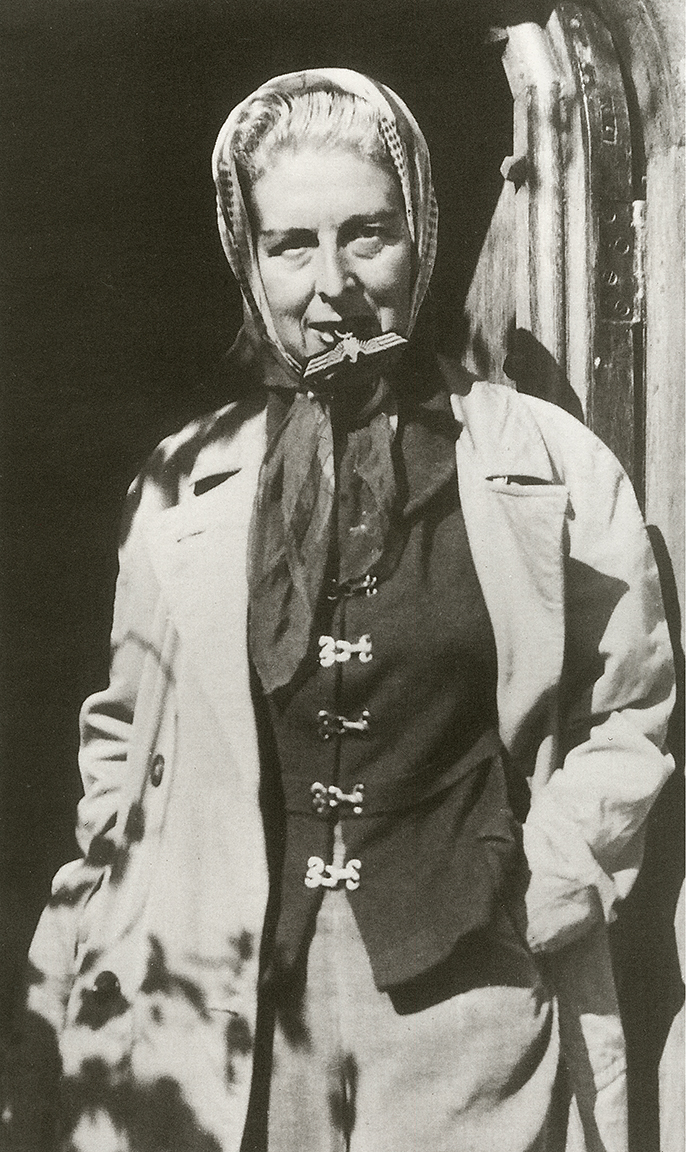
Untitled (Cahun biting down on a Luftwaffe insignia), Claude Cahun and Marcel Moore, May 1945.

The image above shows Claude Cahun in May of 1945, soon after her release from prison. With her unique sense of humor (and resistance), she bites down on a Luftwaffe insignia that one of the German prisoners had given her.

After the War

For Claude and Marcel, the return to a ‘normal life’ after the war was no small feat. During their incarceration, the Germans had pillaged their home completely, stripping it bare of all furniture and their artwork. The Germans also stole artworks Cahun and Moore had collected, household items, books, clothing, mementos, even locks, keys and electrical wire.

Following the liberation, Cahun and Moore spent months rebuilding their home. They also had to search across the island for belongings that had been taken or given away by the Nazis. The Germans had also burned many of their artworks and resistance works before liberation. They found their French Bible and Cahun’s complete edition of Shakespeare at the Metropole Hotel. They managed to find other valuables and books as well; apparently, their library had been bought by a bookseller and sold to individual buyers across the island. Gradually, they put their lives back together.

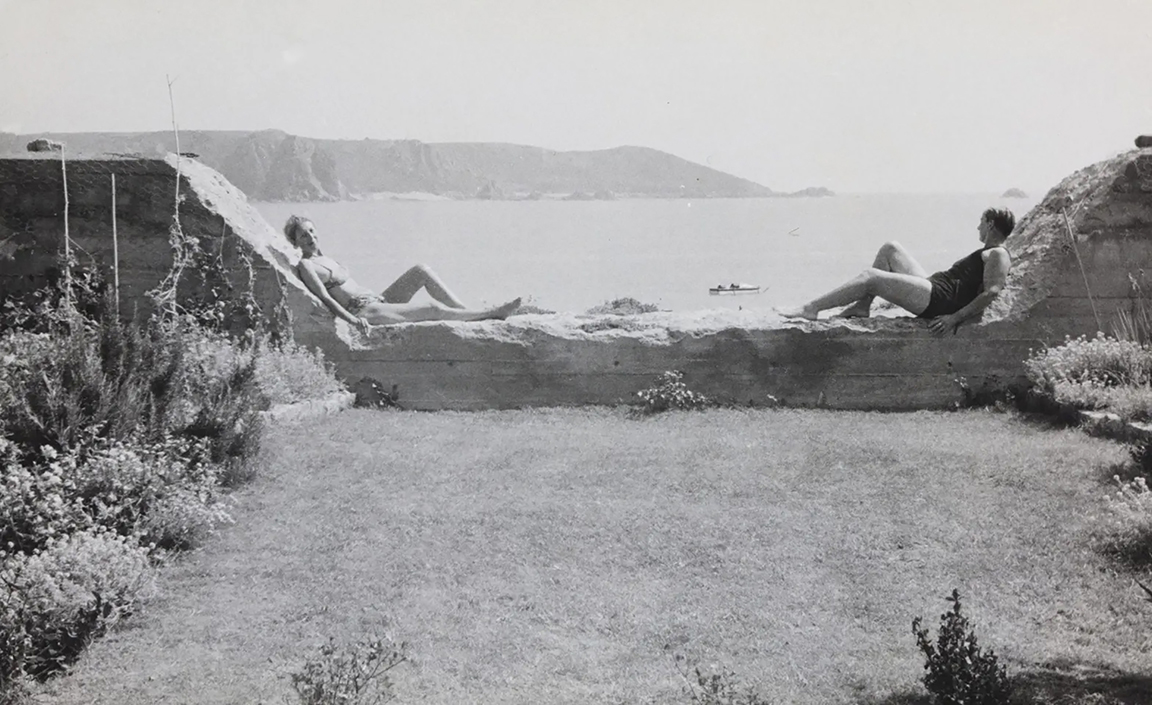
Cahun and Moore sunbathing,1945.

Cahun continued to be outspoken about the war and the occupation and felt isolated and alienated from the islanders who had, albeit passively, aided and abetted the Nazis. Cahun worked on several written works (long letters, a memoir, prose) in the late forties and early fifties that recounted her and Moore’s experiences and their resistance during the occupation and their time in jail. She started the memoir titled Le Muet dans la melée,The Mute in the melée,based on her prison notes. She also worked on a text Confidences au Miroir, Confessions at the Mirror, comprised of poetic musings and autobiographical materials.

Cahun’s health had suffered during her imprisonment, and it did not improve afterward. Still, Claude and Marcel managed to create an enjoyable life on the island. They reinitiated their photographic practice together in and around their home. Cahun was again the main subject.

Untitled (Cahun as The Soldier Without a Name), Claude Cahun and Marcel Moore, 1947.

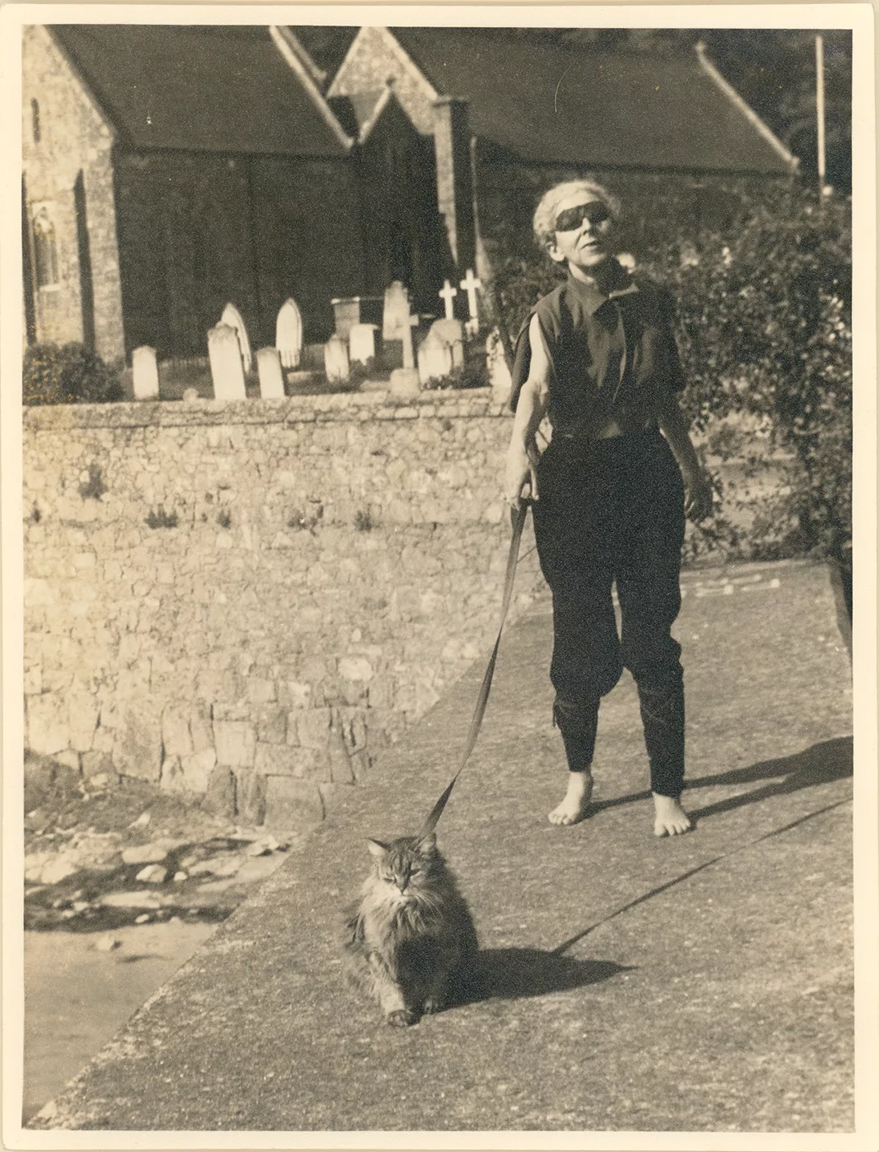
Untitled (Cahun walking the cat), Claude Cahun and Marcel Moore, 1948

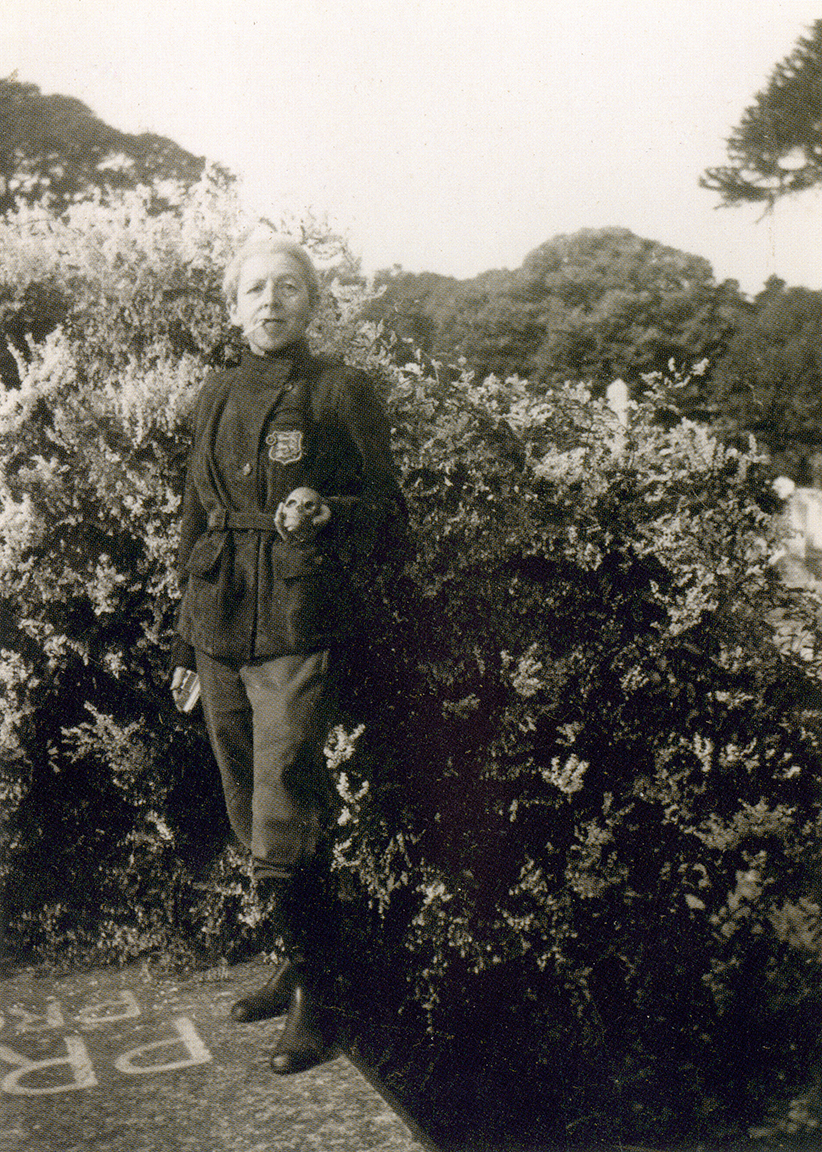
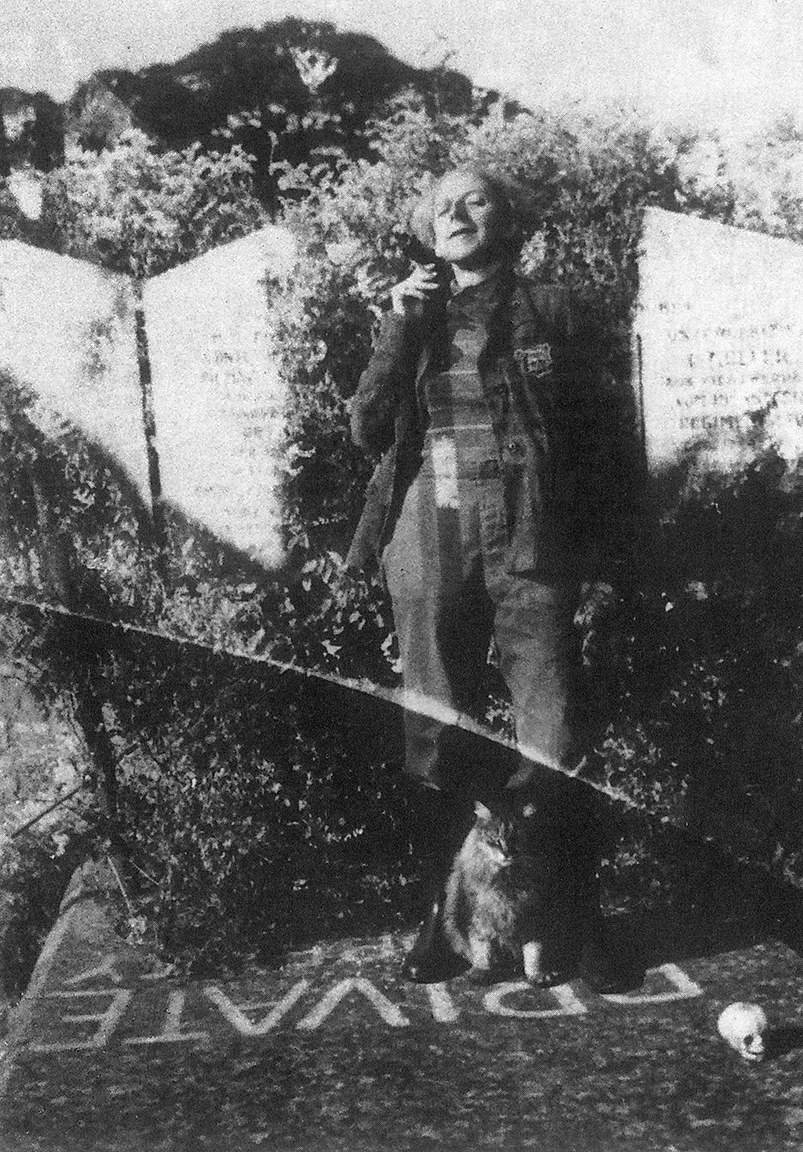
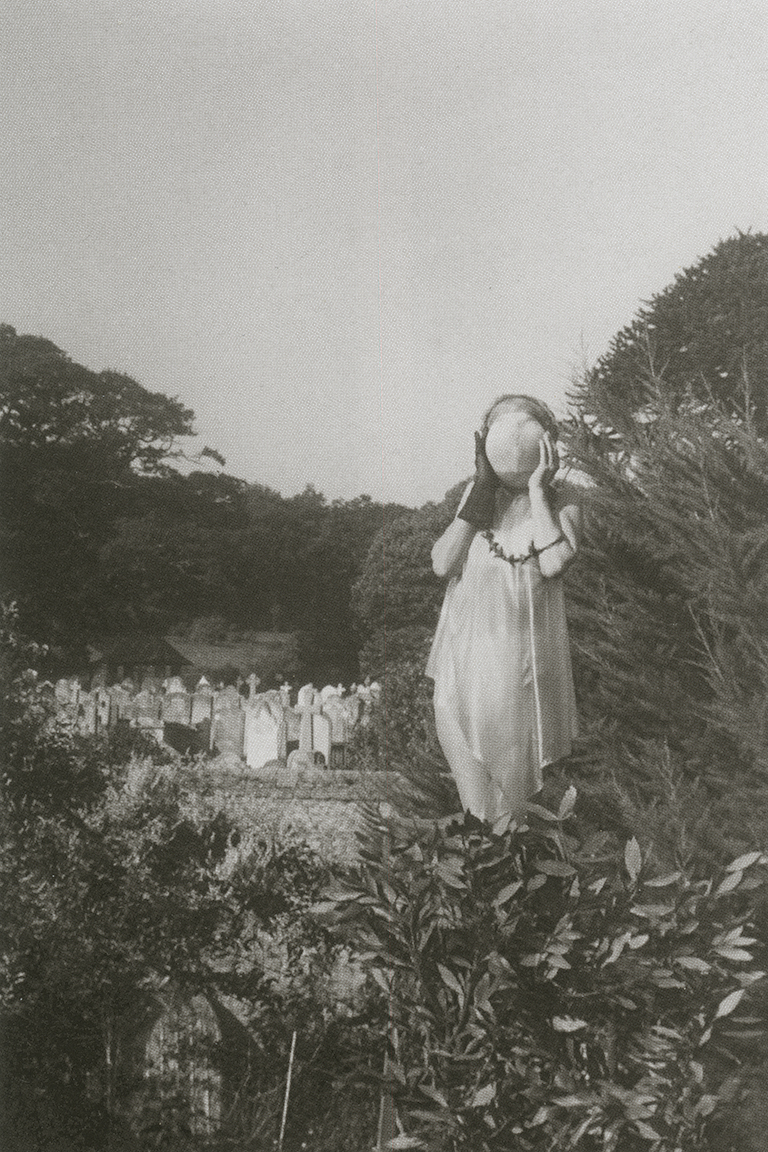
Untitled (Cahun in the cemetery), Claude Cahun and Marcel Moore, 1947.

These images, taken during the last period of Cahun’s life, are telling for me. As an older artist, I relate to these images of Cahun. I haven’t suffered war and occupation as Cahun and Moore did, or fragile health as Cahun did. Yet, still, I relate to their often-tender observances of a life/lives (well lived) that happen with age: their joys, tragedies and triumphs. Cahun reappears as the Soldier Without a Name, smoking and grinning sardonically. Cahun walks their new cat, Nike, on a leash barefoot and blindfolded.She holds a blank mask up to her ghostlike figure in the cemetery.  All these images feature the cometary as a backdrop (is this again a lingering symbolist strategy?).

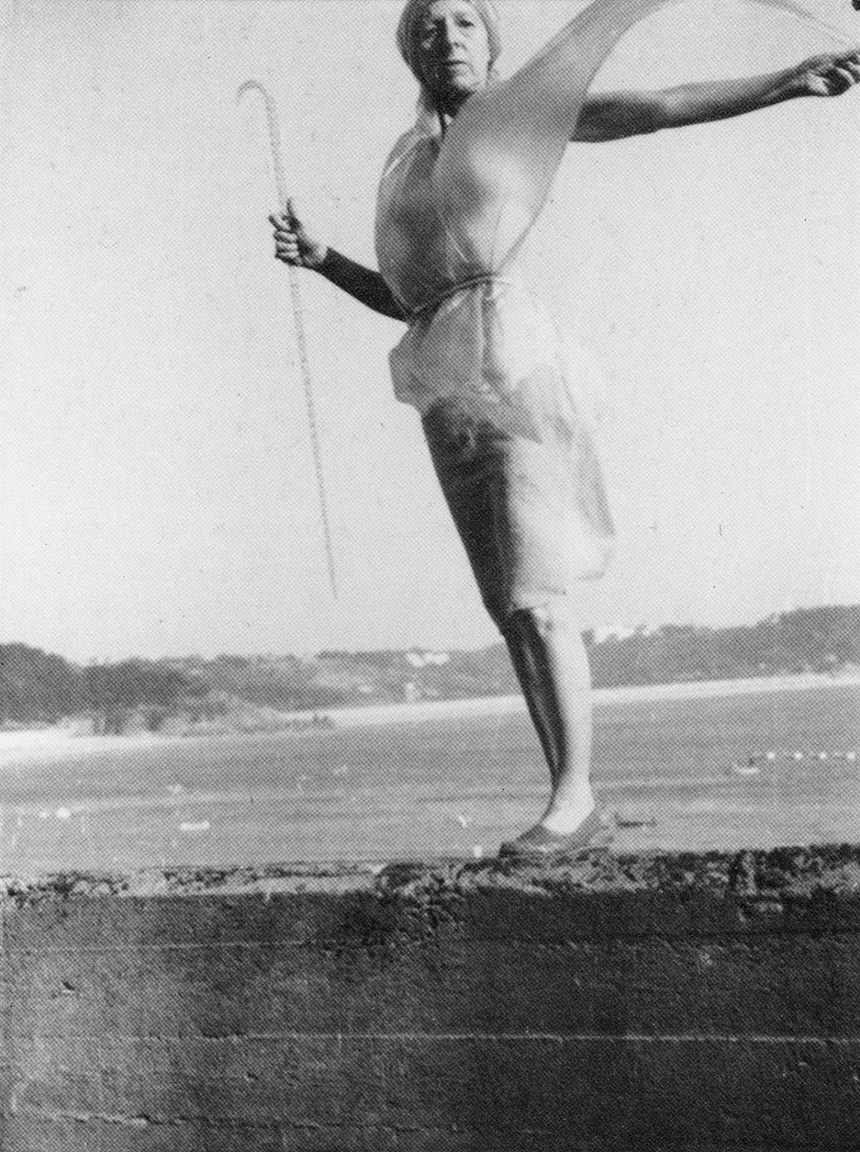
I love this series of images below, depicting Cahun walking along the sea wall with St. Brelade’s Bay in the background. She appears almost floating, free, unencumbered. Perhaps an elderly angel?

Untitled (Claude walking along the sea wall), Claude Cahun and Marcel Moore, 1947.

Untitled (Claude walking along the sea wall), Claude Cahun and Marcel Moore, 1947.

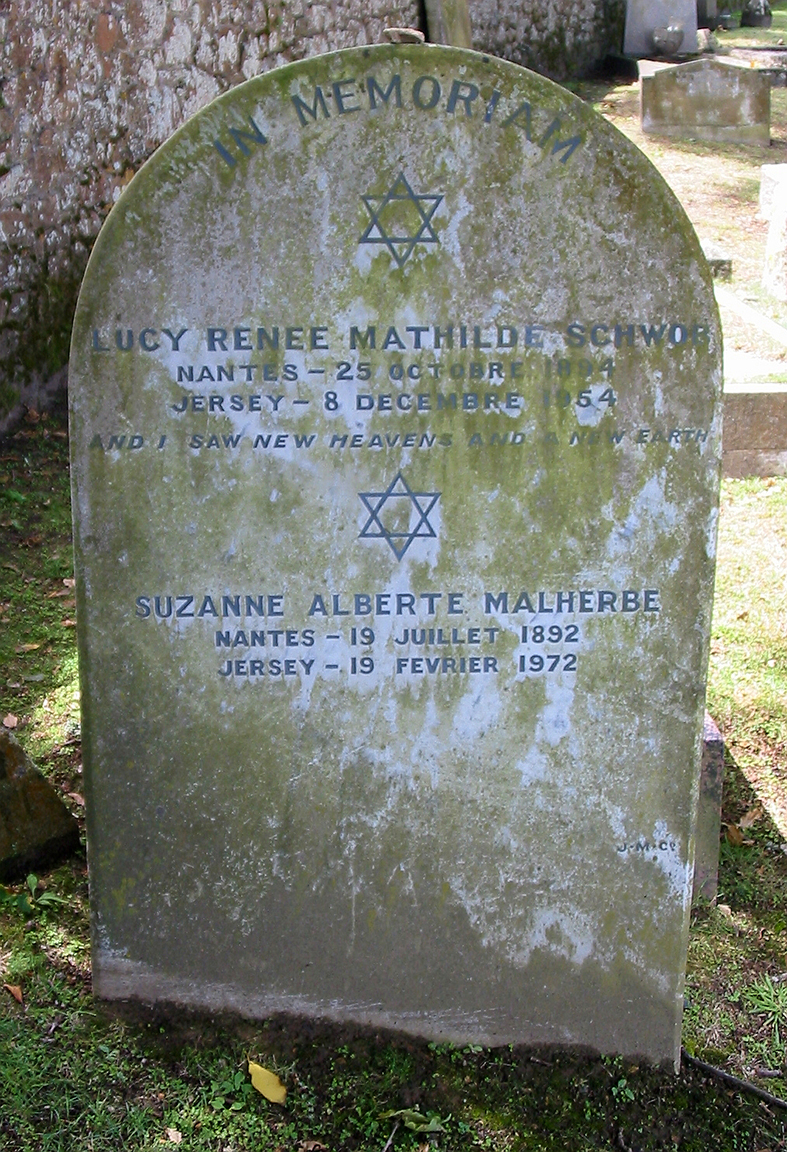
Still, Marcel and Claude kept thinking of Paris, their old friends and a chance for a more stimulating cultural life than the island afforded. In 1953, they traveled to Paris with the intention of reestablishing a life there. They stayed in their old neighborhood and met with old friends. Cahun became ill in Paris, so they had to give up these plans and return to Jersey. In the fall of 1954, Cahun’s health declined further and she was taken to the hospital in St. Helier. She died there on December 8, 1954. Claude was sixty years old. Marcel buried her in the cemetery on St. Brelade’s Bay. Moore later sold ‘the Farm without a Name’ and moved to another house on Jersey. Marcel died by suicide in 1972. She was eighty years old. Marcel is buried beside Claude. Suzanne and Lucy lie in rest together on St. Brelade’s Bay.

Gravestone at St. Brelade’s Parish Church Cometary

There is so much more to Claude and Marcel’s story, and to the details of how their lives and works have been recovered, rediscovered, collected, interpreted and represented.

Wish me luck on my pilgrimage to Jersey. I leave on February 2nd.

As a postscript, I would like to say that the images on these blog posts have been scanned from the various books I have collected about Cahun and Moore. The Jersey Heritage holds many of these images in their archive. I hope to gain permission to obtain high resolution digital copies of some of these images. I also recommend that interested readers get a copy of Jennifer L. Shaw’s biography Exist Otherwise: The Lives and Works of Claude Cahun. Unfortunately, the catalogue produced by the Jersey Heritage Trust, don’t kiss me: the art of Claude Cahun & Marcel Moore, edited by Louise Downie, is out of print. Gen Doy’s Claude Cahun: A Sensual Politics of Photography is also a fabulous resource.

I’m in training (with Claude Cahun)- posted July 30, 2025

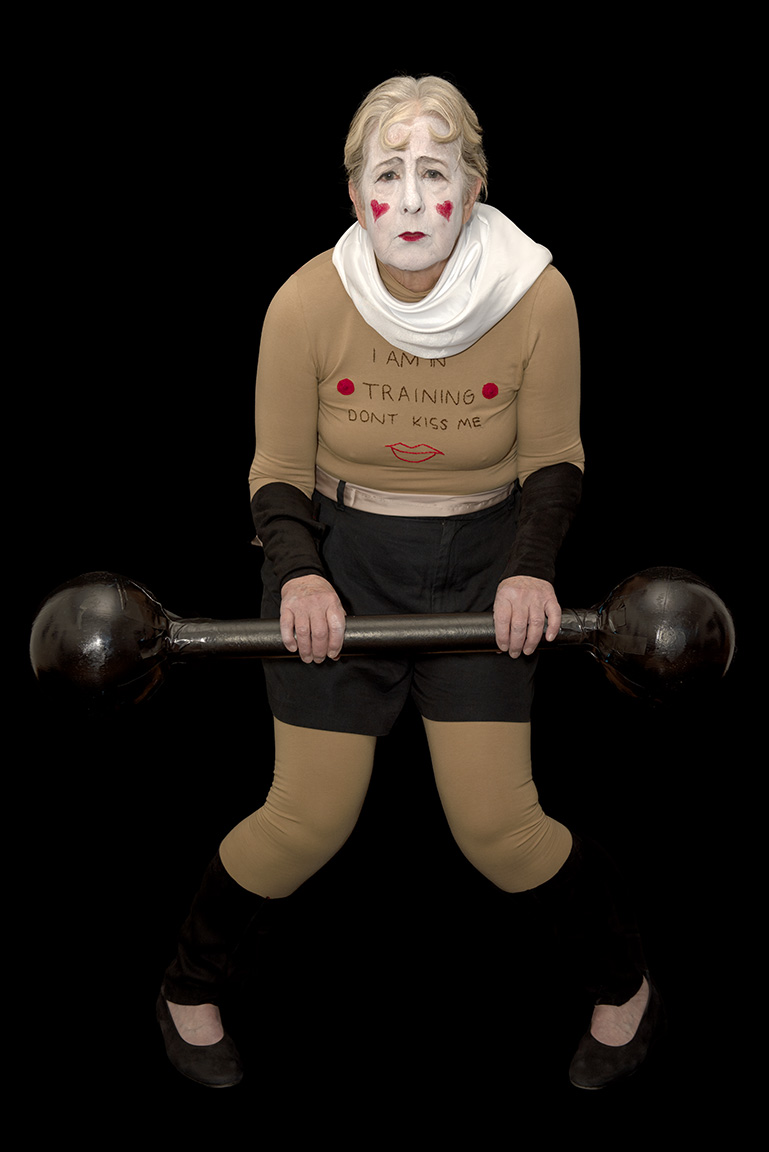
“Don’t Kiss Me I,” Sherry Wiggins and Luís Branco, 2025.

In February, I enacted a performance and embodiment practice with early-twentieth-century French artist Claude Cahun. This practice resulted in a direct transmission from Claude to me through Luís Branco’s magic camera.

Luís and I shot hundreds of images on the French Riviera at La Napoule Art Foundation. In the studio and in and around the beautiful Chateau de la Napoule, we created a body of work in conversation with Claude Cahun and her lifelong photographic practice, much of which was produced with her partner in art and life, Marcel Moore.

Cahun (1894 – 1954), a surrealist intellectual, was a significant, multitalented artist. She was a performance artist, photographer, sculptor and writer. She was also a committed, even jailed, anti-Nazi activist. Cahun was gender ambiguous, a lesbian and a cross-dresser. (I use she/her pronouns for Cahun; the gender-neutral pronouns they/them, while perhaps more appropriate, were not in use during Cahun’s lifetime.) Cahun’s work, in both photography and writing, explores the many masks of selfhood. Cahun encourages us to examine the theater of identity, where we perform and inhabit roles that are imposed upon us as well as roles that we invent. Claude Cahun is my queer superheroine.

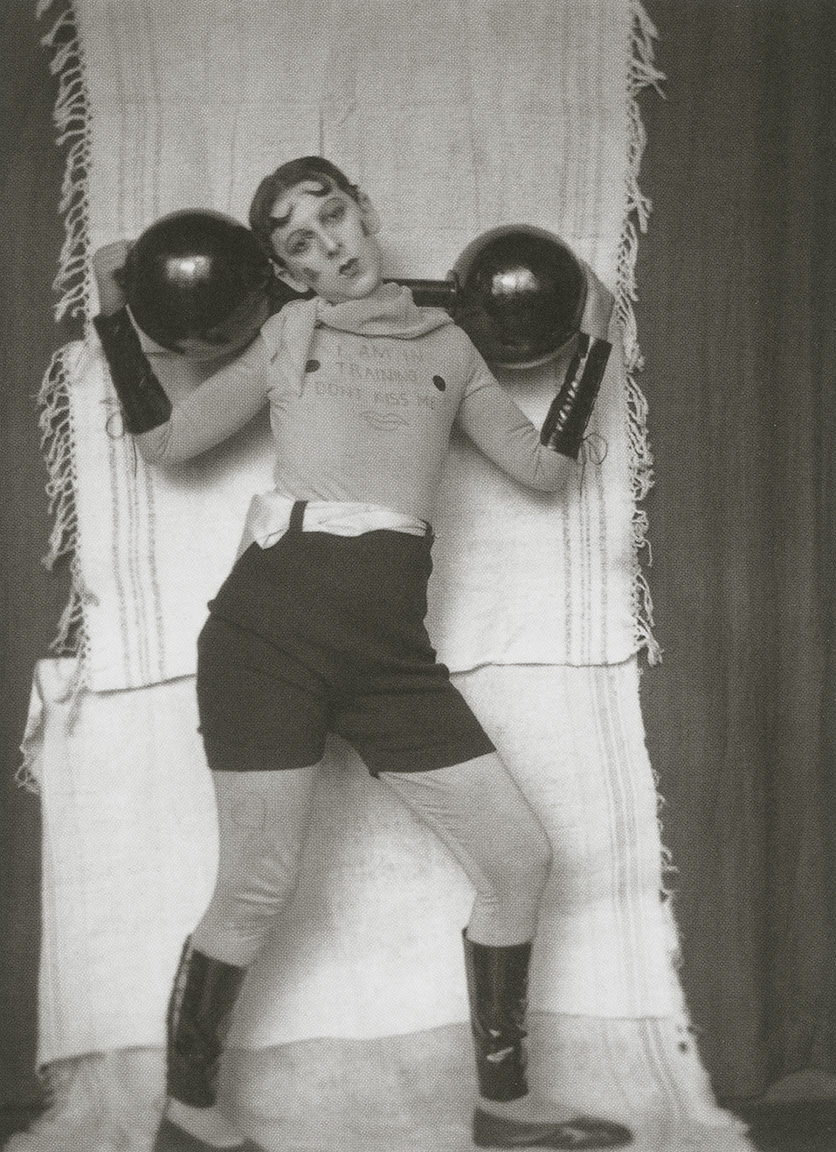
Untitled, Claude Cahun (with Marcel Moore), 1927.

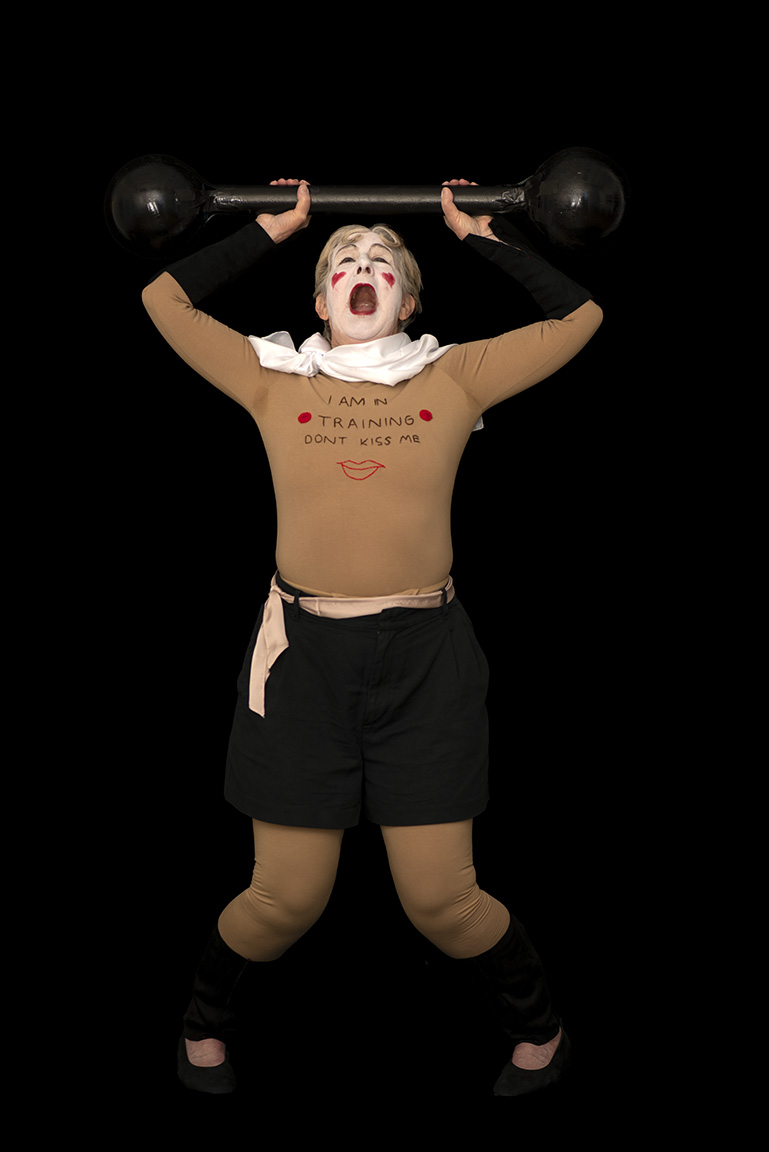
The 1927 image of Cahun posing as a body builder (above) is one of my favorites in Cahun’s oeuvre. It plays on all sorts of tropes of identity and performance. The costume in the image is both masculine and feminine: the misplaced nipples and lips on the shirt, the delicate neck scarf and silk waist sash, the “I AM IN TRAINING DON’T KISS ME” message, the enormous dumbbell across her shoulders and the contrapposto stance that would never bear its weight. What is she in training for? The curlicue hair, the hearts on her cheeks and the dishtowels hung as a backdrop. It is all just plain funny and indicative of Cahun’s lifelong pursuit of “dressing up,” a pursuit she accomplished in her everyday life and in theater productions in Paris in the 1920s.  For my enactments of this image, assemblage artist Jensina Endresen helped me create my own body-builder costume. My partner, Jamie, constructed the inflatable barbells that I brought with me to France. Et voilà!

“Don’t Kiss Me II,” Sherry Wiggins and Luís Branco, 2025.

“Don’t Kiss Me III,” Sherry Wiggins and Luís Branco, 2025.

On a more serious note…


Untitled, Claude Cahun (with Marcel Moore), 1928.

The photograph above, of Cahun standing beside a mirror, is eerily striking. The mirror doubles her image—the “real” Cahun gazes toward the camera and us, while the mirror image of Cahun looks into the mirror itself and beyond. Cahun’s gaze is deadpan, serious. Her hair is shorn, very butch or masculine—hommasse in French. The jacket and the gesture are also masculine. Cahun was always toying with ideas of self-reflection, self-questioning and gender ambiguity.

“Masculine? Feminine? It depends on the situation. Neuter is the only gender that always suits me.”

 – Claude Cahun, Disavowals, trans. Susan de Muth (Cambridge: MIT Press 2007), 151. Originally in Cahun’s Aveux non Avenus, 1930.

“I’ve been thinking about Claude Cahun I,” Sherry Wiggins and Luís Branco, 2025.

In our triptych “I’ve been thinking about Claude Cahun,” Luís and I did not attempt a direct copy of Cahun’s photograph. Instead of gazing sidelong, as Cahun does, I gaze directly into the mirror. The three photographs depict the process of me “performing” my more butch, more masculine self. I cut my hair short (then later cut it off entirely). In all three images, the water and horizon of the Mediterranean are visible through the windows. I donned a Cahun-inspired checked jacket and a mask. The costume and the setting allude to an art-deco-era past or early Hollywood. I will be showing this triptych in a group exhibition called “Queer Perspectives” at Michael Warren Contemporary in Denver opening July 31st and up through August 30, 2025.

“I’ve been thinking about Claude Cahun II,” Sherry Wiggins and Luís Branco, 2025.

“I’ve been thinking about Claude Cahun III,” Sherry Wiggins and Luís Branco, 2025.

Que me veux tu?”  Claude Cahun (with Marcel Moore), 1929.

The double-headed image of Claude Cahun (above) is one of Cahun’s few titled photographs. “Que me veux tu?”, or “What do you want from me?”, speaks to Cahun’s never-ending existential struggle with and questioning of identity in her life and art

I had my head shaved at the beauty shop in La Napoule. It was kind of liberating. Luís shot a whole series of double exposures of this new hairless and quite androgynous “double me,” creating our own version of “What do you want from me?”

What do you want from me?” Sherry Wiggins and Luís Branco, 2025.

Untitled, Claude Cahun (with Marcel Moore), 1920.

Marcel Moore must have taken this image (above) of Claude in her dandy and gentleman-like attire in the early 1920s in Paris. They were living a life that allowed Cahun to explore her gender ambiguity in full.

“Masked (after Claude Cahun),” Sherry Wiggins and Luís Branco, 2025.

As a Gentleman (after Claude Cahun), Sherry Wiggins and Luís Branco, 2025.

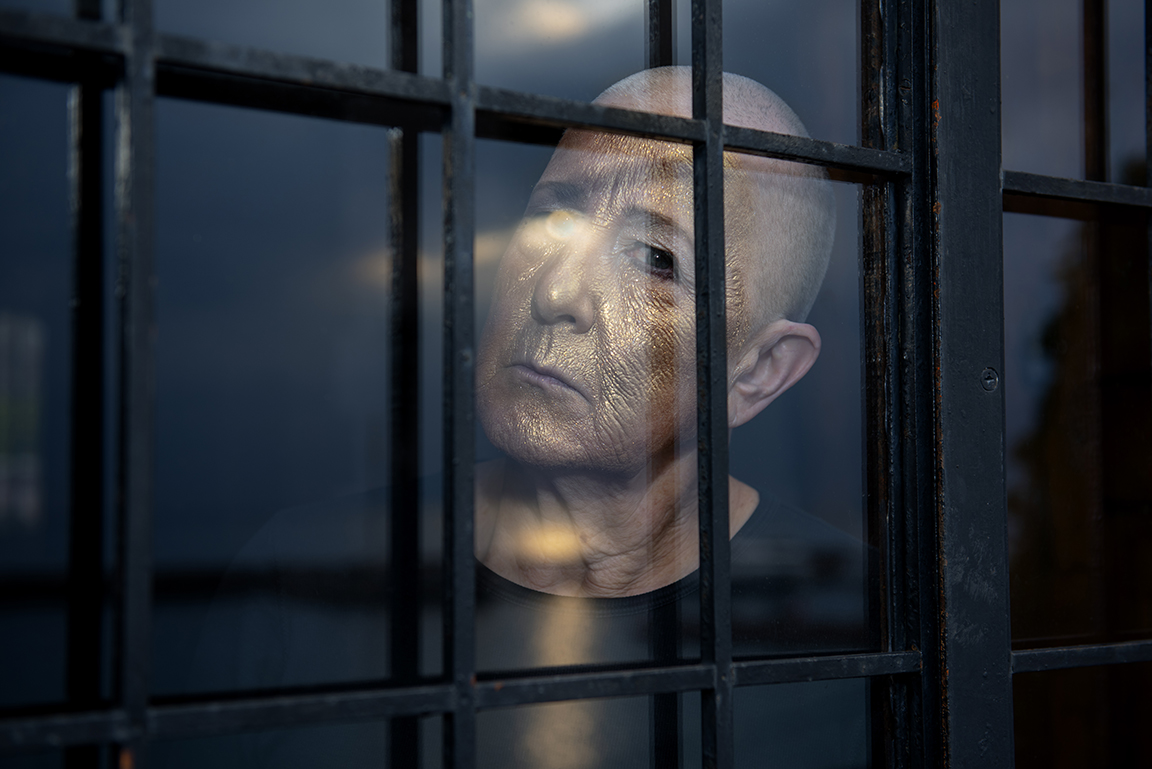
Gilded, Sherry Wiggins and Luís Branco, 2025.

I received a transmission from Claude Cahun during this intense period in France. This last image, which I call “Gilded,” is one of my favorites. This was taken during our last photoshoot at La Napoule. I had applied gold makeup to my face. Cahun’s golden light shines through me.

Naked and Adorned Part I : Inanna and Ishtar – posted in Boulder, CO Nov 8, 2024

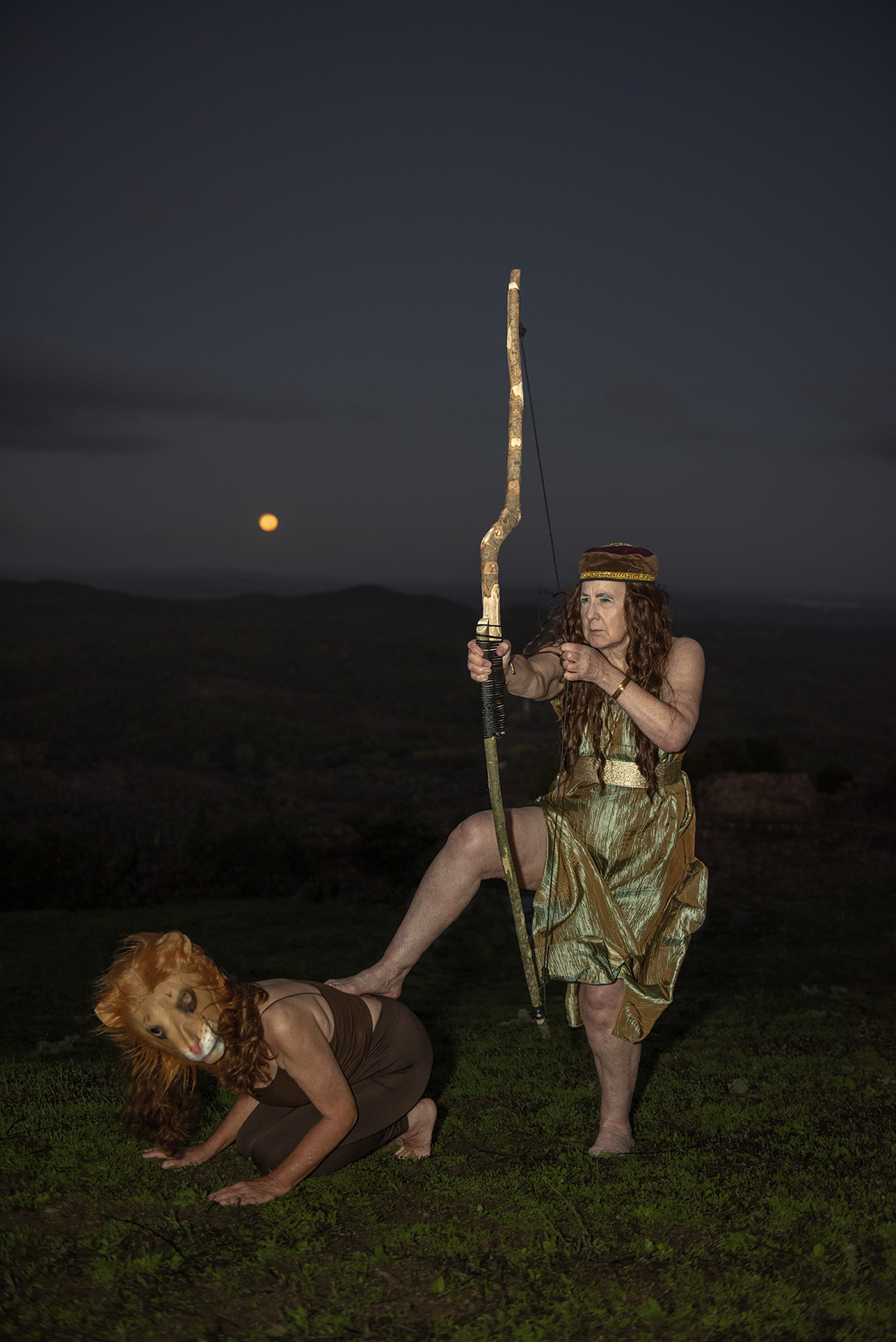
WIP—Inanna / Ishtar series, color digital image, Sherry Wiggins and Luís Branco, October 2024.

I almost retitled this blog post  “F__K THE PATRIARCHY: Part I: Inanna and Ishtar and Part II: Aprhodite and Venus”. I am posting this after the election… but I decided to go with my original title “Naked and Adorned Parts I and II.  I’ve been home from Portugal for more than a week and I have been looking over the images Luís Branco and I produced during our residency at OBRAS. No final edits—just a quick look through and a consideration of my most recent heroines, Inanna and Ishtar, and my long-term heroine, Aphrodite, and her reincarnation as Venus (they are considered in Part II).

For the HEROINES project I have researched and embodied several ancient goddesses and made performative photographs with Luís over the last four years. These goddesses include the Greek goddess / enchantress / sorceress Circe, from Homer’s The Odyssey, with her tamed lions and the men she transformed into swine; Isis, the great Egyptian goddess of motherhood, fertility and magic; and Aphrodite, Greek goddess of love and sexuality and more …, who morphs into the Roman goddess Venus. These goddesses fascinate me for their special powers and independence and agency. They are all sexy, badass goddesses.

These goddesses of ancient times were also syncretic: They merged into one another and through one another across time, cultures, wars, land and water. Aphrodite, my original favorite goddess, has pointed me backward in time to her early predecessor / sister goddesses of love and sexuality (and much more …) in ancient Mesopotamia—Inanna and Ishtar.

My preparation for embodying all of these goddesses includes an exploration of thousands of years of representations, descriptions and depictions of them. I am not a historian, an academic or an archeologist, but I do my own intuitive investigations and excavations of these archetypal heroines.

In this current inquiry and recent embodiments, I have ventured to the East (in my mind and in my research) to the lands and cultures of ancient Mesopotamia, the Fertile Crescent, to find ancient Sumerian goddess Inanna and Akkadian / Babylonian goddess Ishtar. These two goddesses merged over a period of a few thousand years (ca. 4000 BCE to 500 BCE) and are, at times, indistinguishable. Artifacts, texts and poems represent these amazing and powerful goddesses of love, sexuality, war (and much more …). Studying these ancient goddesses has been a revelation. Patriarchal Western European history has largely ignored them.

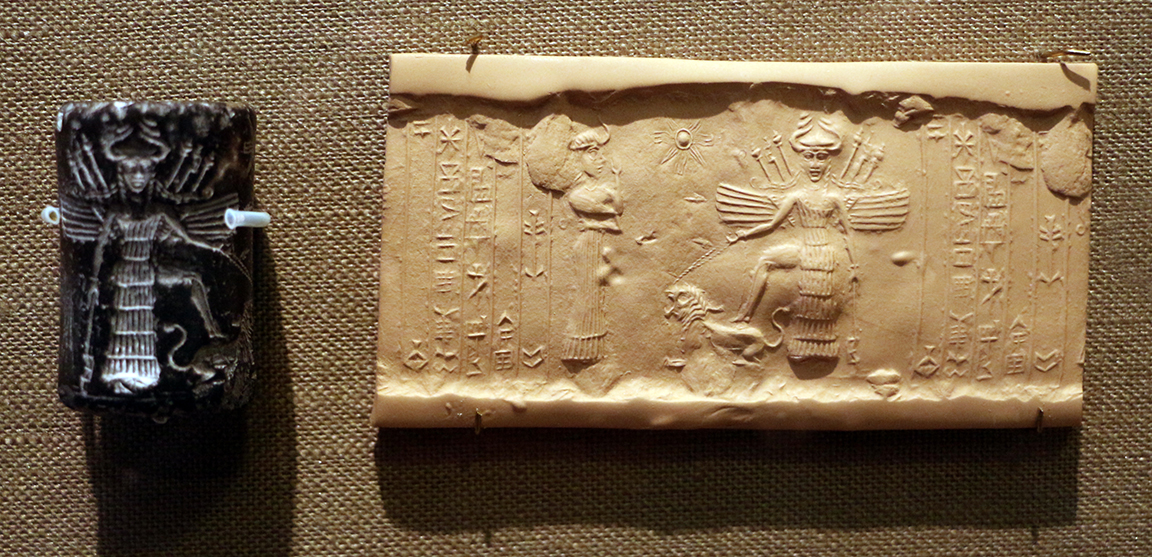
Radiant Inanna, cylinder seal, Mesopotamia, Akkadian period, ca. 2334 – 2154 BCE, h. 4 cm, d. 2 cm. The Oriental Institute Museum, University of Chicago.

In the two images of the ancient cylinder seal terracotta plate above, Inanna / Ishtar stands triumphantly in full regalia with one foot upon the back of her roaring lion. She wears a headdress of multiple horns. Weapons issue from her shoulders, while enormous wings appear from behind her back, suggesting both her martial and supernatural nature. An eight-pointed star, emblem of her manifestation as Venus, the morning and evening star, appears in the sky beside her.

WIP—Inanna / Ishtar series, black-and-white digital image, Sherry Wiggins and Luís Branco, October 2024.

Known as the “Queen of Heaven and Earth,” Inanna is the goddess of love, war, fertility, political power, sex (and much more …). She was worshipped as early as 4000 BCE in Sumer in southern Mesopotamia. In later Babylonian culture (2000 BCE to 500 BCE), Inanna becomes Ishtar and represents many of the same attributes and mythoi and is represented in many poems and hymns.

Terracotta plaque showing the goddess Ishtar (Inanna), 19th – 17th century BCE, from Iraq. Pergamon Museum, Berlin, Germany.

On the terracotta plaque above, Ishtar / Inanna stands on the back of a lion. She holds a bow in her left hand and a crook or a sickle in her right. The symbol of the god Shamash (Utu) appears in the upper right corner. The scene seems to take place in mountainous terrain.

I constructed her gown and collected golden horns, a lapis necklace and a golden girdle for my embodiment of Inanna / Ishtar. My friend Antonio made a wooden bow for us. My lioness, Jacinta, accompanied Luís and me to the top of Evoramonte near dawn, just as the moon was setting.

WIP—Inanna / Ishtar series, color digital image, Sherry Wiggins and Luís Branco, October 2024.

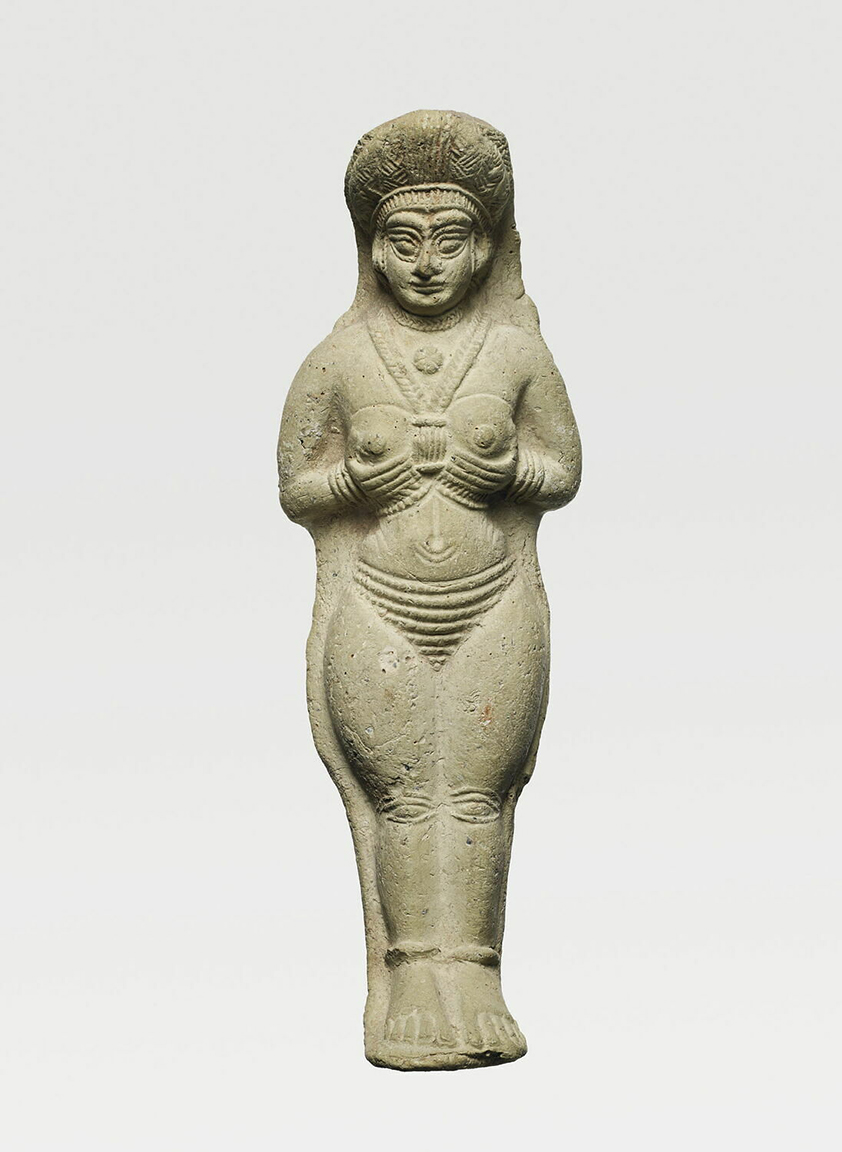
Both Inanna and Ishtar have been portrayed in various states of nakedness and adornment, all of which evoke their power and their sexuality. They are invincible goddesses and sexy, graced with elaborate crowns and jewels, often portrayed full-frontal in sculpture or other artifacts, whether nude or adorned. Their states of dress and undress reflect cultural ideas about female sexuality and female power, essentially equating the two. Which of course I love! Many Mesopotamian sculptures depict Inanna / Ishtar, as well as other women, holding their breasts—not as a statement of modesty, but, rather, referring to their potent and powerful sexuality.

Ishtar from Susa, 1500 – 1100 BCE. Louvre Museum, Paris, France.

WIP – Inanna / Ishtar series, color digital image, Sherry Wiggins and Luís Branco, October 2024.

In addition to sculptures and plaques, Inanna / Ishtar is depicted in texts and poems. I have been reading translations of these texts in Inanna, Queen of Heaven and Earth: Her Stories and Hymns from Sumer by Diane Wolkstein and Samuel Noah Kramer. “The Descent of Inanna” is the most famous text. Here, Inanna descends into the underworld through seven gates. At each gate, she must give up an article of clothing or an object that signifies one of her various powers—her horned crown, her scepter, her lapis jewelry, her robe. Finally, she is naked in the colorless underworld alongside her sister, Ereshkigal, who is the goddess of death and the underworld. Ultimately, Ereshkigal and the seven judges of the underworld kill Inanna. Her corpse is hung on a hook on the wall and left to decompose. Yet Inanna contrives a way to return to the living world: She consigns her husband, Dumuzi, the shepherd /king, and her faithful servant to spending half of every year in the underworld for eternity. Inanna is definitely a badass, but she has other sides as well; her sexual powers are prodigious.

Perhaps my favorite text about Inanna is the very sexy “The Courtship of Inanna and Dumuzi”:

Inanna spoke:

“What I tell you,

Let the singer weave into song.

What I tell you,

Let it flow from the ear to mouth,

Let it pass from old to young:

My vulva, the horn,

The Boat of Heaven,

Is full of eagerness like the young moon.

My untilled land lies fallow.

As for me, Inanna,

Who will plow my vulva?

Who will plow my high field?

Who will plow my wet ground?

As for me, the young woman,

Who will plow my vulva?

Who will station the ox there?

Who will plow my vulva?”

Dumuzi replied:

“Great Lady, the king will plow your vulva.

I, Dumuzi the King, will plow your vulva.”

Inanna:

“Then plow my vulva, man of my heart!

Plow my vulva!”

(From Inanna, Queen of Heaven and Earth: Her Stories and Hymns from Sumer, Diane Wolkstein and Samuel Noah Kramer, 1983, Harper Perennial: New York, NY, pp. 36 – 37.)

Terracotta Couple from Susa, 1500 – 1100 BCE. Louvre Museum, Paris, France.

Please read my blog post “Naked and Adorned Part II: Aphrodite and Venus” about our work made during the same time period at OBRAS, also part of the F__K the Patriarchy series…

Made in Portugal at the OBRAS Artist Residency – posted Sept 19, 2024 in Boulder, CO

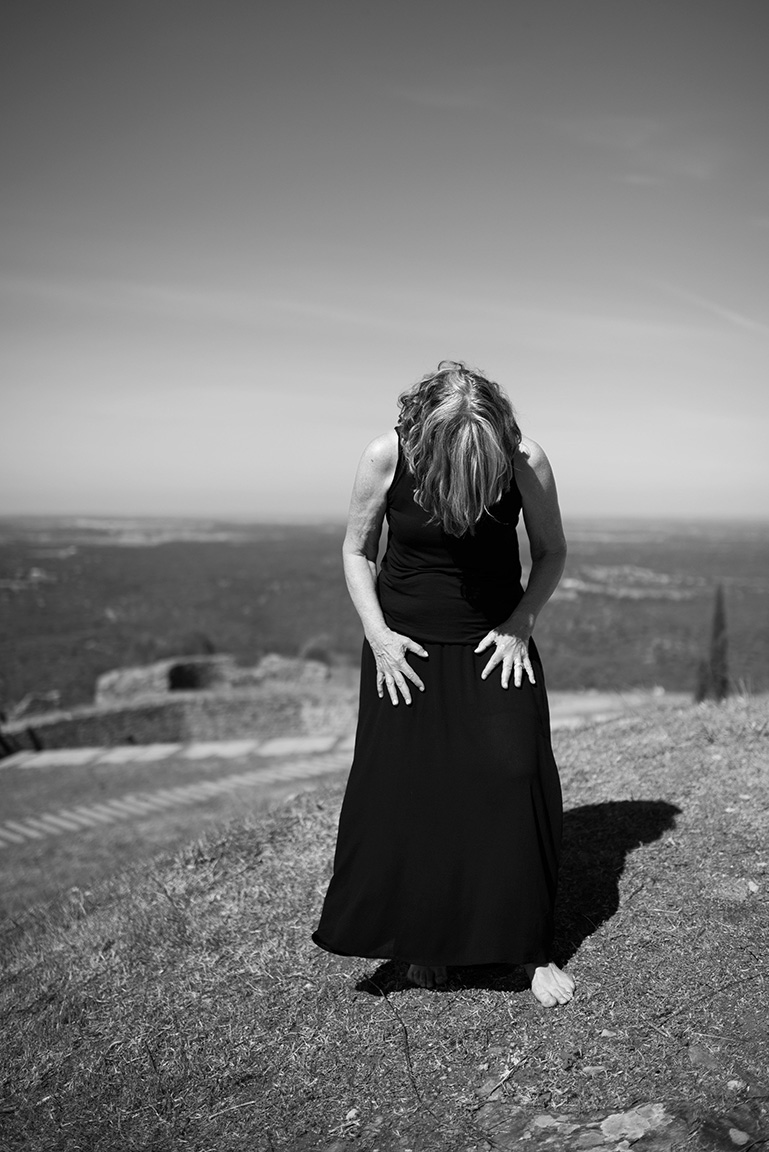
 Woman Standing, Still, black-and-white digital image, Sherry Wiggins and Luís Filipe Branco, 2015.

Woman Standing, Still, above, is one of my favorite images that I made with photographer Luís Branco during my first trip to Portugal and to the OBRAS Artist Residency in the fall of 2015.  She (I) stands with her feet planted firmly on the ground, on the mountain of Evoramonte, with the spacious sky surrounding her (me). She (I) is obviously an older woman and a strong matriarchal archetype.

I am preparing to return to Portugal in October, to the OBRAS Artist Residency near Evoramonte in the Alentejo region of Portugal. This place is very special to me, as are the people I have met at OBRAS, especially the residency’s founders, Carolien van der Laan and Ludger van der Eerden. I am feeling sentimental and grateful for the work I have accomplished with photographer Luís Branco over the last nine years at OBRAS. I am posting ten of my favorite images here, all of which were made at OBRAS and in nearby Evoramonte, and which convey the special affinity I have for this place. Luís and I have produced A LOT of work over the last several years at OBRAS and at other residencies and places in Portugal and Holland, and we have been showing our work in both Portugal and the US all along the way. You can see more of this work on my website.

It all began in the fall of 2015, when I traveled to Portugal and to OBRAS as a resident for the first time. At the time, I was studying the work of the fabulous Portuguese conceptual and performance artist Helena Almeida (1934 – 2018). Inspired by Almeida, my intention in 2015 was to make performative photographic artworks with myself as the subject. I asked Ludger and Carolien to introduce me to a photographer with whom I could work while I was at OBRAS. They introduced me to Luís Branco, and we began working together, in the studio, across the hills and fields surrounding OBRAS and in and around the nearby castle of Evoramonte. Woman Standing, Still, above, is (still) one of my favorite images from that first work period with Luís in 2015.

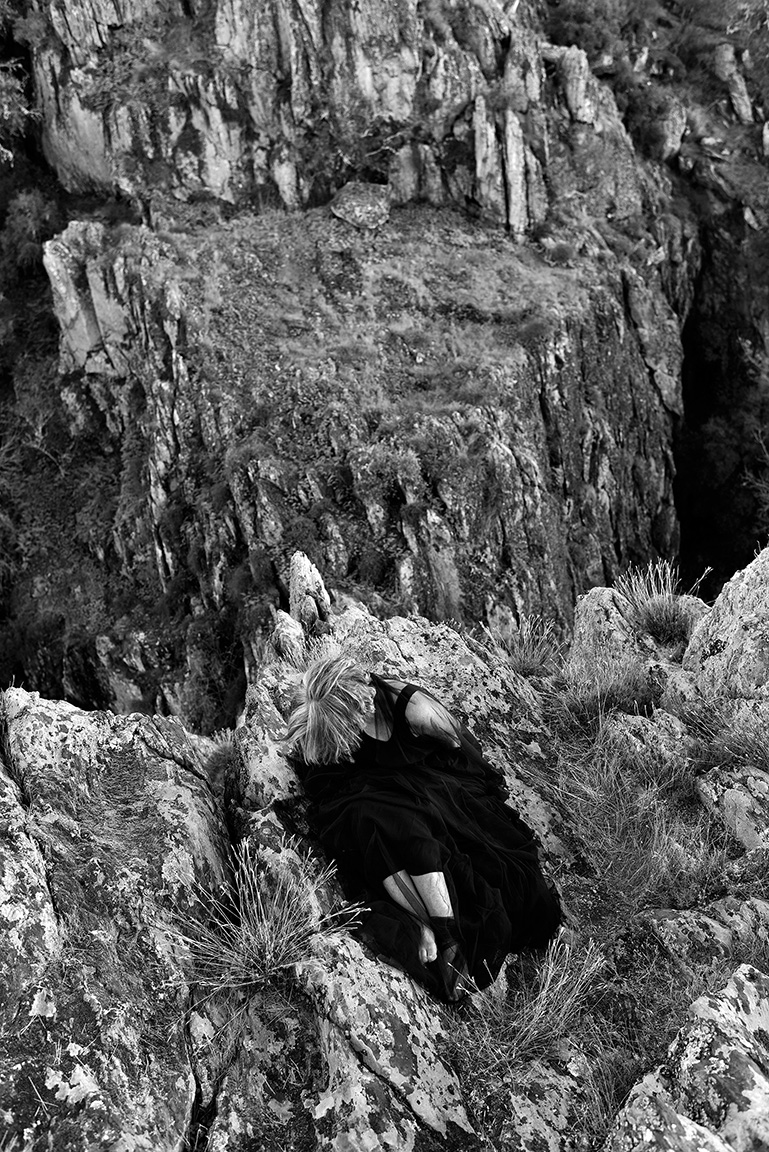
Woman in the Pego do Sino, black-and-white digital image, Sherry Wiggins and Luís Filipe Branco, 2016.

I returned to OBRAS in the fall of 2016 to work with Luís once again. We spent time in the Pego do Sino (Canyon of the Bells), a magical canyon near OBRAS. In Woman in the Pego do Sino, above, I am swathed in black gauzy fabric, almost hidden in the rocky landscape. The black form of my body appears like an entrance into the earth. During this residency, Carolien and Ludger offered to curate a show of Luís and my works to date in the beautiful palácio in the nearby town of Estremoz. Following is a seven minute video that we made with videographer Rui Fernandez about that exhibition, REENCONTRANDO-A / MEETING HER AGAIN: An exhibition of Sherry Wiggins with Luís Branco, which took place in early 2017:

In the fall of 2017, I returned to OBRAS to work with Luís in various land and waterscapes. We made many images at different sites in the Alentejo: in canyons, in rivers, in lakes and in dry reservoirs. The title of the image below, Encarnado, refers to multiple things in Portuguese. Encarnado literally means the color red, but it also refers to the incarnation of another being. We made this image in the bottom of Pego do Sino, the dwelling place of a fierce goddess/deusa, according to my Portuguese friends.

Encarnado, color digital image, Sherry Wiggins and Luís Filipe Branco, 2017.

Encarnado was in the exhibit “Delirium” curated by Mark Sink at Redline Contemporary Art Center, Denver, CO, 2019. (photo by Robert Kitilla)

I returned to OBRAS-Portugal in the spring of 2019 to work with Luís yet again. Below are just a few of my favorite images from that time. These works demonstrate our continued connection with the landscape near OBRAS.

Woman, Rising, color digital image, Sherry Wiggins and Luís Filipe Branco, 2019.

Seat at Evoramonte, color digital image, Sherry Wiggins and Luís Filipe Branco, 2019.

I love Outside Woman, the black-and-white image below. Luís is shooting from inside the Casa Miradouro (the little house I stay in at OBRAS), and I am standing outside, swathed in a gauzy nude colored fabric, like a phantom goddess/ghost. The mountain of Evoramonte is visible in the background.

Outside Woman, black-and-white digital image, Sherry Wiggins and Luís Filipe Branco, 2019.

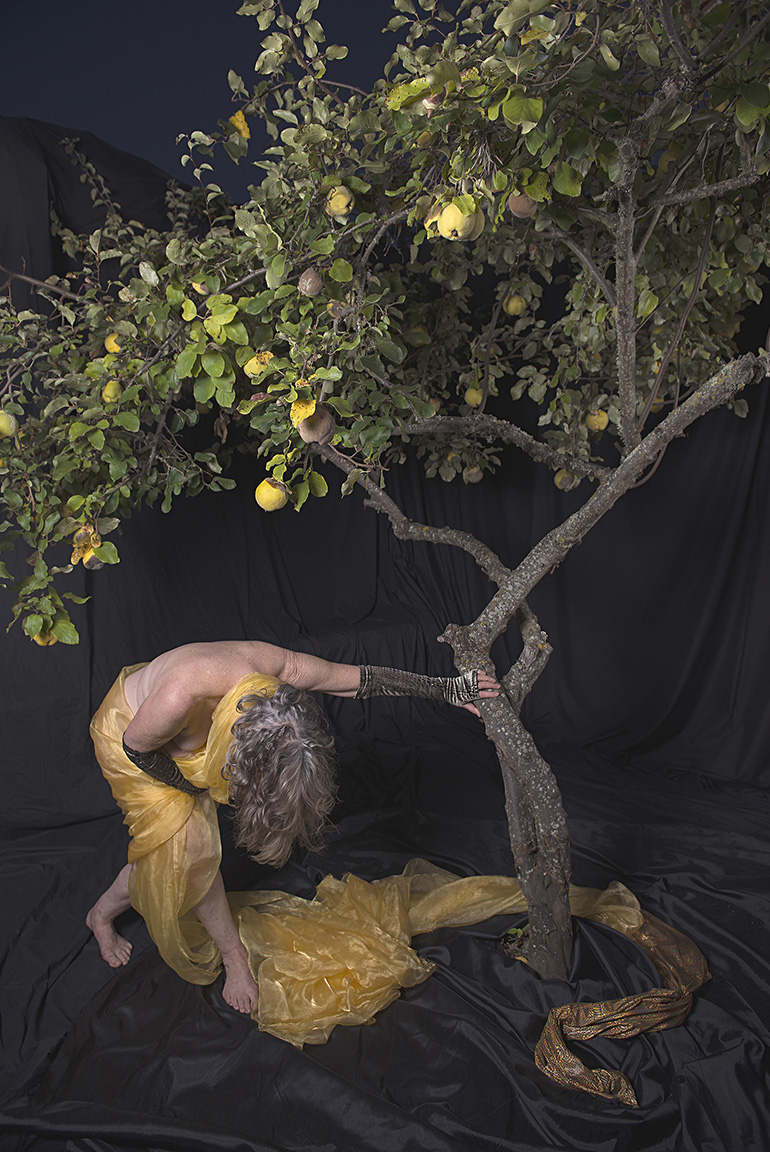
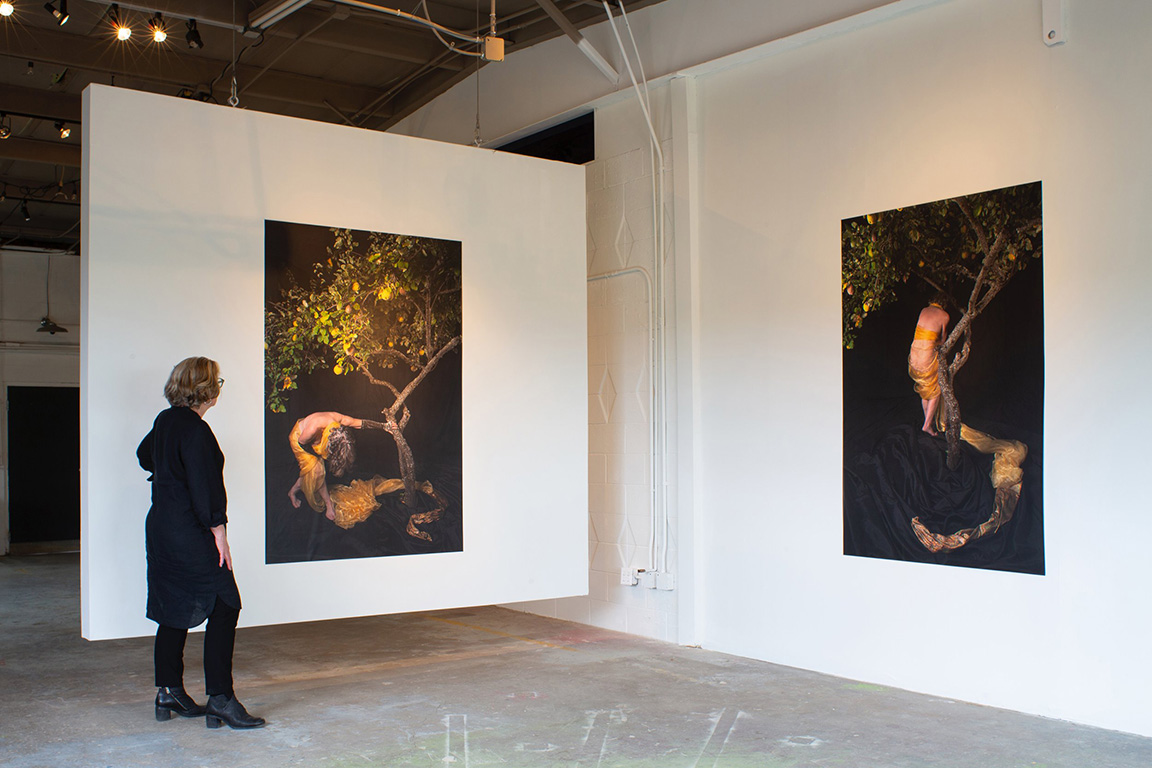
In 2021, Luís and I initiated our ongoing Heroines Project at OBRAS-Portugal. For this project, I have been researching and embodying various biblical, historic, literary and mythical female figures, and Luís has been photographing me. Our first heroines were the biblical figures Eve and Salome. Exit Paradise, below, was inspired by Eve’s banishment from paradise and includes a gorgeous marmeleira, or quince tree, which is located in the courtyard at OBRAS.

Exit Paradise I, color digital image, Sherry Wiggins and Luís Filipe Branco, 2021.

Exit Paradise I and II, installation at Seidel City, Boulder, CO, 2023. (photo by Robert Kitilla)

And I love the black-and-white image Salome at Sunset, below, with the mountain of Evoramonte in the background at sunset. These works, and many more, were shown in Boulder in 2023 as a part of the fabulous exhibit Exit Paradise at Seidel City.

Salome at Sunset II, black-and-white digital image, Sherry Wiggins and Luís Filipe Branco, 2021.

In spring of 2022, we put up The Mirror Between Us, a gorgeous exhibit in Evora, Portugal, curated by Ludger and Carolien. Margarida Branco and the municipality of Evora supported this exhibit, which was held in the beautiful Igreja de São Vicente in the center of Evora. This exhibit highlighted twenty-five performative photographs that Luís and I made in the Portuguese landscape between 2015 and 2019. The exhibit was originally scheduled for 2020 but was delayed due to covid. More than 4,000 people visited the exhibit over a two-month period. You can read about this exhibit and see the images on my blog:

https://sherrywigginsblog.com/2022/04/26/%EF%BF%BCwalk-through-the-exhibition-and-the-inauguration-of-the-mirror-between-us-at-the-igreja-de-sao-vicente-

Our work on the Heroines Project has progressed over the last few years at different locations in Portugal and Holland. In March of 2024, we were able to work for a few days at OBRAS-Portugal and at the Café O Emigrante in Evoramonte, and we shot some wonderful images of my heroine the Greek goddess Circe (from Homer’s The Odyssey) with several of our friends posing as Circe’s lioness companions and as Circe’s swine. In The Odyssey, Circe famously transforms Odysseus’s men into swine and later restores them to human form.

Circe and Her Companions, color digital image, Sherry Wiggins and Luís Filipe Branco, 2019.

Circe at the Bar, black-and-white digital image, Sherry Wiggins and Luís Filipe Branco, 2024.

As you can see, our work has become more theatrical with the Heroines Project. In October, Luís and I will be working at OBRAS-Portugal again. We will revisit my heroine Aphrodite, the goddess of love, beauty and sexuality (and more …). We will also represent the ancient Mesopotamian goddess Inanna/Ishtar (also a goddess of love, sexuality and war and more …). I am thrilled to be returning to OBRAS-Portugal, a place of incredible inspiration and productivity for me, and I am grateful for my creative partnership with photographer Luís Branco that emerged at OBRAS and continues to flourish.

The Idea and the Body of Mary Magdalene: inventing, reinventing, traversing sacred ground-posted in Portugal March 9, 2024

Work in progress: “My Mary Magdalene” series, Sherry Wiggins and Luís Filipe Branco, 2024.

I have been in Portugal for a week and a half, settling into the Cortiço Artist Residency and thinking about Mary Magdalene. I have started working with my creative partner, Luís Branco, on my embodiments and performative photographic work with Mary Magdalene. It takes some time, this process with my heroines—my research has gone on for several months. And now, the enactments/embodiments with Luís are coming forth. We have set up a photo studio and shot many images of this wondrous heroine this week. The image above is one of the best from this week. There will be more …

“Mary Magdalene in Ecstasy,” Artemisia Gentileschi, 1620-1625. private collection.

The painting above is by Artemisia Gentileschi and is one my favorite images of Mary Magdalene.

I have been studying images and ideas of Mary Magdalene, as represented by artists, scholars, feminists, and popes. I have looked at many paintings and images of her, and I have engaged with narratives in the New Testament and in the Gnostic gospels. I have explored the Gospel of Mary, an extracanonical text from the second century CE that was found in a cave in Egypt in the last 150 years. This is the only gospel named after a woman, and it is named for Mary Magdalene. It is a stunning depiction and explanation of the spiritual understanding of Mary Magdalene in relationship to her teacher, Jesus. I am a neophyte when it comes to the subject of Christianity, so forgive my ignorance; I have delved into this subject from Mary Magdalene’s point of view. I realize I am traversing sacred and complicated ground here. Mary Magdalene, as a figure and a metaphor, is a huge subject, considering the history, the mythology and the misogyny that surround her. She is my most complex heroine to date.

Baroque painter Artemisia Gentileschi (1593 – 1656) is known for inserting her own image into paintings of her heroines, many of them biblical figures. She made several paintings of the Magdalene. In Gentileschi’s painting above, MM is depicted in a state of spiritual and physical rapture. Can we have both at the same time? This is the paradox and the beauty of the idea of Mary Magdalene. Her body is our body—her neck, her hair, her spirit. (Though in Western art she is almost always depicted as a beautiful, young, white woman). Portrayals of her are contradictory: a saint cloaked in red, a bare-breasted penitent, a contemplative beauty, an ascetic covered in hair and carried by angels. She has been revered and scandalized and depicted in multiple incarnations throughout time.

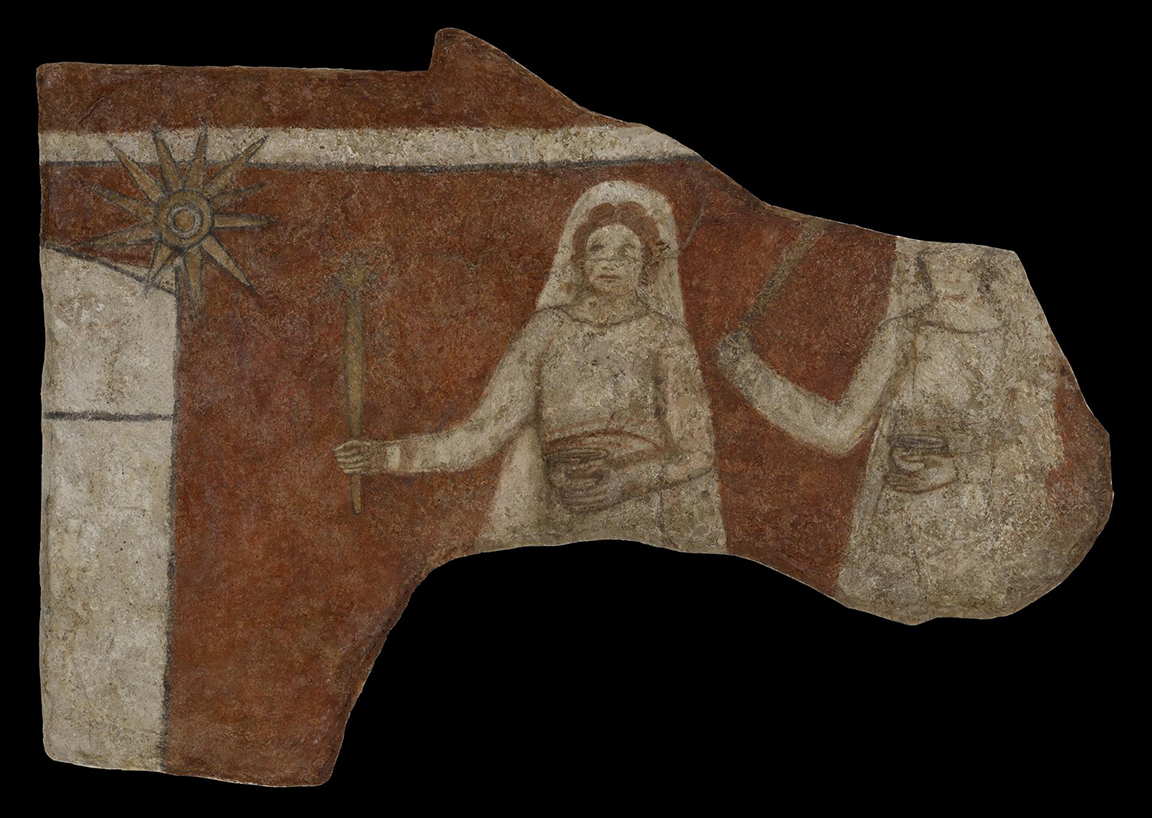
“Baptistry wall painting: Procession of Women,” 240-45 CE, Dura-Europos, Yale University Art Gallery.

Above is one of the first known depictions of Mary Magdalene, found in one of the world’s earliest house-churches in Dura-Europos in modern-day Syria. We (secular historians, biblical scholars and the rest of us) don’t know much about Mary Magdalene nor much about the early history of Christianity or Jesus. There is no written history from the early days. Biblical scholars and historians think MM was a real historical figure (as was Jesus) living in Galilee in ancient Judea in the first part of the millennium, when Judea was under Roman occupation. The New Testament gospels—Matthew, Mark, Luke and John—mention Mary Magdalene more than any of the other women who followed and surrounded Jesus. She is said to have been present at Jesus’s crucifixion (notice her in red in Masaccio’s painting below with the Virgin Mary on the right and St. John on the left). Magdalene is said to have witnessed his burial and was perhaps one of the first to have witnessed his resurrection. The canonical gospels were probably written in the first hundred years after Christ’s death and were most likely rewritten again and again, so their historical accuracy has been disputed over the centuries.

“Crucifixion,” Masaccio, 1426, Capodimonte Museum.

We don’t really know what the name Mary Magdalene signifies. There were many Marys (Miriam in ancient Hebrew) surrounding Jesus in the gospels and in real life during this period. The term “magdala” means tower; it was also the name of a fishing village located on the west side of the Sea of Galilee, where Jesus was teaching. Mary Magdalene was not associated with any man—neither a father nor a husband (which almost all women were in the patriarchal society of the time). One of the gospels tell us that Jesus cast “seven demons” out of her. Jesus was known as a healer, an exorcist of sorts. This idea of MM’s “demons” has been used over time to portray her as a former prostitute or adulterous woman. However, these kinds of healings were supposedly practiced by Jesus as a form of psychological and physical healing. It is said that Mary Magdalene became a hands-on healer herself as one of Jesus’s disciples. Magdalene was most often pictured with an unguent bottle or jar, representing the oil and herbs used for many things, including healing and caring for the body after death. Mary and the other women who accompanied her to Jesus’s tomb after his burial sought to anoint him with these special herbs and unguents.

“Mary Magdalene as Melancholy,” Artemisia Gentileschi, 1622 -1625, Museo Soumaya, Mexico City.

Above is another painting of Mary Magdalene by Artemisia Gentileschi. It serves as a symbol of melancholy. What was Mary Magdalene healed from? Artemisia (and I) can relate to this feminine/feminist “melancholy” and the expelling of it. In this painting, a downcast Mary Magdalene is draped in loose, beautiful fabrics; her soft, gold-tinged hair (it is always about the hair with MM) falls over her shoulder and winds around her fingers. In the gospels, MM and other women disciples or followers of Jesus, are described as “out of their resources,” implying that these women were in possession of wealth that they shared with Jesus and his followers. MM is often portrayed (especially in the Renaissance and Baroque periods) in beautiful garments with a mirror, a skull and a candle, representing the shedding of vanity, acknowledgement of the transitoriness of life, and the search for spiritual awakening. French Baroque painter George de La Tour (1593 – 1692) painted several series of the Magdalene in deep contemplation with a mirror, a skull and a candle. I particularly love the painting below, which Luís and I have used as an entryway to our work with Mary Magdalene.  You can see our interpretation of George de La Tour’s painting below. The first image on the blog has some of the melancholy expressed in Gentilieschi’s painting.

“The Penitent Magdalene,” George de La Tour, 1640, The Met collection.

Work in progress: “My Mary Magdalene” series, Sherry Wiggins and Luís Filipe Branco, 2024.

What happened to Mary Magdalene after Jesus’s crucifixion (and resurrection) is unclear. She was called “the apostle to the apostles,” which means that she was charged with spreading the “word” of Jesus, as were the other apostles (there were no written texts by Jesus). This might also signify that MM had experienced and understood some deeper teachings from Jesus. The term “apostle” means disciple and follower; it also signifies a duty as an evangelist or proselytizer to spread the word. Many stories detail the Magdalene leaving Judea and going to Ephesus, to Rome, and to France (there is a very detailed story/myth (held deeply by many) about MM going to France). She performed miracles, taught and later lived in a cave and meditated for many years. Her “relics” are worshipped all over the Mediterranean and beyond. She is worshipped and sanctified in many Eastern and Western Christian traditions. Perhaps she did get in a boat and teach and practice after Jesus’s death. Most secular historians hypothesize that she stayed in Galilee, where she taught and preached. These early years were dangerous times for Christians, and I imagine they were even more dangerous for a female spiritual teacher.

The erroneous or unfounded idea that Mary Magdalene was a reformed prostitute or an adulterous woman before meeting and being healed by Jesus was introduced into church doctrine in 591 by Pope Gregory. He conflated many of the women named Mary and unnamed women from the gospels. This idea held for hundreds of years, and Mary Magdalene became a figure and a symbol of penitence from then onward to saintliness.

Innumerable paintings of the repentant Magdalene emerge during the Renaissance, and usually involve her boobs as well as lots of hair. She is often cast in nature, or in the mythical cave that she was said to dwell in in France, according to one of the many stories/inventions of MM. The Italian Renaissance painter Titian (1488 – 1576) created several paintings of the penitent Magdalene during his lifetime, the first one, in 1531, with a lot of hair barely covering her breasts. The last one, in 1560, included less hair and partially covered breasts. An unguent bottle appears in the lower left corner of both paintings. The skull appears only in the later painting.

“Penitent Magdalene,” Titian, 1531. Palazzo Pitti collection, Firenze.

“Penitent Magdalene,” Titian, 1560. Hermitage Museum collection, St. Petersburg.

The Renaissance produced many images of Mary Magdalene with her breasts revealed (got to love the Renaissance). The painting below verges on campy porn. It was perhaps painted by Giampietrino (1495 – 1549), who was a student of Leonardo da Vinci’s, though some think this painting is by Leonardo himself.

“Mary Magdalene,” Giampietrino, 1515, private collection.

And I love the image below by French Baroque artist Simon Vouet (1590 – 1659) of Mary Magdalene carried by angels.

“Mary Magdalene Carried by Angels,” Simon Vouet, Musée des Beaux Arts, Besancon France.

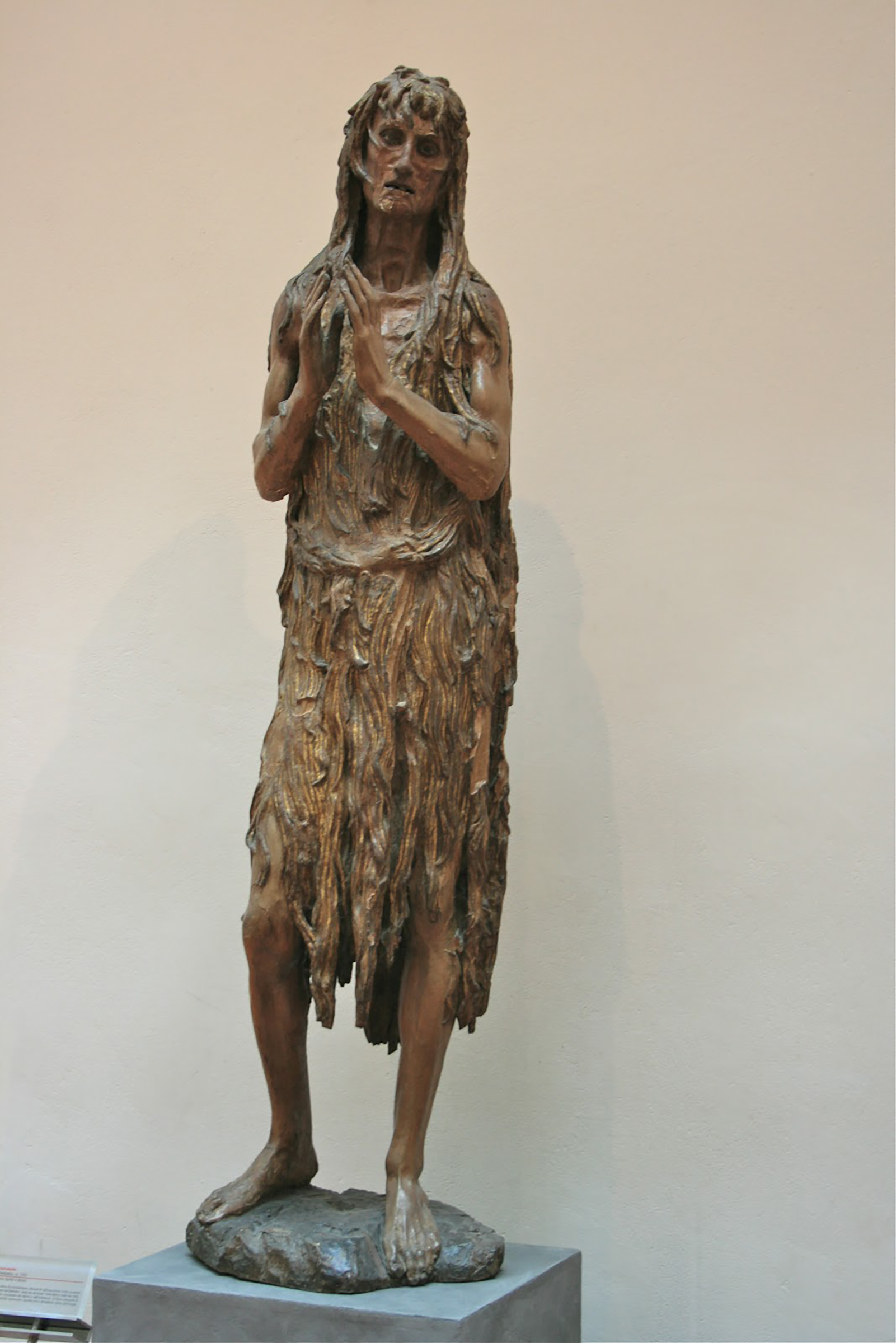
I am not clear on when Mary Magdalene was declared a saint (or how this works ?). During the medieval period she was a big deal and her iconic images from this time are many and beautiful. We also see the “hairy Mary” images, where Mary Magdalene is conflated with the “Mary from Egypt” who was also a supposed repentant sinner who went into the desert and lived in a hair garment or a coat of her own hair. Notice the bottle of unguent in the images, the halo, the hair coat, the life stories of Mary Magdalene, Donatello’s magnificent wooden sculpture and finally Lady Gaga as Mary Magdalene. So many Marys …

“Saint Mary Magdalene,” Paolo Veneziano, c. 1325 – 30.

“Maddalena penitente e otto storie della sua vita, Maestro della Maddalena, c. 1280 – 85, Galleria dell’Accademia, Firenze.

Penitent Magdalene,” Donatello, c. 1440, Museo dell Opera del Duomo, Firenze.

“Lady Gaga’s Mary Magdalene,” I am not sure where I found this image, but I love it.

A few of my recommended sources:

“Mary Magdalene: A Visual History,” Apostolos-Cappadona, Diane, 2023, Bloomsbury Academic, London.

“Mary Magdalene: Truth and Myth,” Haskins, Susan, (new edition 2007), Random House, UK.

I will be working over the next two and a half weeks in Portugal on both my heroines Mary Magdalene and the goddess Circe with photographer Luís Branco. I wrote about Circe on my previous blog post.

A Defense of Circe – posted February 9, 2024

“Circe,” Franz Stuck, oil on wood, 1913, Alt Nationalgalerie, Berlin.

The painting above pictures the Greek goddess Circe, who we know from Homer’s The Odyssey and other texts, as a mesmerizing temptress offering a golden goblet of her drugged wine (which purportedly turns men to pigs). In March, I will be embodying the ancient Greek goddess Circe, my most recent heroine, in performative photographs with my collaborator Luís Branco. And so, I am contemplating (obsessing over) the enchantress and how she has been portrayed throughout the ages.

Circe and Ulysses,” Francesco Maffei, oil on canvas, c. 1650, Gallerie dell’Accademia, Venice.

In my circuitous investigations into Circe I stumbled upon this painting of Circe and Ulysses / Odysseus by Italian baroque painter Francesco Maffei. Here is the whole thing: Circe meets Odysseus and sparks fly. Maffei’s painting is a hallucinatory revelation; the figures are distorted; we can’t really discern what’s happening. We know that Circe offers Odysseus the drugged wine that has the power to change humans into wild animals. However, it’s as if the figures of Circe and Odysseus are merging, their bodily boundaries melding. The mercurial god Hermes (shown in the background) has warned Odysseus and offered him an antidote to Circe’s potion. To Circe’s surprise, her spell is thwarted. What might have been a zone of terrifying transformation for Odysseus transforms into the best foreplay ever. Circe has met her match in trickery and falls in love.

Who is this goddess who alters men? How is it that she has captured the imagination of singers, writers, and artists throughout the ages? How do Circe and Odysseus solve the puzzle of loving and letting go?

The goddess Circe and one of Odysseus’ half-way transformed men, Athenian pelike, c. 5th century BCE, Staatliche Kunstsammlungen, Dresden

.

The ancient Greek vase above depicts the well-known scene from Homer’s The Odyssey, where Circe transform half of Odysseus’ men into pigs. Like Odysseus and his men, I have fallen under Circe’s spell, as I have been searching for her and researching her.

Circe first emerges (in written words that we know of) in Homer’s The Odyssey, which was compiled around 800 BCE. Homer’s Circe was more than likely a compilation of other ancient primordial goddesses of the near and far east; it is fascinating to examine the associations of Circe with earlier matriarchal goddess figures and their iconography, particularly in relationship with the animal world. First, her name, Circe, or Kirke in ancient Greek, is the feminine form of Kirkos, which means falcon or hawk.

According to Judith Yarnell:

Long before Homer imagined Circe, birds have been associated with the divine. According to Marija Gimbutas, birds appear in the prehistoric art of Europe and Asia Minor as the “main epiphany of the Goddess as Giver-of-all, including life and death, happiness and wealth.”

– from Transformations of Circe, Judith Yarnell

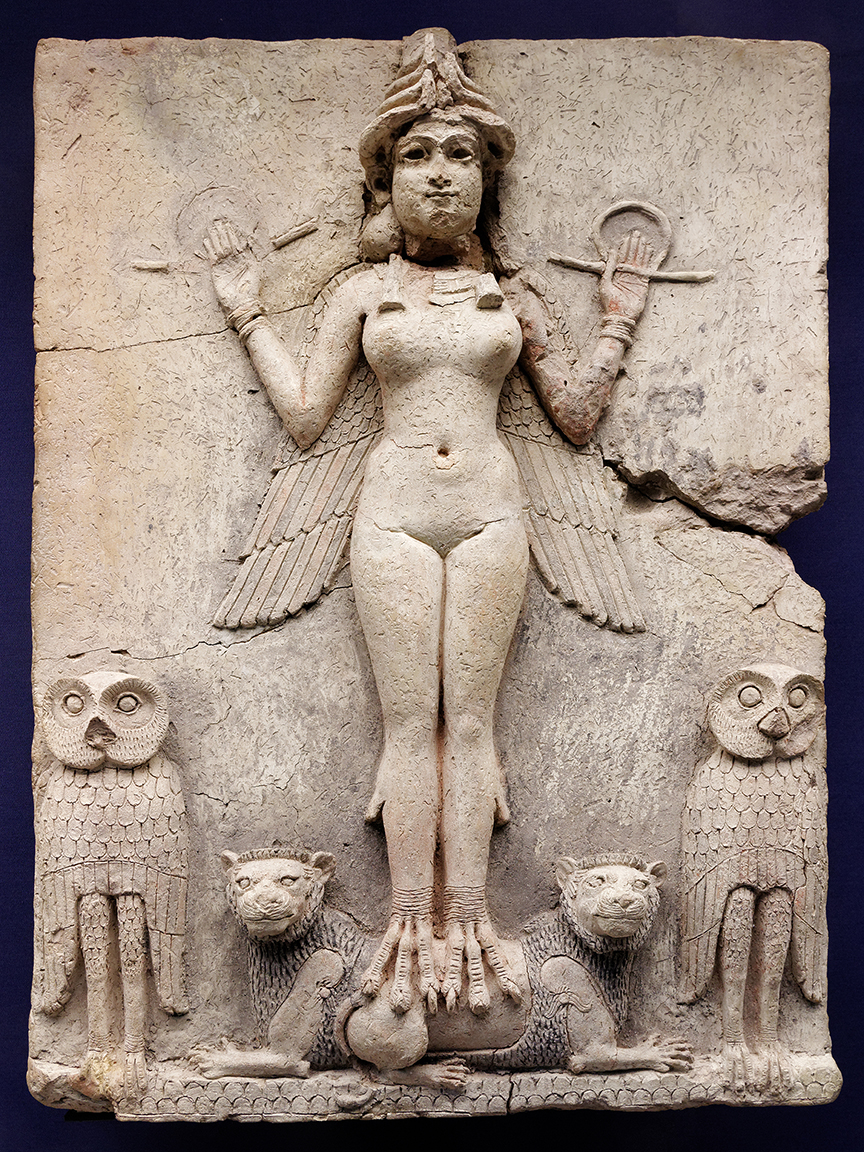
The Burney Relief, sometimes called Queen of the Night, c. 19th – 18th century BCE, Babylonia.

The ancient sculpture above, known as the Burney Relief, shows a beautiful, winged goddess (possibly representing the Mesopotamian goddesses Ishtar or Ereshkigal) with her taloned feet resting upon two small lions and flanked by larger owls. Perhaps this goddess prefigures Circe, as perhaps does Isis, the winged goddess of ancient Egypt, who is also associated with a bird of prey, the kite. Circe is not depicted with wings, but her connection to the animal world is apparent across time. Many stories and images exist that depict her wolves and lions, tamed companions, as well as other tamed (and sometimes drugged) wild creatures. Circe’s power to transform human beings into swine and other animals is another major aspect of her mythos.

Kylix (wine cup) depicting Circe giving an antidote to Odysseus’ men, Greek, Archaic Period, c. 560 – 550 BCE.

The sixteenth-century fresco below, by Allesandro Allori, illustrates a part of the Circe story found in The Odyssey and subsequent texts. The goddess is seated on a rocky bench in the foreground, looking contemplative and a little melancholic. She rests her face in the palm of her hand, her book of spells at her side. She calmly points her magic wand toward a wolf and a lion, both seated before her. A second lion peers out from beneath Circe’s bench. Both lions gaze outward, appearing almost human. In the middle ground, the naked god Hermes (identified by his winged helmet) offers Odysseus the special herb that will protect him from Circe’s spells. Odysseus’ men move chaotically in the background, presumably fearing the goddess’s special powers. Their ship rests moored in the pale distance.

“Circe and Odysseus,” Allesandro Alloriand collaborators, fresco, c. 1575 – 1576, Palazzo Salviati, Florence.

I have been reading Emily Wilson’s 2018 translation of The Odyssey. Wilson is the first woman to translate Homer’s epic into English. Circe emerges in Book 10 as a key figure in Odysseus’ long, perilous journey home to Ithaca following the Trojan war. Homer portrays Circe as a powerful and resourceful goddess, and I find her relationship with Odysseus strangely modern, verging on feminist, especially for a three-thousand-year-old text.

Below, I present images and paintings that best evoke Circe’s story along with quotations from Wilson’s translation of The Odyssey.

In Book 10: The Winds and the Witch, Odysseus recounts how he and his men first arrive at Circe’s island:

We reached Aeaea,

home of the beautiful, dreadful goddess Circe,

who speaks in human languages—the sister

of Aeetes whose mind is set on ruin.

Those two are children of the Sun who shines

on mortals, and of Perse, child of Ocean.

(10.135–140)

Odysseus and his men arrive at Aeaea exhausted and in despair (after their many misadventures). At first, they are unaware that they have landed on Circe’s island. They spend a couple of days recuperating on the shore. Odysseus, when exploring the island on his own, sees smoke rising from the forest above. After drawing lots, he sends half of the crew off to explore the island, and he stays with the other men near their ship. The men soon discover Circe’s house:

Inside the glade they found the house of Circe

built out of polished stones, on high foundations.

Round it were mountain wolves and lions, which

she tamed with drugs. They did not rush on them,

but gathered around them in a friendly way,

their long tails wagging, as dogs nuzzle round

their master when he comes back home from dinner

with treats for them. Just so those sharp-clawed wolves

and lions, mighty beasts, came snuggling up.

The men were terrified.

(10.210–219)

“Circe,” Wright Barker, oil painting, c. 1889, Bradford Museums and Galleries, West Yorkshire.

Odysseus’ men shout out to Circe:

She came at once,

opened the shining doors, and asked them in.

So thinking nothing of it, in they went.

Eurylochus alone remained outside,

suspecting trickery. She led them in,

sat them on chairs, and blended them a potion

of barley, cheese, and golden honey, mixed

with Pramnian wine. She added potent drugs

to make them totally forget their home.

They took and drank the mixture. Then she struck them,

using her magic wand, and penned them in

the pigsty.

(10.229–240)

“Circe Changing Ulysses’ Men to Swine, (Ulyssis soci a Circe in porcos), from Ovid’s ‘Metamorphosis,’” Antonio Tempesta, etching, 1606, Rome.

After Eurylochus watches his fellow men turned to swine, he returns to the ship, overwhelmed with grief. He tells Odysseus of the plight of his men, and, against Eurylochus’s tearful pleading, Odysseus sets off alone to Circe’s palace. Along the way, the mercurial god Hermes (one of my favorite Greek gods) comes to his aid. Hermes gives Odysseus an herbal antidote to Circe’s poisoned wine and tells Odysseus what he must do to trick Circe and free his men. Hermes instructs Odysseus to sleep with Circe (after all, you cannot deny a goddess) but to first draw his sword and demand an oath from Circe to free his men and cause no further harm. Odysseus follows Hermes’ instructions

“Circe Offering the Cup to Ulysses,” John William Waterhouse, oil painting, 1891, Gallery Oldham, England.

Circe is surprised when the magic wine does not change Odysseus; she is also intrigued. She says to Odysseus:

Who are you?

Where is your city? And who are your parents?

I am amazed that you could drink my potion

and yet not be bewitched. No other man

has drunk it and withstood the magic charm.

But you are different. Your mind is not

enchanted. You must be Odysseus,

the man who can adapt to anything.

Bright flashing Hermes of the golden wand

has often told me that you would sail here

from Troy in your swift ship. Now sheathe your sword

and come to bed with me. Through making love

we may begin to trust each other more.

(10.325–336)

Odysseus agrees to sleep with her, but demands she first fulfill her oath. Circe complies, promptly reversing the spell, changing Odysseus’ men from pigs back into human men, only taller, younger, and more handsome.

Circe Restores Human Form to Odysseus’ Companions,” Giovanni Battista Trotti, fresco, c. 1610, Palazzo ducale del Giardino, Parma.

The men return to Circe’s hall unsettled and sobbing. Circe says to Odysseus:

“King,

clever Odysseus, Laertes’ son,

now stop encouraging this lamentation.

I know you and your men have suffered greatly,

out on the fish-filled sea, and on dry land

from hostile men. But it is time to eat

and drink some wine. You must get back the drive

you had when you set out from Ithaca.

You are worn down and brokenhearted, always

dwelling on pain and wandering. You never

feel joy at heart. You have endured too much.”

(10.455–465)

And so the “beautiful, dreadful goddess” becomes a compassionate and generous lover of Odysseus and host to him and his men. They stay with Circe for a year, and they are content. Odysseus relays:

We did as she had said. Then every day

for a whole year we feasted there on meat

and sweet strong wine.

(10.466–469)

“Circe enticing Ulysses,” Angelica Kauffmann, oil on canvas, 1786.

“Circe Preparing a Banquet for Ulysses,” Ludovico Pozzoserrato, 1605.

Homer does not describe this year-long hiatus on Circe’s island in detail. I managed to find another imagining of it, though, in Katherine Anne Porter’s beautiful, limited-edition book, A Defense of Circe, which was published in 1954. Porter expands upon this part of Circe’s story, adding details not found in The Odyssey:

The transformed warriors and the whole company, joined by still reluctant Eurylochus, stayed on cheerfully for a year as the guests of Circe. Odysseus shared her beautiful bed, in gentleness and candor, with that meeting in love and sleep and trust she had promised him.

– from A Defense of Circe, Katherine Anne Porter

After Odysseus and his crew’s year on her island, Odysseus asks Circe for help getting home to Ithaca. Circe gives Odysseus very specific guidance, instructing him to travel to Hades for advice from the blind prophet Tiresias. She later advises Odysseus on avoiding the dangers of the Sirens and the monster Scylla. Circe empowers Odysseus to make his way home alive (though, spoiler alert, he loses all his men on the journey).

The beauty of the story of Circe and her relationship with Odysseus, in my twenty-first-century mind, is that there is no diminishment of Circe’s power, wisdom, or independence. She and Odysseus become friends, lovers, and equals; she supports him and his men, and, when it is time, she lets him go.

The Sorceress, John William Waterhouse, oil on canvas, c. 1911 – 1915.

In this final painting, “The Sorceress,” by English artist John William Waterhouse, we see our beautiful Circe, once again with her book of magic and her (most likely) poisoned wine spilling out of the golden chalice. She appears pensive and sad, facing her feline companions across the table. Here, I think of Circe after Odysseus and his men have made their final departure from her island. She is an immortal goddess, and so, perhaps, she ponders a long life ahead without her mortal companion and lover, Odysseus, whom she loved more than any god.

I love this description of Circe and her “unique power” in Porter’s work:

She was one of the immortals, a daughter of Helios; on her mother’s side, granddaughter to the Almighty Ancient of Days, Oceanus. Of sunlight and sea water was her divine nature made, and her unique power as a goddess was that she could reveal to men the truth about themselves by showing to each man himself in his true shape according to his inmost nature. For this she was rightly dreaded and feared; her very name was a word of terror.

– from A Defense of Circe, Katherine Anne Porter

The primary sources which I have drawn from in my research and which I highly recommend are:

Homer. The Odyssey. Trans. Emily Wilson. New York, N.Y. : W.W. Norton & Company Inc., 2018.

Miller, Madeline. Circe. New York, N.Y.: Little Brown and Company, 2018.

Porter, Katherine Anne. A Defense of Circe. New York, N.Y.: Harcourt, Brace and Company, 1954.

Yarnell, Judith. Transformations of Circe. Urbana and Chicago, Illinois: University of Illinois Press, 1994.

A World Weary Cleopatra (me) – a Rocky Mountain PBS short video and the show at East Window – posted in Boulder, CO Nov 25, 2023

“Cleopatra at the Café,” (now showing at East Window), Sherry Wiggins and Luís Branco, 2023

It has been great exhibiting Luís Filipe Branco and my work from “The Heroines Project” in multiple shows in Boulder and Denver over the last several months.  Rocky Mountain PBS videographer Lindsey A. Ford came to my studio in Boulder, recently, and we spent time talking about my intentions and process in making this performative work with my heroines such as Eve, Cleopatra, Helen of Troy, Sappho and others. We talked about the series “Cleopatra at the Cafe,” and the two pieces we are currently exhibiting at East Window gallery in Boulder in the group exhibit “Aging Bodies, Myths and Heroines” curated by Todd Edward Herman. The exhibit at East Window is up through February 28th. More of the Cleopatra Series (and the Isis Series) will be showing in a group show at Boulder Museum of Contemporary Art curated by Jane Burke that will be opening at the end of January 2024. Lindsey did a wonderful job of interviewing me and she gives a good glimpse into my practice and studio.

Here is a link to the article on the RMPBS blog, scroll down to watch the video: https://www.rmpbs.org/blogs/rocky-mountain-pbs/sherry-wiggins-boulder-cleopatra/

“ The Death of Cleopatra (for Regnault) ,” (showing at East Window), Sherry Wiggins and Luis Branco, 2023

Me in front of “The Death of Cleopatra (for Regnault),” photo taken by Roddy MacInnes at East Window.

The exhibit at East Window includes the work of 12 artists (including Luís and I):

André Ramos-Woodard, Danielle SeeWalker, Donigan Cumming, James Hosking, Magdalena Wosinska, Marissa Nicole Stewart, Mitchell Squire, Roddy MacIness, Sherry Wiggins & Luís Filipe Branco, Will Wilson and others.

Please come see the show!

AGING BODIES, MYTHS AND HEROINES
at East Window @eastwindow1

November 9th 2023 – February 28th 2024
4550 Broadway Suite C-3B2 Boulder Colorado

Gallery hours are Thursday to Saturday 4:30 to 7:30

East Window Website:
https://eastwindow.org/2023#block-yui_3_17_2_1_1680389554347_35239

In Conversation—Cydney Payton with Sherry Wiggins

The Mirror of Helen, 20 x 30,” 2022

This conversation with curator and writer Cydney Payton took place in relationship to the exhibit On Sappho, Helen and Aphrodite, an exhibition of performative photographs I produced in collaboration with photographer Luís Filipe Branco. The exhibit will be on view at Michael Warren Contemporary in Denver, Colorado October 31st to December 2nd 2023. The opening reception  is November 2nd from 5 to 8pm and an artist talk will take place November 18th from 10:30 to noon.

CP:       Congratulations on your show, On Sappho, Helen and Aphrodite, at Michael Warren Contemporary.

SW:      Thank you. I’m excited to talk with you about it!

CP:       To frame our conversation, you have been engaging with other artists’ images and practices as a modality of self-exploration for more than a decade. You referred to your practice as performative but also as embodying and enacting.

SW:      I am compelled to study the lives and work of women. In doing so, I have found a kind of courage and sense of self-power. That has led me to create an artistic practice that is more performance based.

The women I study become the subjects of various projects and bodies of work. The photographs document my artistic process and the practice itself; the photographs are also the intended result. While I am performing, I envision the poses to be a photographic work. Yes, enactment and embodiment—the terms you mention—are definitely the terms that describe this work.

The beauty of performative art for me has been that my body can exist in different environments. Somehow those environments—sites, places, atmospheres—come to represent the women I am thinking about and making work about. That process is empathic, yet it exists because I have excavated and studied their lives and work. Until recently, most of those women were artists. Now, I am working with a broader representation of historical and feminine voices in creating the Heroines Project.

CP:       You are very process driven in your artistic practice. You make a lot of images.

SW:      The work is created through in-depth research, editing, and post-production of thousands of images. Each image goes through the processes of the performative act, lens and shutter, preproduction on a digital screen/film, printing, and, finally, exhibited object.

But in the end, I am forever an installation artist. Thus, the final narrative of an exhibition arrives because I care about the spatial dynamics between the audience and the art. An exhibition offers a liminal plane where the viewer and the object—the concept and the artist—participate. In the case of On Sappho, Helen and Aphrodite, I hope to create a way of confronting volumes of history largely written by men. 

Sappho’s Crown, 22 x 33,” 2022

CP:       The exhibition insists upon directness of viewership. We cannot look away. We are obligated to make comparisons, historical and contemporary, among these three iconic representations of the feminine. Sappho is the first heroine you bring into view. Her words, from the few remaining papyrus fragments, are sprinkled throughout the installation in excerpts taken from translations by Diane Raynor and poet Anne Carson. These traces of Sappho, which have survived over centuries, to be investigated, translated, and (re)interpreted, anchor the show.

SW:      I investigate women, both fictional and real, such as Sappho. She was a real person; we know that because we have her words. Helen and Aphrodite are mythical and archetypal figures, but for me Sappho has an artist’s voice. As I delved into the translations of her texts, which were originally songs meant to be performed and sung and accompanied by dancers and instrumentation, I found her to be so modern. And her subjectivity feminist and feminine. She is speaking from 2,800 years ago, and, even so, the work resonates with me as being in the present moment.

In Poem #58, which is also called “The Old Age Poem,” Sappho speaks to me as an artist very directly, as she speaks about herself at an older age. In truth, I am inserting myself into the lives and stories of these heroines from my position as a sixty-something-year-old woman.

CP:       Even though your photographs present a type of romanticism in tone and composition, there is a feminist message about love in the work that pervades the exhibition.

SW:      Love means many things. Gender might be implicit, but it is also fluid. Though Aphrodite was not seen as a supporter of lesbianism in the ancient Greek world, maybe because it’s mostly stuff written by men, she should be seen as totally supportive of all forms of love (and sexuality, too). I love this line that Aphrodite speaks to Sappho: “Who, O Sappho, is wronging you? For if she flees, soon she will pursue. If she refuses gifts, rather will she give them. If she does not love, soon she will love, even unwillingly.”

CP:       Beautiful.

SW:      There is this complexity of love, the giving and receiving, the joy and the loss, in the poem. I just love this advice from Aphrodite. And Sappho loves Aphrodite—she’s her main goddess, and she speaks with her a lot.

Aphrodite with Roses I, 30 x 20,” 2022

CP:       The photographs also contain an abundance of symbolism, for example roses in the images of Aphrodite. For Aphrodite, you looked to the Pre-Raphaelite painting Venus Verticordia by Dante Gabriel Rossetti. The painting is of a beautiful young woman with an apple and a dart. In your diptych, Aphrodite with Roses, you present us with an apple and a bouquet of red roses against a figure on a proverbial bed of roses.

Venus Verticordia, 32 x 26,” Dante Gabriel Rossetti, 1864

SW:      I was riffing on Venus Verticordia. I don’t expect the viewer to make that connection, but roses do serve as a backdrop in both the painting and in the diptych. The roses are brought forward to perhaps deliver other meanings. Both Venus and Aphrodite are usually represented as beautiful and sometimes sexy young maidens. Rossetti’s painting sort of morphed into the work in the moments when photographer Luís Branco and I were making these pictures. I had an idea of where I wanted to go. We set up the photo shoot toward that idea. Even so, every photograph has its own performative life, such as it did with creating Aphrodite. The image is obviously me, an older woman, and you see all the wrinkles on my neck and face.

Aphrodite with Roses II, 30 x 20,” 2022

CP:       Your decolletage.

SW:      My decolletage. And my breast is exposed, as Venus’s is in the painting. The work is compressed and cropped, cut off, and presented larger-than-life size. The face and the boob and the arms, the roses, everything operates against a natural sense of scale.

CP:       Rossetti’s version was also the first time that he painted a nude figure. He, too, compressed and zoomed in to create an artificial reality that reads more intimate and sexualized. His other images were more full-bodied and fully clothed. There is a mirror between your image and Rossetti’s image as far as being on the heterosexual edge of desirability; it’s almost camp.  

SW:      After making and producing these photographs, I looked up who Venus Verticordia was in Roman mythology. I discovered that she was a goddess who protected young women and older matrons from their own sexual appetites. This is the opposite of what my Aphrodite and the Greek Aphrodite are all about. I am inserting myself into Rossetti’s view but as this older woman who is sexualized through my autonomy of choice. I’m in a bed of roses as an older woman, not as a subject posed against roses to suggest a social norm of idealized beauty. My Aphrodite is one of generosity. She is for ALL love.

CP:       Is Aphrodite your main goddess?

SW:      I’ve always thought it was Aphrodite. As I learn more and more about her, I do adore her. But she is kind of tricky too. She actually put Helen in a bad position. It was Aphrodite who made a promise to Paris. In the Judgment of Paris Aphrodite tells Paris that if he gives her the golden apple and deems her the most beautiful goddess over Hera and Athena, she will give him the most beautiful woman in the world, Helen of Sparta. That was a little presumptuous, her doing that to Helen!

CP:       Venus Verticordia also means “changes of the heart.” That could be one way of looking at Helen After Troy. The image presents us with a Helen full of regret, after the war, abduction, kidnapping (or elopement) with Paris. We all know about Helen from history, certainly the Odyssey and the Iliad, but you have augmented that reading with something new.

Helen After Troy, 33 x 22,” 2022

SW:      We shot that photograph in March. We were shooting Helen with her gown and crown and jewels in the swimming pool. When I got out of the pool, it was dark and I was cold. We can see how miserable I was. That’s when Luís said, “Just one more shot.” I was like, “You know, Luís, I am fucking cold.” 

Later, when I saw the proofs for the image, I thought, well here’s Helen after Troy. In the ancient story, Helen comes home from Troy with her husband, King Menelaus of Sparta. After the fall of Troy, he had been meaning to kill her when he captured her, but he couldn’t because she was so beautiful (and her breasts!). According to the Odyssey, he brings her home and they have a nice life in the palace in Sparta, entertaining guests with lavish parties.

And, who really believes that? How could she have gone through the torture of the ten-year war in Troy with thousands of Greeks and Trojans dying, purportedly because of her, and just go home and have a nice life in the palace? I thought this is what she really would have looked like. She would look like a drowned rat, a drowned queen. Helen After Troy is one of my favorite images in the show.

CP:       Helen After Troy brings us to an alternative ending of what has been known. You point us there through the meta structure of your work. For example, Sappho’s poems reference both Aphrodite and Helen. And, when we take in the larger view, we can see you enacting Sappho, Helen, and Aphrodite in the context of the twentieth-century artist/performer Claude Cahun. How has Claude Cahun influenced this body of work?

SW:      As you know, from the artist’s book THE UNKNOWN HEROINE that you and I worked on, Claude Cahun is the artist who has been influencing my work for a while now. Cahun was incredibly well educated. Her grandmother taught her ancient Greek, so she understood the breadth of history and classical literature. She was both a performance artist and an imagemaker who used herself in her photographs. Helen and Sappho came to me originally from Cahun, from her Heroines text, where she writes about fifteen women, mythical, real and fictional. She portrays Sappho in her short essay, written to be performed as a monologue, as Sappho the Misunderstood. And Helen is Helen the Rebel.

CP:       Your photograph Sappho the Misunderstood is a parallel of Helen After Troy. Both figures step out of the darkness; neither is idealized. Even with the theatrical lighting, we can penetrate the deeper questions about Helen and Sappho. With Sappho, we sense all that ambiguity around her identity and life. 

SW:      Sappho is misunderstood on all these levels—her sexual preferences, whether she loves men, whether she loves women, whether she loves both. These are things that have been discussed throughout the ages. And then all the mythology of her jumping off the Leucadian cliff. Sapphic lore tells us that later in life, she was in love with Phaon, a young ferryman, who ditched her for a younger woman. Supposedly, she was so upset she jumped off the Leucadian cliff.

CP:       You disagree with this?

SW:      Sappho would not be undone by Phaon’s betrayal. She was way too conversant with the fickle ways of love.

Sappho the Misunderstood, 33 x 22,” 2022

CP:       The photograph suggests a defiance, as if she’s looking back at us across the ages. It is a tantalizing expression of a mystery that will never be solved.

SW:      Yeah, I like that image a lot, too.

CP:       Maybe this is the moment to ask: How does your feminist perspective inform your collaboration with Luís Branco as far as process and vision?

SW:      When Luís and I work together, it’s like making a film. Beforehand, part of the research might be reading Sappho’s work, reading what historians and critics have thought about Sappho’s work, and studying paintings that have been made of Sappho through the ages. I also bring props, makeup, and outfits. We find sites, sometimes we create a staged setting. For Sappho, Helen and Aphrodite we worked outdoors in different locations in Holland and in Portugal.

It takes me a while to get into character. Part of the process becomes interacting in different spaces at different times—early morning, day, and night. What happens emerges from the connection to the site, the materials, the research, and the collaboration. In the process I do not camouflage my sixty-something-year-old persona. I attempt to embody these female icons from the truth of my body. Luís is very good at pushing me into character. We do literally take hundreds and hundreds of images to find those that are just right.

CP:       There are many artists who are working with identity, such as Cindy Sherman, who take their own pictures. You know how to take pictures. What does Luís’s perspective bring to the work that you couldn’t do on your own?

SW:      Our interaction, the collaboration, we call it a push-pull. He is, in essence, the viewer. People have asked why I don’t work with a female photographer. The fact that he is a man creates a kind of friction. Sometimes friction, sometimes seduction, that goes back and forth. For example, with the making of Helen After Troy, he saw what was possible.

CP:       He brings an objectivity to the moment that you could not.

You describe it as cinematic or filmic, which sits within the language of moviemaking. Is that a more important language for you now than the language of performance? Have you crossed over from thinking about visual art into thinking more about the cinematic nature of visual art?

SW:      I’m not trained as a performer—that’s something that’s just happened through this process, happened more and more. Taking on these big-time heroines, I must rise to be Aphrodite, to be Helen of Troy. I would say, there is this cinematic quality to the images because they are photographs. On Instagram these images operate in the public melee of social media. But when I exhibit them in a gallery, the physicality of the images allows people to really respond. The response is not just older women saying, “Wow, this is really cool!” Younger women, older men, queer people, respond. Everybody has a mother or a sister or a lover or whatever. I’m your everyday girl, but …

CP:       There is a kind of surrogacy in the visual plane that you can step into.

SW:      People see me not just as Helen but as me, the sixty-eight-year-old artist-performer woman who is not afraid to be seen.  

Helen’s Eidolon, 30 x 20,” 2022

The exhibit On Sappho, Helen and Aphrodite will be on view October 31st to December 2nd 2023 at Michael Warren Contemporary in Denver, Colorado. https://www.michaelwarrencontemporary.com/

The opening reception is Thursday November 2nd from 5 to 8pm and the artist talk will be Saturday November 18th from 10:30am to noon. There is a concurrent exhibition of Ann Marie Auricchio’s work. Gallery hours are Tuesday to Saturday 11am to 5pm.

Video about EXIT PARADISE –  an exhibition of the artwork of Sherry Wiggins and Luís Filipe Branco

Salome at Sunset Series, still photograph, Sherry Wiggins and Luís Filipe Branco

I am posting the video here that documents my collaborative work with Portuguese photographer Luís Filipe Branco that was in the exhibition Exit Paradise held at Seidel City Contemporary Art Gallery in Boulder, Colorado during Month of Photography in March and April 2023. It was a wonderful exhibit and I was so happy to exhibit Luís and my work alongside the work of fabulous photographers Mark Sink and Kristen Hatgi Sink. Ron Landucci of Infinite Editions produced beautiful prints for us. Terry Seidel was a great host and Seidel City is a fantastic contemporary art space. In this video I explain my intentions and sources for this work about my biblical heroines Eve, Judith (who took the head of Holofernes) and Salome and we also show the works themselves along with installation shots in the galleries. Videographer Robert Kittilä shot and edited this short video for me.

Here is the link to our video on You Tube:

It was so much fun to work with my friend Robert Kittilä to make this video and I am glad to have this document. I have had a difficult summer with some physical problems that I am slowly recovering from. Meanwhile I have been editing and producing more of Luís and my Heroines work and I am looking forward to upcoming exhibits of our work: with a show at Michael Warren Contemporary in Denver opening November 2nd titled “On Sappho, Helen and Aphrodite,” a group show at East Window Gallery in Boulder titled “Aging Bodies, Myths and Heroines” curated by Todd Herman opening November 10th, and another group show that will be opening at BMoCA in January curated by Jane Burke. Hugs to all near and far.