
Claude Cahun Series (mask), black-and-white digital image, Sherry Wiggins and Luís Branco, 2022.
Luís Branco and I shot the above image in a strange and beautiful hotel in Amsterdam in 2022, referencing French artist Claude Cahun’s 1928 masked image below.
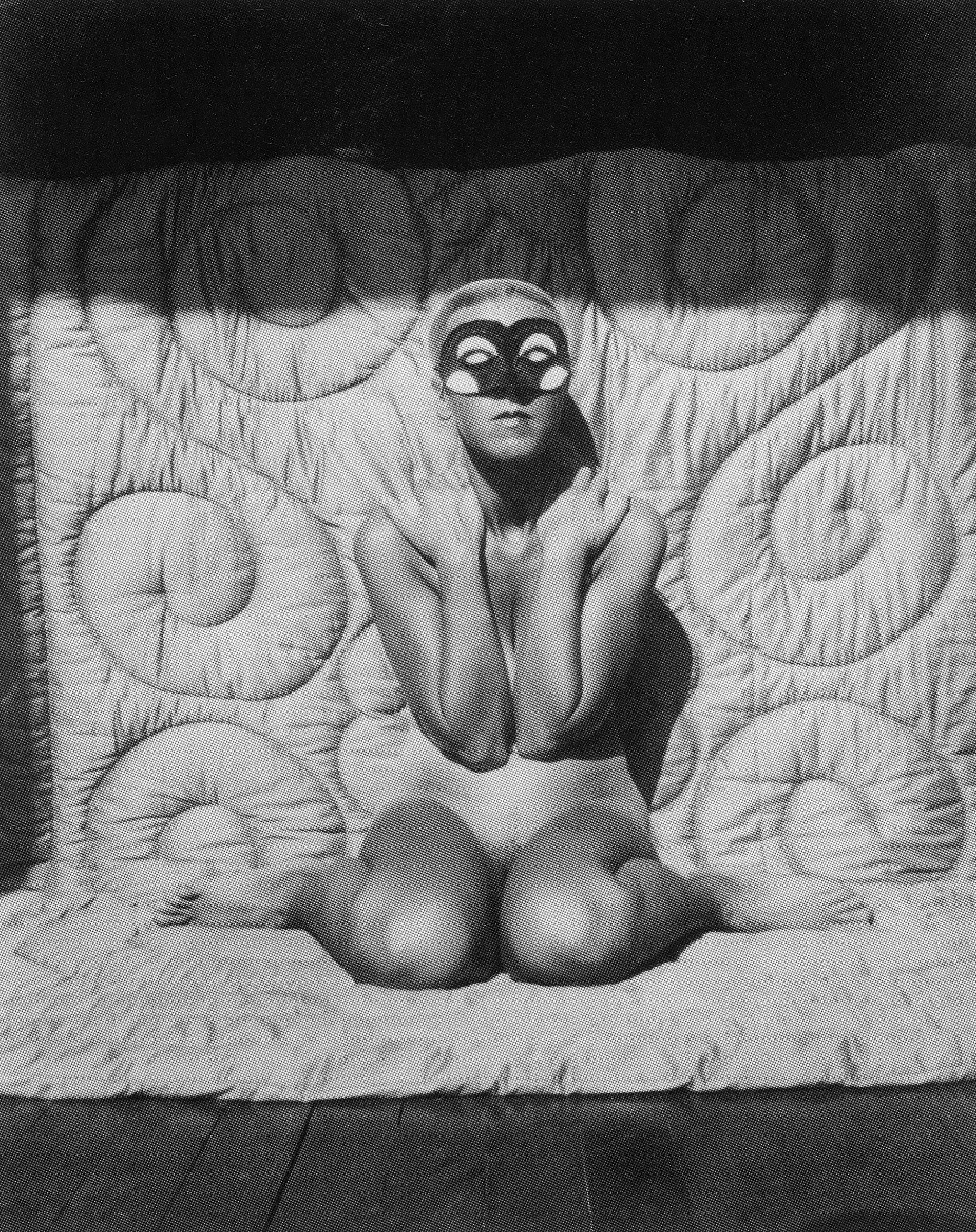
Untitled, black-and-white photograph, Claude Cahun (with Marcel Moore), 1928.
I love this image of Cahun, taken by her partner Marcel Moore. Cahun is masked and naked, her gender identity obscured and conflated by the covering of her breasts and her closely cropped hair. Cahun, born Lucy Mathilde Schwob, refused and resisted a prescribed female identity from a young age, as did Moore, who was born Suzanne Malherbe. Despite her gender nonconformity, I will not refer to Cahun (or Moore) as “they” or “them,” as these gender terms were not in use during their lifetime. Cahun had her own take on gender, saying,
“Shuffle the cards. Masculine? Feminine? It depends on the situation. Neuter is the only gender that always suits me.”
– Claude Cahun, Disavowels, trans. Susan de Muth (Cambridge: MIT Press, 2007), 151. From Claude Cahun’s Aveux non Avenus, 1930.
In early February, I will begin a residency at La Napoule Art Foundation in southern France with Luís Branco. There, we will make new performative photographs in direct conversation with Claude Cahun’s portraits and photographs. This residency will offer me further opportunity for some serious play with this complex artist (and lots of costumes and in France to boot!). We are excited to work in the historic Château de la Napoule and the gardens and grounds of the La Napoule Art Foundation on the Côte d’Azur. American sculptor Henry Clew and his wife Marie bought this historic property in 1918 and actively redesigned and restored the château and gardens in the 1920s and 30s. They welcomed other American expatriates and European aristocrats into their home for lavish parties and cultural events. This is the same period of time when Claude Cahun and her partner Marcel Moore were active in the vibrant cultural life of Paris. In 1951 Marie Clew established the property as the La Napoule Art Foundation. The foundation welcomes artists from around the world for artist residencies, exhibitions and other cultural events.
Claude Cahun (1894 – 1954) has been my main muse over the last several years. Cahun’s remarkable self-portraits, with Marcel Moore (1892 – 1972) behind the camera, confirm her courage in exploring the fluidity of identity and gender. These images reveal Cahun in flux—as masculine and feminine, masked and masquerading. The images depict Cahun as a body builder, a buddha, a dandy, a she-devil and in other guises and manifestations.
Cahun and Moore’s collection includes photographs in ordinary settings: in their hometown in Nantes France; in glimpses of their life together in Paris in the twenties; and on Jersey (one of the Channel Islands located between England and France) where they lived before, during and after World War II. Postwar photographs of Cahun demonstrate the toll the war, the occupation of Jersey and her time in jail took on her health. Cahun and Moore both served time for their anti-Nazi activities during World War II. Cahun died in Jersey in 1954. Moore died in 1972.
Cahun and Moore’s photographs have been widely published, exhibited and heralded over the last thirty years. However, it is interesting to me that for Claude and Marcel, this was a private photographic practice. They exhibited very few of their photographs, though they did create remarkable photomontages together with many of these images for Cahun’s seminal 1930s surrealist monograph Aveux non Avenues, which has been translated and published in English as Disavowals.
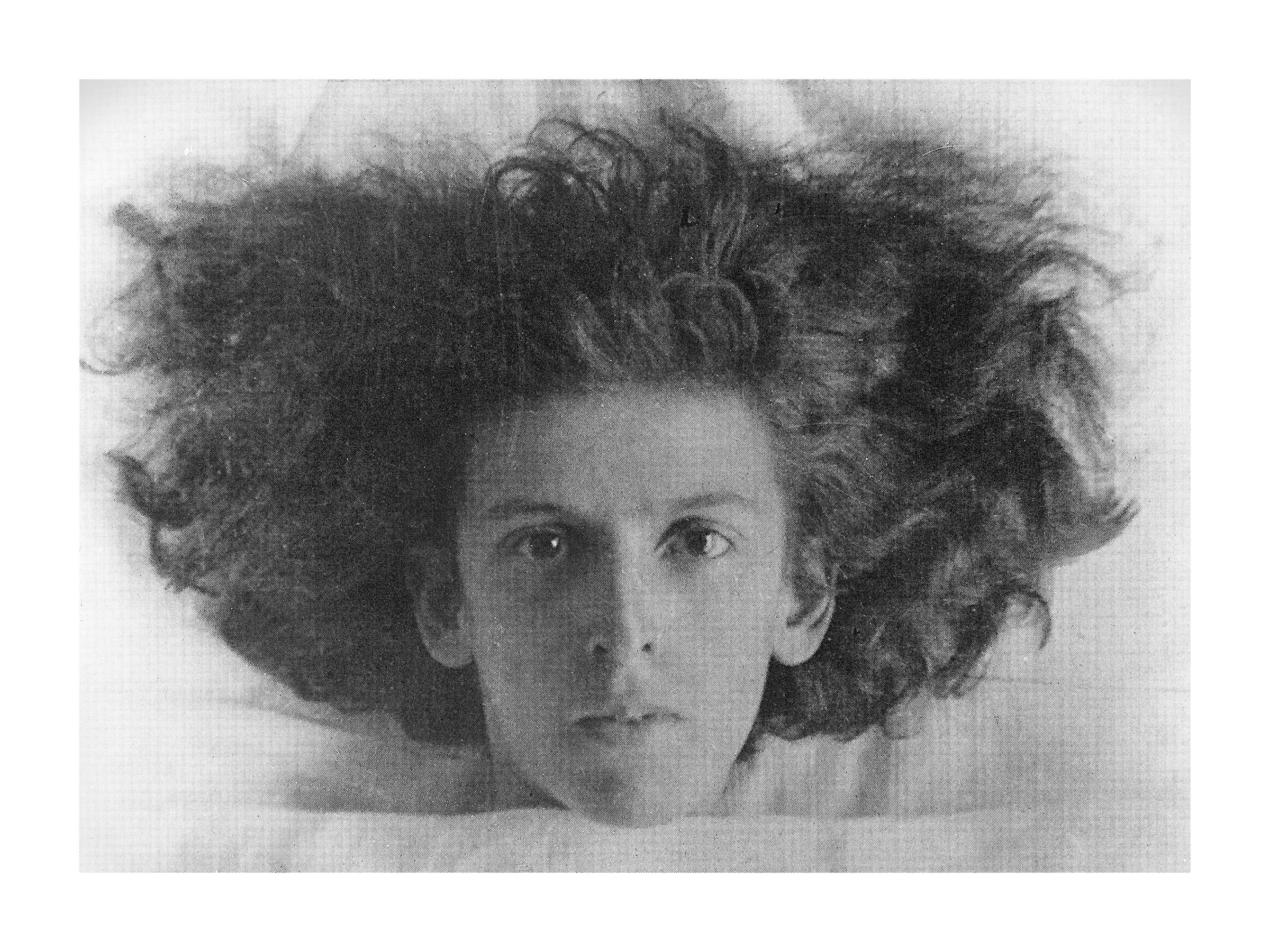
Untitled, black-and-white photograph, Claude Cahun (with Marcel Moore), 1914.
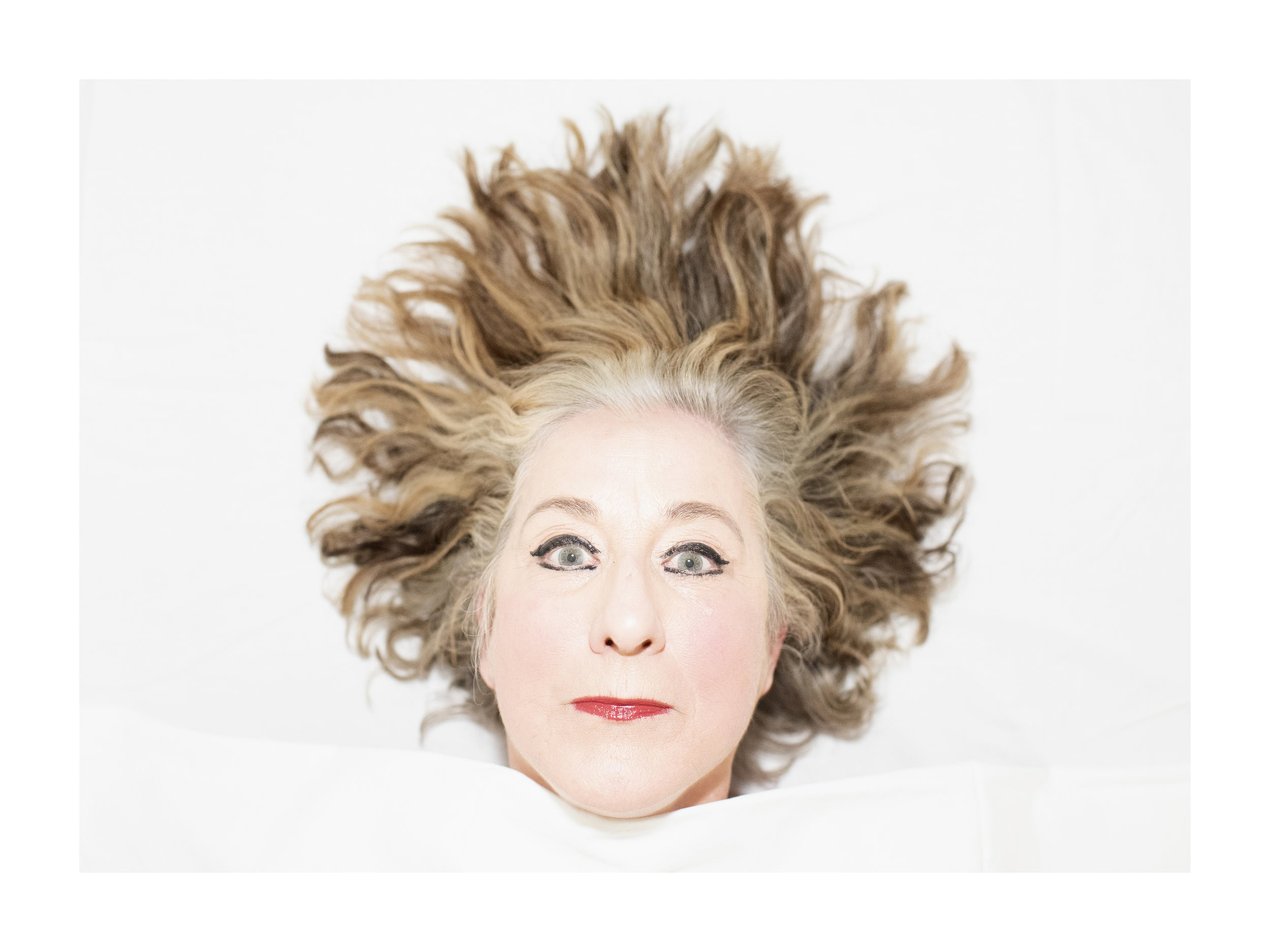
My Claude / My Medusa, color digital image, Sherry Wiggins and Luís Branco, 2019.
Luís Branco and I shot the above image in the Netherlands at Foundation OBRAS. We were referencing the above black-and-white portrait of Claude Cahun. Here, Cahun rests her head on a pillow, her hair billowing out around her face; she gazes, wide-eyed, directly toward the camera. The image was undoubtedly made in collaboration with Moore when Cahun was eighteen years old.
I was sixty-four when Luís and I reenacted this photograph more than 100 years later. As I lay on the pillow and performed for the camera, I pondered my life alongside Cahun’s—my teens and her teens, my twenties and her twenties, and onward into our thirties, forties, and fifties. Cahun died at the age of sixty. My performative practice with Luís Branco is both serious and playful, kindred to Cahun’s lifelong photographic practice with Marcel Moore. A transmutation occurs between my and Luís’s work and Marcel and Claude’s work. My reaction when I saw our images was, “Oh, my god, I look like Medusa!”
Under Cahun’s influence, I am compelled to delve into the ambiguities of my own identity, to explore definitions of gender and to examine the tropes of selfhood I inhabit. What is masculine and what is feminine? Are gender and sexuality performative? What lurks behind the masks we wear? Below are several of my favorite images of Cahun’s (and Moore’s). These images produced over Cahun’s lifetime and many more will serve as inspirations for my own embodiments and performative photographs.
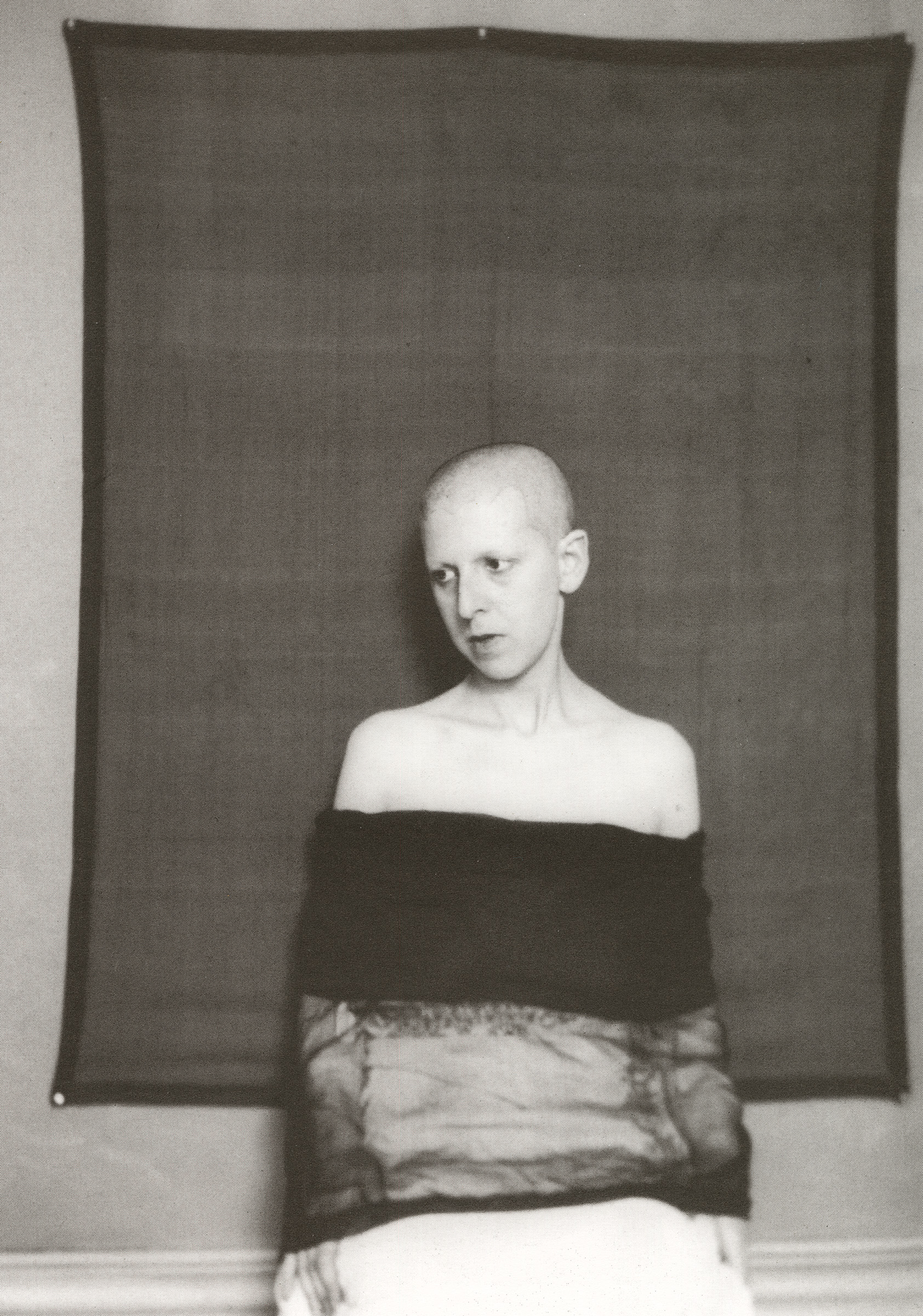
Untitled, black-and-white photograph, Claude Cahun (with Marcel Moore), 1921.

Untitled, black-and-white photograph, Claude Cahun (with Marcel Moore), 1921.

Untitled, black-and-white photograph, Claude Cahun (with Marcel Moore), 1927.
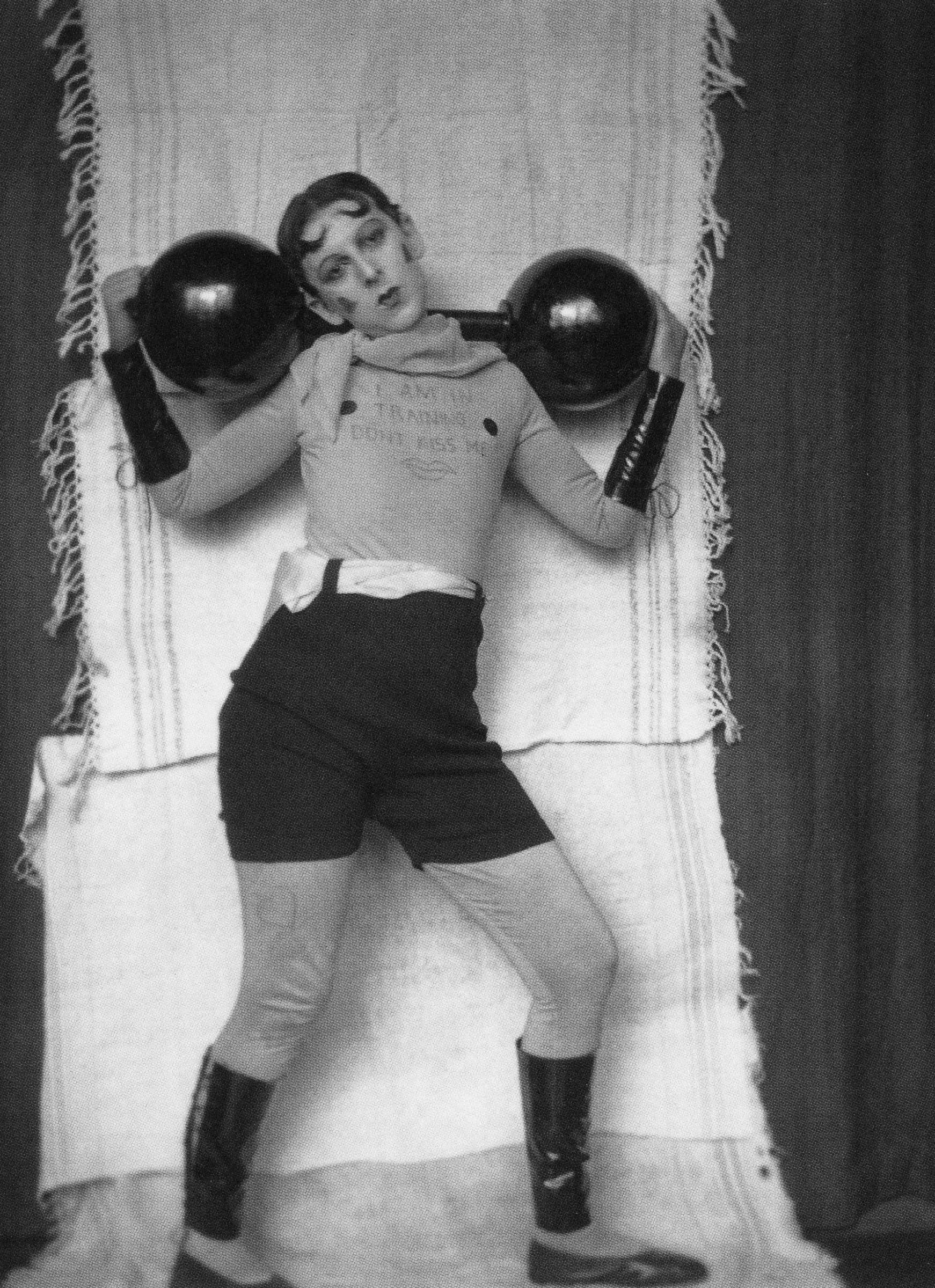
Untitled, black-and-white photograph, Claude Cahun (with Marcel Moore), 1927.
Cahun’s images as a body builder are some of my favorites. Assemblage artist Jensina Endreson (check out her fabulous work at https://www.bustleworshipdesigns.com/ ) has been helping me with my body-builder costume, complete with a T-shirt like Cahun’s, embroidered with the text, “I’m in training. Don’t kiss me.”

Untitled, black-and-white photograph, Claude Cahun, 1927.
Cahun and Moore were associated with several avant-garde theater groups in Paris in the twenties. The image of Cahun as the Buddha is thought to document her involvement with the theater group Les Amis des Arts Esoteriques. Luís and I reincarnated this Buddha image in Holland in 2022 and some curious images emerged.
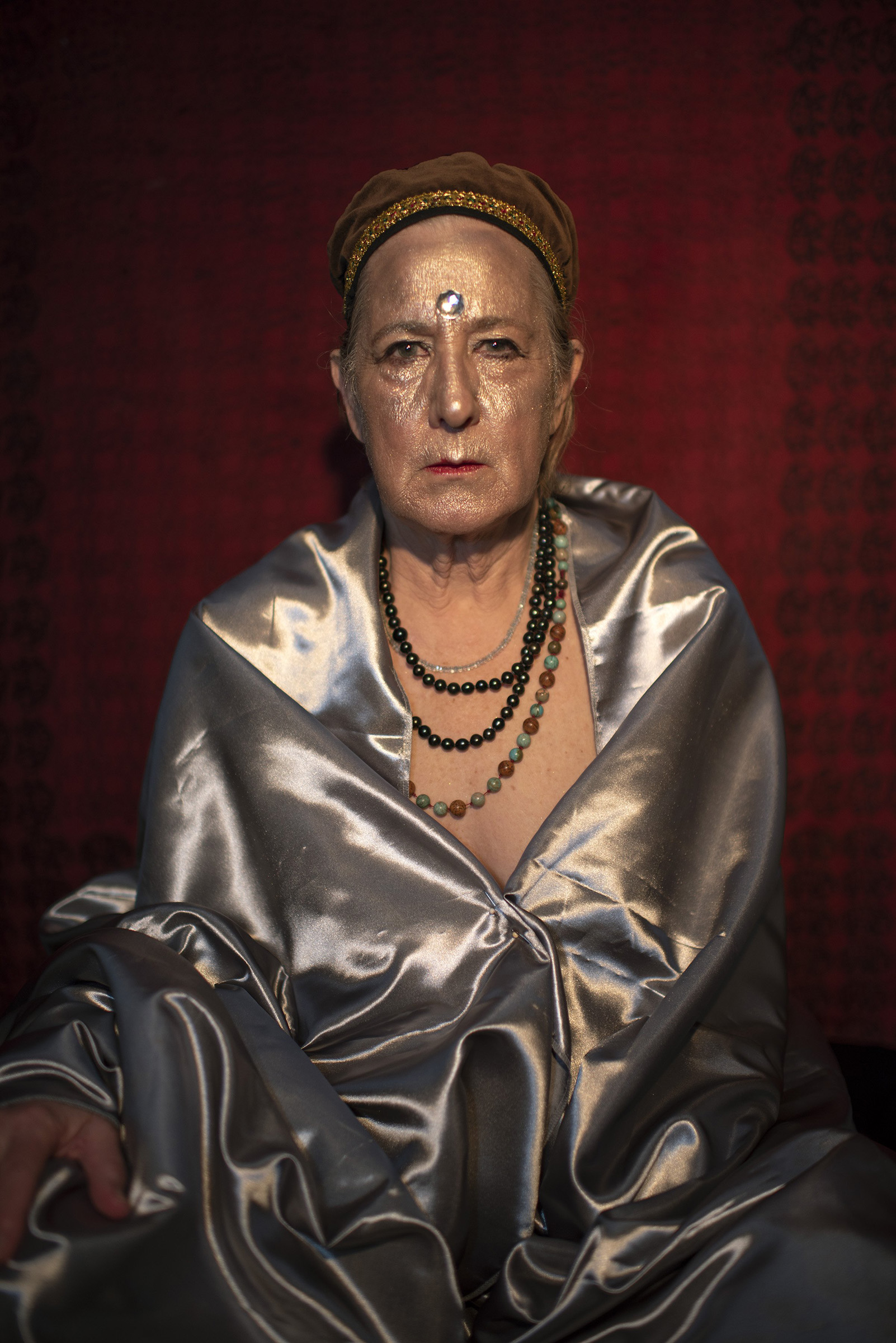
Claude Cahun Series (Buddha), color digital image, Sherry Wiggins and Luís Branco, 2022.

Claude Cahun Series (Buddha), color digital image, Sherry Wiggins and Luís Branco, 2022.

Que me veux tu? What do you want from me?, black-and-white photograph, Claude Cahun (with Marcel Moore), 1927.
The composite photo above is one of Cahun’s few images with a title: Que me veux tu? What do you want from me?. The image and title reflect her lifelong questioning of self and identity in words and images.

Untitled, black-and-white photograph, Claude Cahun, 1929.
The image above documents Cahun’s performance as the Devil in a production of the medieval play The Mystery of Adam. I have enlisted seamstress Laura Simmons to make this fabulous art deco costume and Jamie to make the wings. Voilà!

Untitled, black-and-white photograph, Claude Cahun (with Marcel Moore), 1932.
Many of Cahun and Moore’s images, performed in domestic settings, project the idea of serious play, which they regularly enacted in their photographic practice.
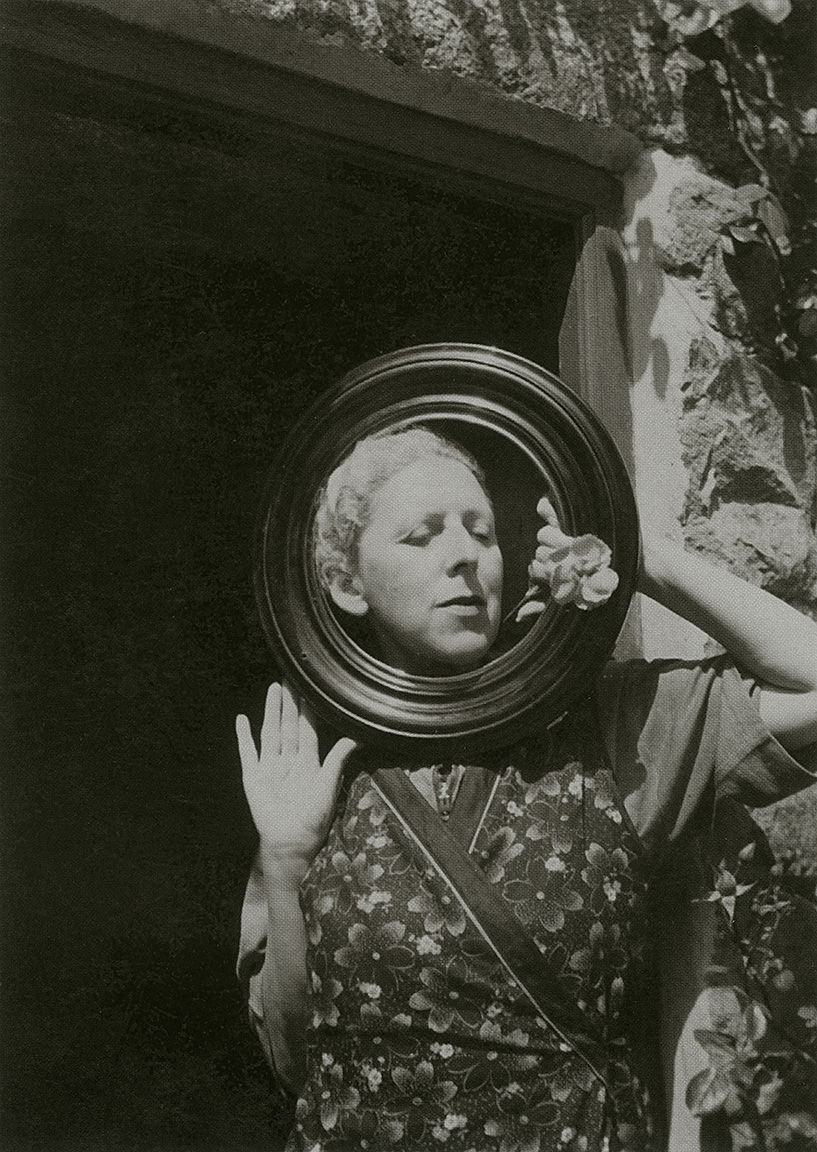
Untitled, black-and-white photograph, Claude Cahun (with Marcel Moore), 1938.
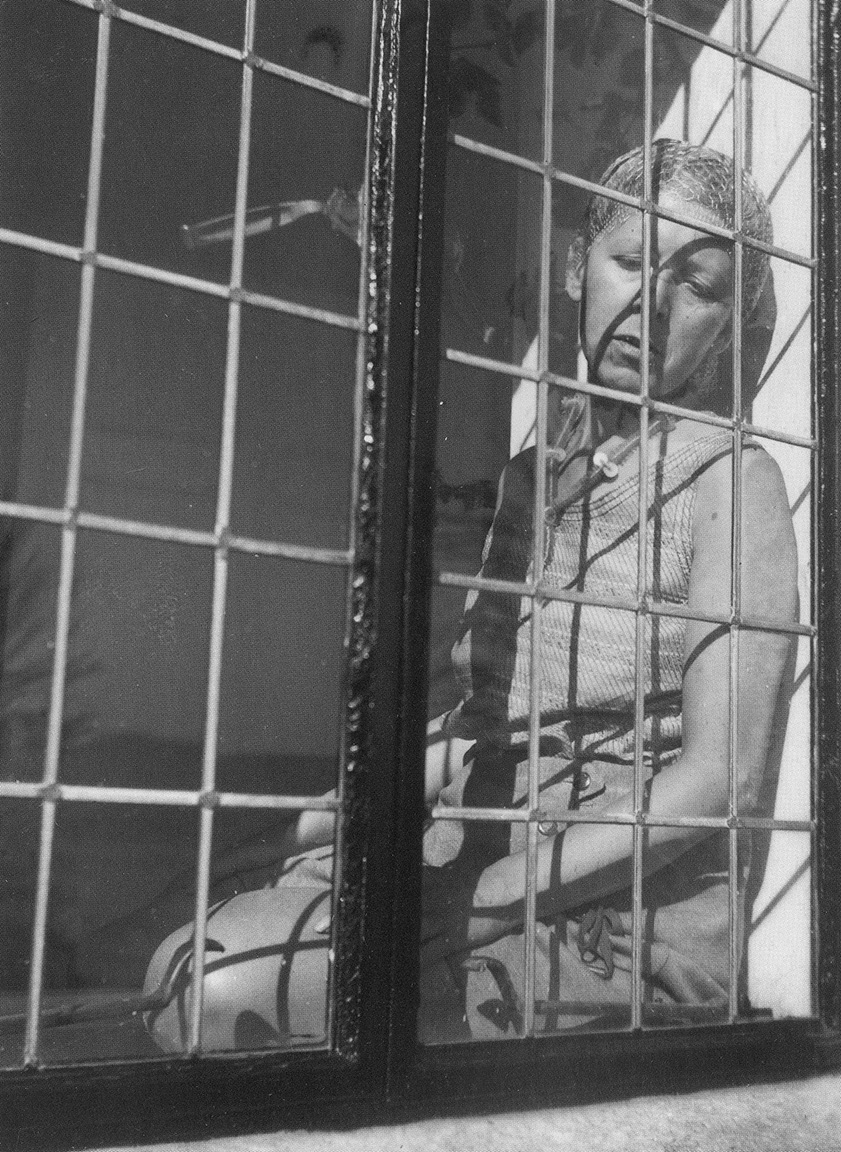
Untitled, black-and-white photograph, Claude Cahun (with Marcel Moore), 1938.
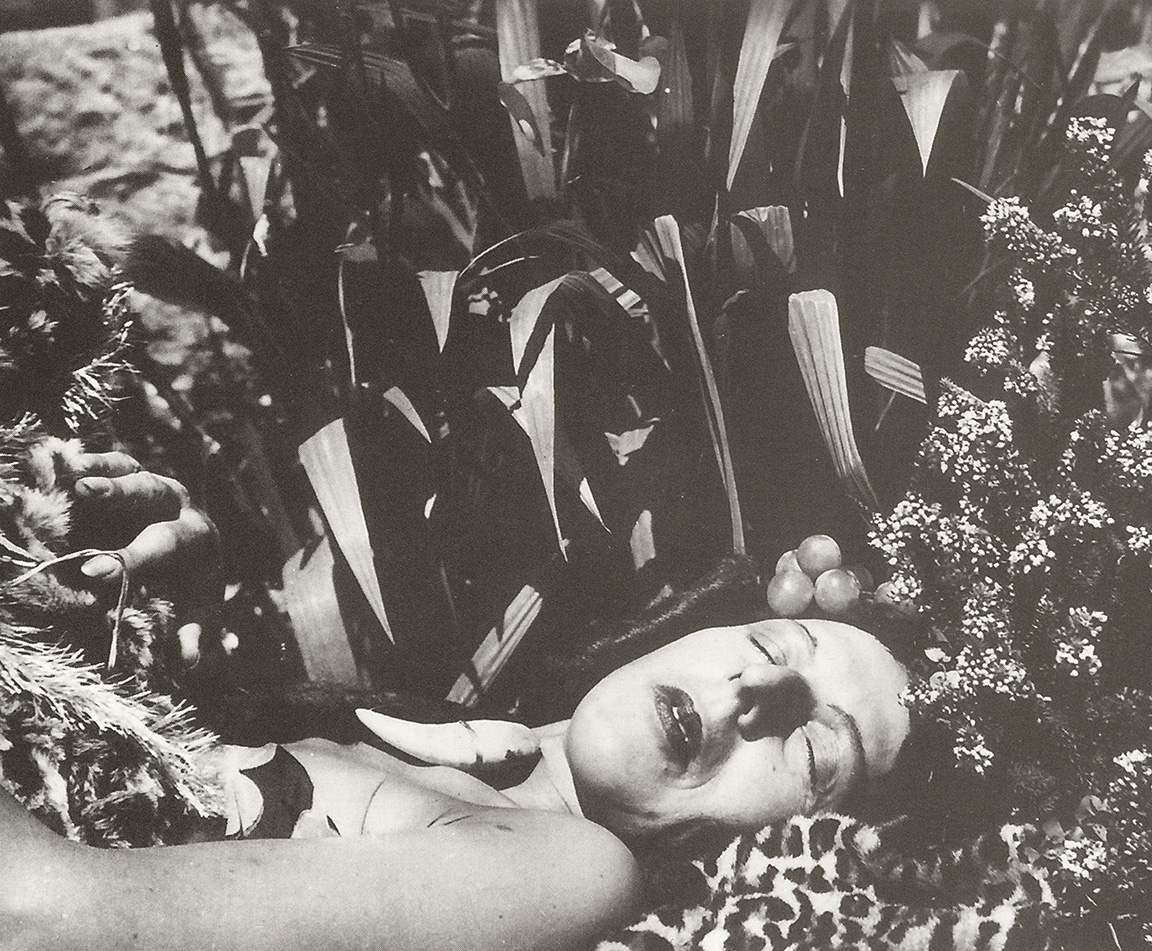
Untitled, black-and-white photograph, Claude Cahun (with Marcel Moore), 1939.
These images from the late thirties were taken after Cahun and Moore had moved permanently to Jersey island from Paris.

Untitled, black-and-white photograph, Claude Cahun (with Marcel Moore), May 1945.
The image above was taken days after Cahun and Moore were released from jail in Jersey in May of 1945. Cahun, ever resistant, bites down on the German Luftwaffe insignia. Fifty-one years old at the time, she appears much older. Few photographs have survived from the period during World War II, when Cahun and Moore were living under the occupation on Jersey and actively resisting the war and the occupation in covert actions. They were caught in 1944 and sentenced to death and were in jail for almost a year. Luckily, the war ended, and they were released. During their time in jail, their home was dismantled, their art and book collections stolen, their furniture possessed by the Germans. They lost so much. They gradually put their life and their home back together. Neither Claude nor Marcel ever returned to Paris—Claude’s health problems prohibited it.
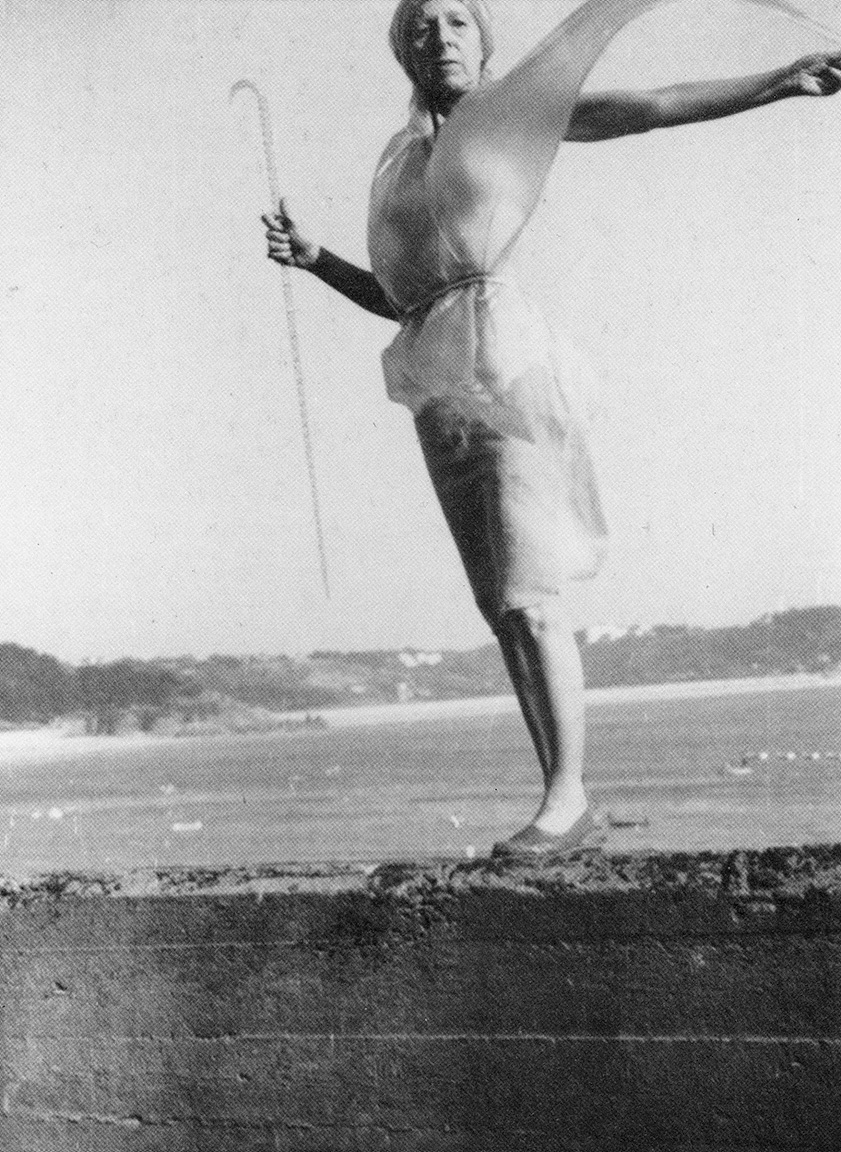
Untitled, black-and-white photograph, Claude Cahun (with Marcel Moore), 1947.
“If there is horror, it is for those who speak indifferently of the next war. If there is hate, it is for hateful qualities, not nations. If there is love, it is because this alone kept me alive.” – Claude Cahun
Cahun and Moore’s artworks, photographs, writings, texts and memoirs have been collected and archived in the Jersey Heritage Museum in St. Helier, Jersey.
For more information on Cahun’s life and practice, you can read “A Brief Biography of Claude Cahun” posted on this blog:
I also recommend these two books:
Paper Bullets, Jeffrey H. Jackson. Chapel Hill: Algonquin Books, 2020.
Historian Jeffrey Jackson focuses primarily on Cahun and Moore’s anti-Nazi activities during World War II. He includes lots of interesting details about their life on Jersey island, their activism and imprisonment.
Exist Otherwise: The Life and Works of Claude Cahun, Jennifer L. Shaw. London: Reaktion Books, 2017.
Art Historian Jennifer Shaw has written a comprehensive treatise on Cahun and Moore’s lives and works. This is a great book.
Discover more from sherrywigginsblog
Subscribe to get the latest posts sent to your email.
 sherrywigginsblog
This is spectacular. Love it! I read Paper Bullets a few years ago. Wonderful! Have a terrrific time in Napoules. Can’t wait to see what you and Luis come up with!!!!!
LikeLike
Merci beaucoup Jennifer!! xoxoxooxoxox S
LikeLike