serious play with Claude Cahun – posted in Boulder, CO January 29, 2025

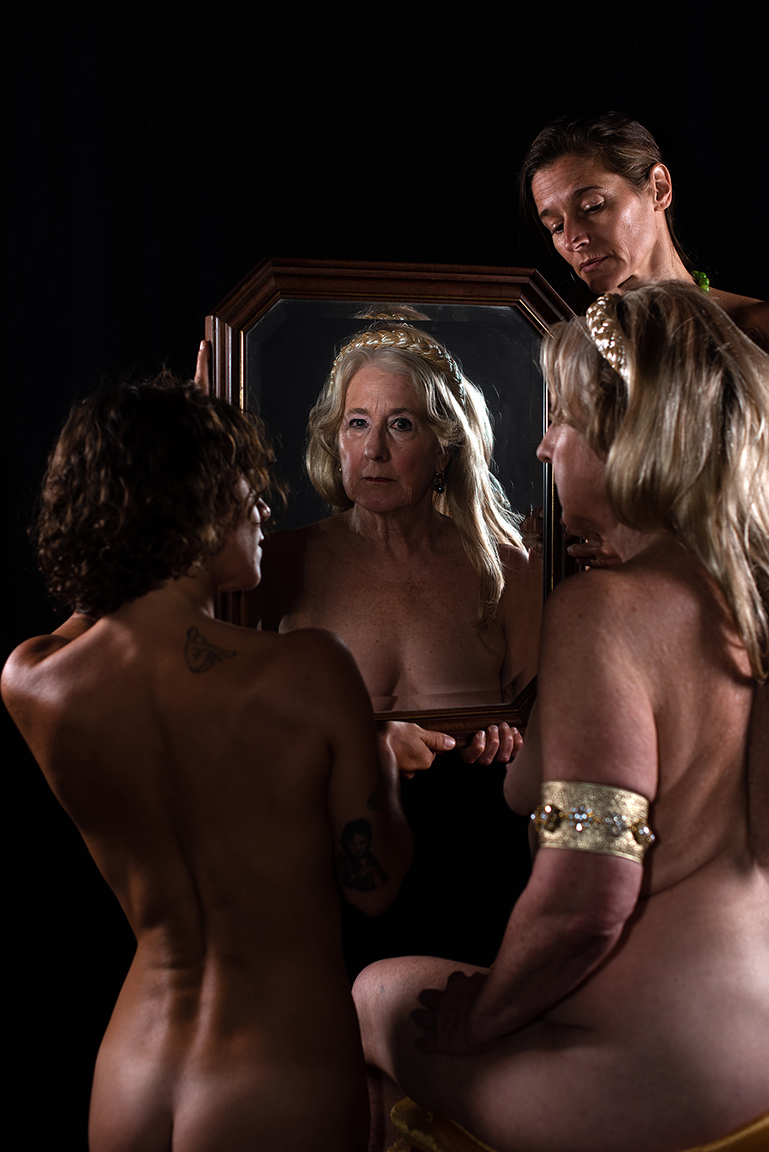
Claude Cahun Series (mask), black-and-white digital image, Sherry Wiggins and Luís Branco, 2022.

Luís Branco and I shot the above image in a strange and beautiful hotel in Amsterdam in 2022, referencing French artist Claude Cahun’s 1928 masked image below.
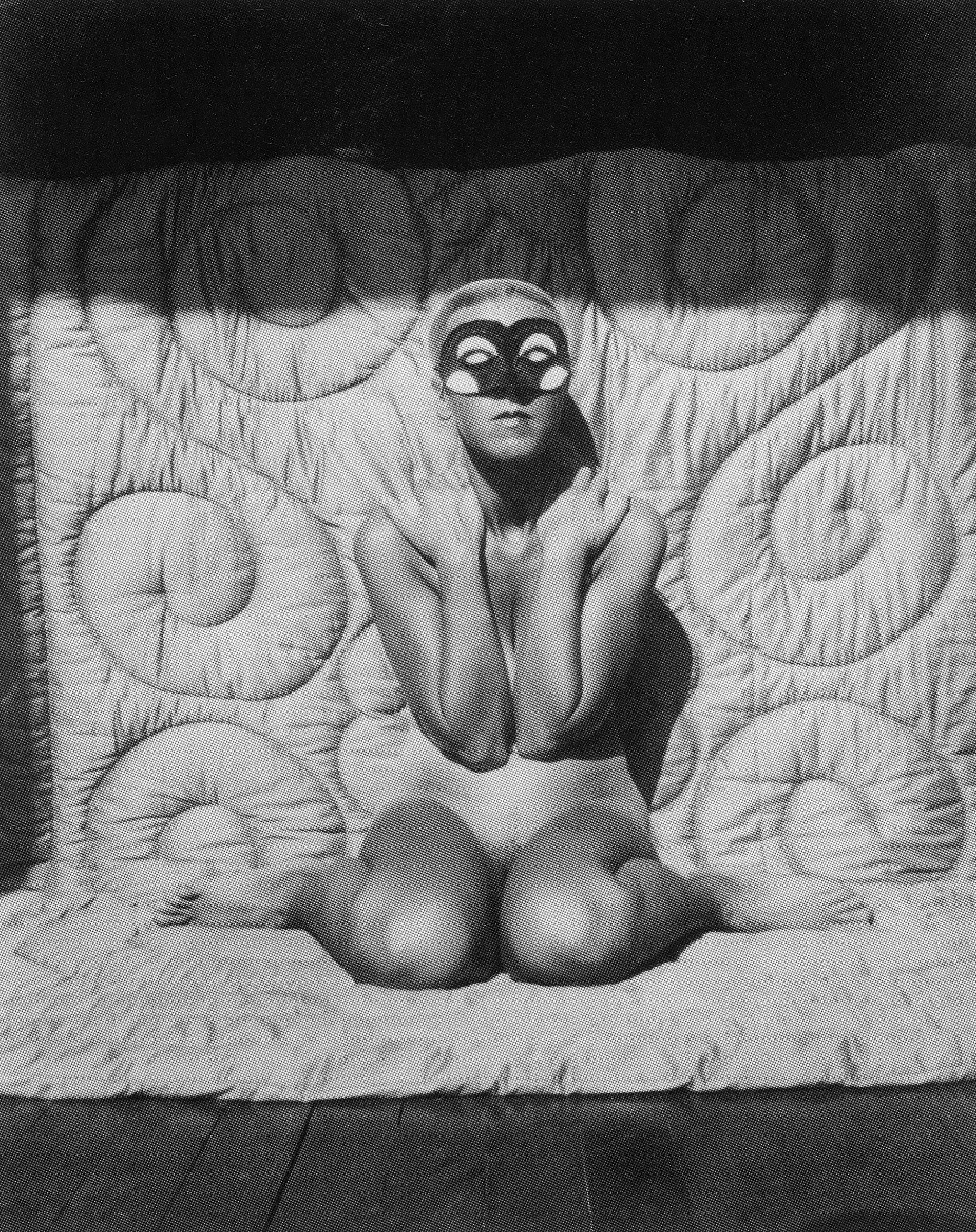
Untitled, black-and-white photograph, Claude Cahun (with Marcel Moore), 1928.

I love this image of Cahun, taken by her partner Marcel Moore. Cahun is masked and naked, her gender identity obscured and conflated by the covering of her breasts and her closely cropped hair. Cahun, born Lucy Mathilde Schwob, refused and resisted a prescribed female identity from a young age, as did Moore, who was born Suzanne Malherbe. Despite her gender nonconformity, I will not refer to Cahun (or Moore) as “they” or “them,” as these gender terms were not in use during their lifetime. Cahun had her own take on gender, saying,

“Shuffle the cards. Masculine? Feminine? It depends on the situation. Neuter is the only gender that always suits me.”

– Claude Cahun, Disavowels, trans. Susan de Muth (Cambridge: MIT Press, 2007), 151. From Claude Cahun’s Aveux non Avenus, 1930.

In early February, I will begin a residency at La Napoule Art Foundation in southern France with Luís Branco. There, we will make new performative photographs in direct conversation with Claude Cahun’s portraits and photographs. This residency will offer me further opportunity for some serious play with this complex artist (and lots of costumes and in France to boot!). We are excited to work in the historic Château de la Napoule and the gardens and grounds of the La Napoule Art Foundation on the Côte d’Azur. American sculptor Henry Clew and his wife Marie bought this historic property in 1918 and actively redesigned and restored the château and gardens in the 1920s and 30s. They welcomed other American expatriates and European aristocrats into their home for lavish parties and cultural events. This is the same period of time when Claude Cahun and her partner Marcel Moore were active in the vibrant cultural life of Paris. In 1951 Marie Clew established the property as the La Napoule Art Foundation. The foundation welcomes artists from around the world for artist residencies, exhibitions and other cultural events.

Claude Cahun (1894 – 1954) has been my main muse over the last several years. Cahun’s remarkable self-portraits, with Marcel Moore (1892 – 1972) behind the camera, confirm her courage in exploring the fluidity of identity and gender. These images reveal Cahun in flux—as masculine and feminine, masked and masquerading. The images depict Cahun as a body builder, a buddha, a dandy, a she-devil and in other guises and manifestations.

Cahun and Moore’s collection includes photographs in ordinary settings: in their hometown in Nantes France; in glimpses of their life together in Paris in the twenties; and on Jersey (one of the Channel Islands located between England and France) where they lived before, during and after World War II. Postwar photographs of Cahun demonstrate the toll the war, the occupation of Jersey and her time in jail took on her health. Cahun and Moore both served time for their anti-Nazi activities during World War II. Cahun died in Jersey in 1954. Moore died in 1972.

Cahun and Moore’s photographs have been widely published, exhibited and heralded over the last thirty years. However, it is interesting to me that for Claude and Marcel, this was a private photographic practice. They exhibited very few of their photographs, though they did create remarkable photomontages together with many of these images for Cahun’s seminal 1930s surrealist monograph Aveux non Avenues, which has been translated and published in English as Disavowals.
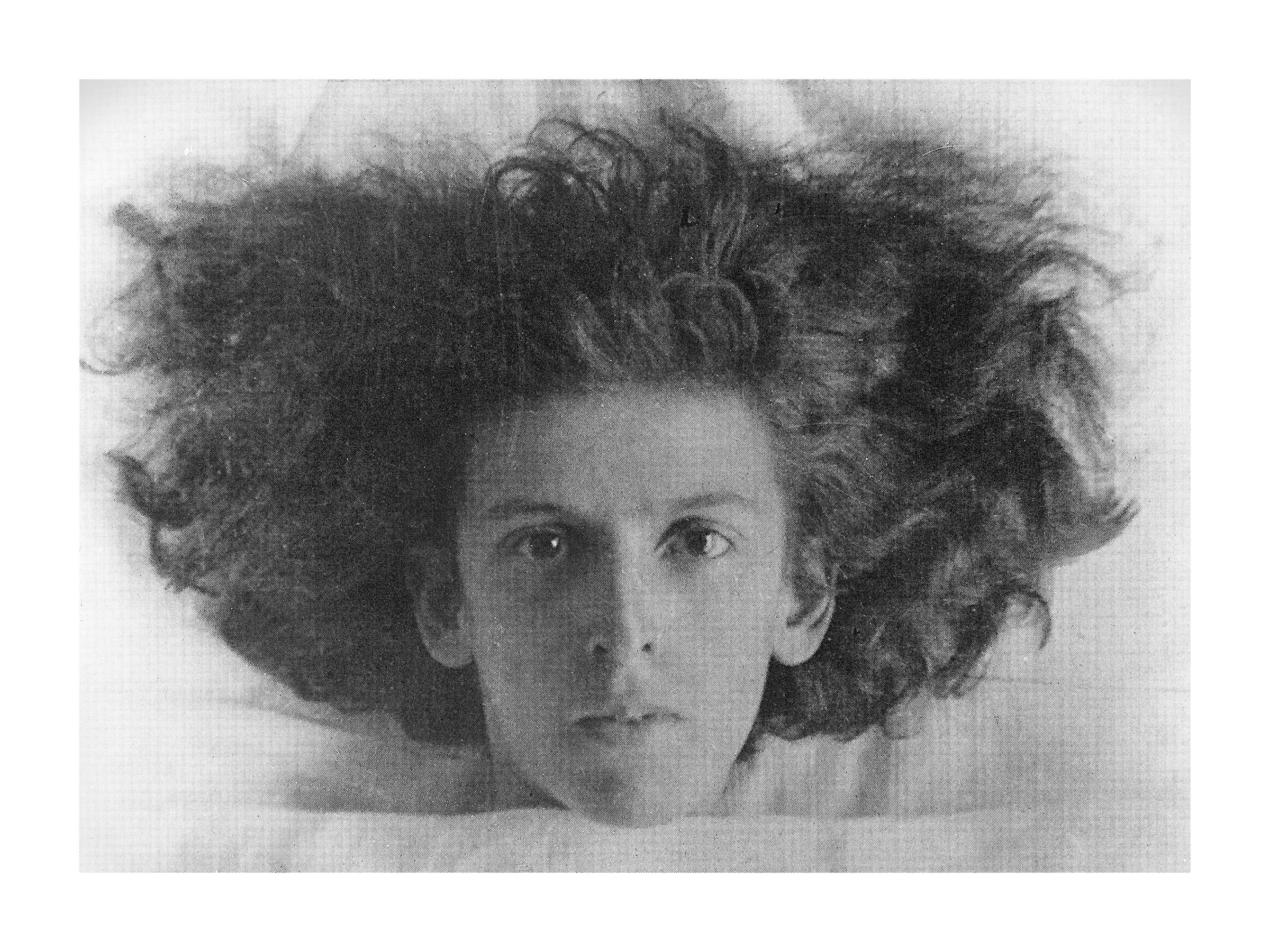
Untitled, black-and-white photograph, Claude Cahun (with Marcel Moore), 1914.
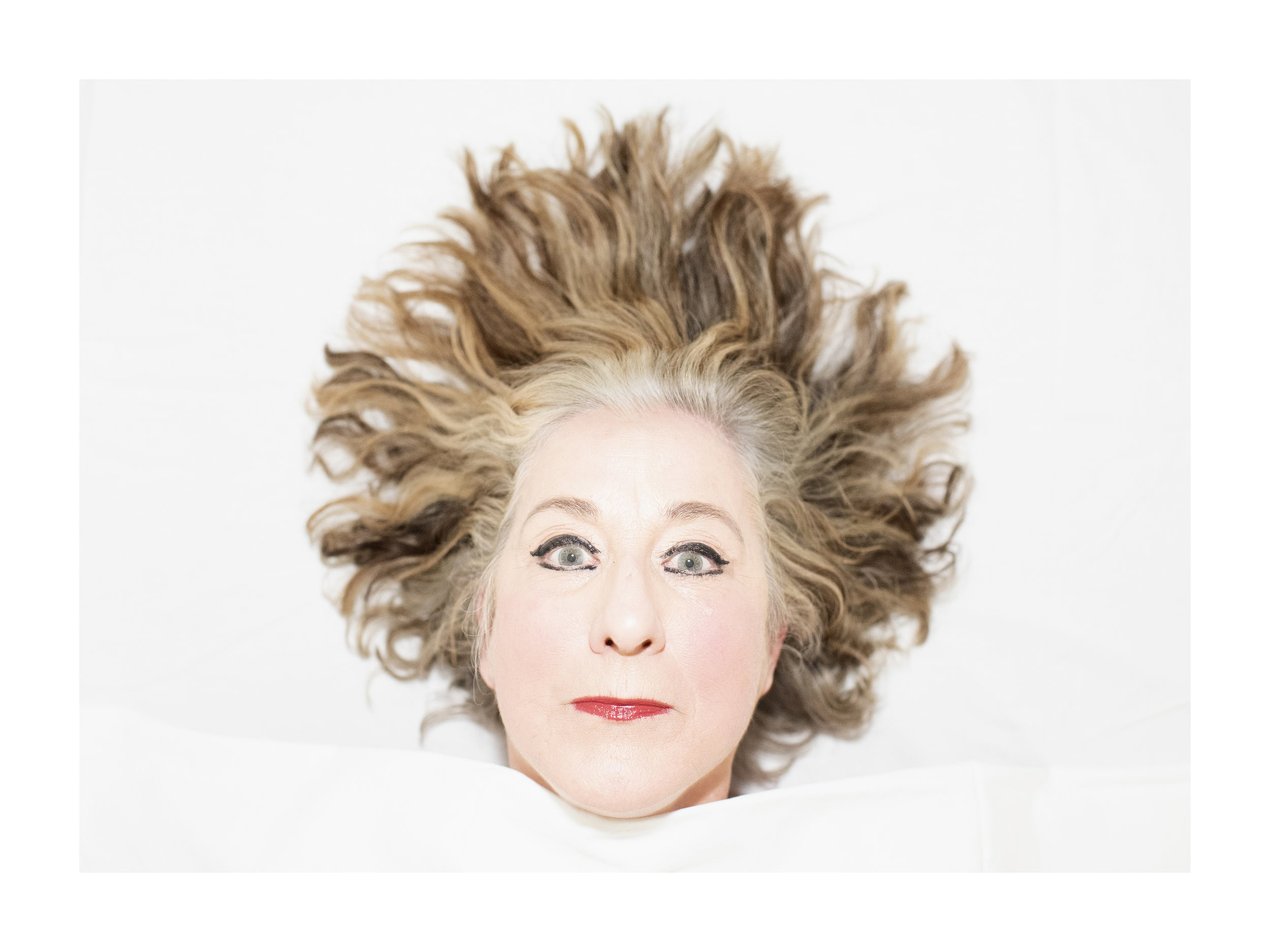
My Claude / My Medusa, color digital image, Sherry Wiggins and Luís Branco, 2019.

Luís Branco and I shot the above image in the Netherlands at Foundation OBRAS. We were referencing the above black-and-white portrait of Claude Cahun. Here, Cahun rests her head on a pillow, her hair billowing out around her face; she gazes, wide-eyed, directly toward the camera. The image was undoubtedly made in collaboration with Moore when Cahun was eighteen years old.

I was sixty-four when Luís and I reenacted this photograph more than 100 years later. As I lay on the pillow and performed for the camera, I pondered my life alongside Cahun’s—my teens and her teens, my twenties and her twenties, and onward into our thirties, forties, and fifties. Cahun died at the age of sixty. My performative practice with Luís Branco is both serious and playful, kindred to Cahun’s lifelong photographic practice with Marcel Moore. A transmutation occurs between my and Luís’s work and Marcel and Claude’s work. My reaction when I saw our images was, “Oh, my god, I look like Medusa!”

Under Cahun’s influence, I am compelled to delve into the ambiguities of my own identity, to explore definitions of gender and to examine the tropes of selfhood I inhabit. What is masculine and what is feminine? Are gender and sexuality performative? What lurks behind the masks we wear? Below are several of my favorite images of Cahun’s (and Moore’s). These images produced over Cahun’s lifetime and many more will serve as inspirations for my own embodiments and performative photographs.
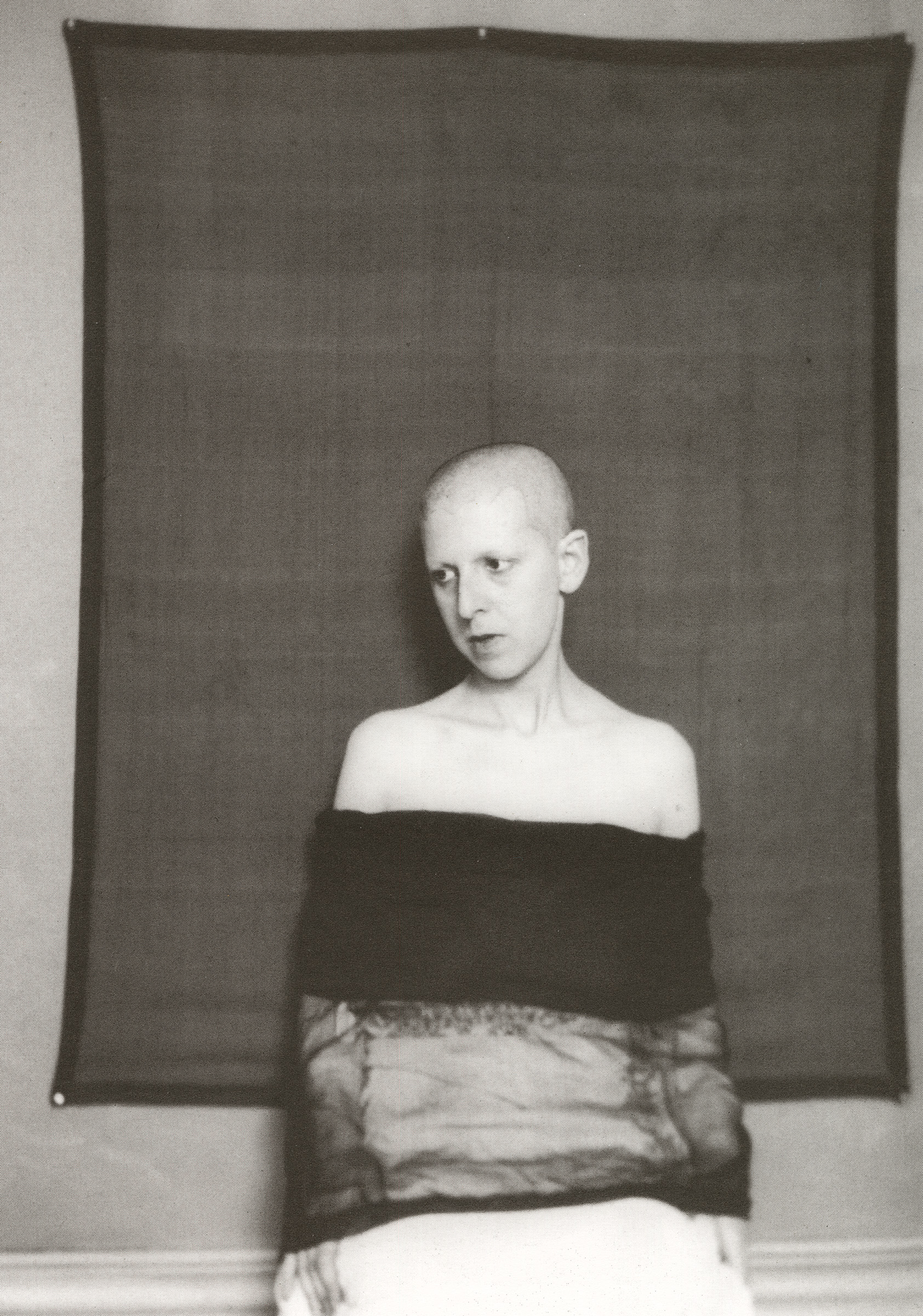
Untitled, black-and-white photograph, Claude Cahun (with Marcel Moore), 1921.

Untitled, black-and-white photograph, Claude Cahun (with Marcel Moore), 1921.

Untitled, black-and-white photograph, Claude Cahun (with Marcel Moore), 1927.
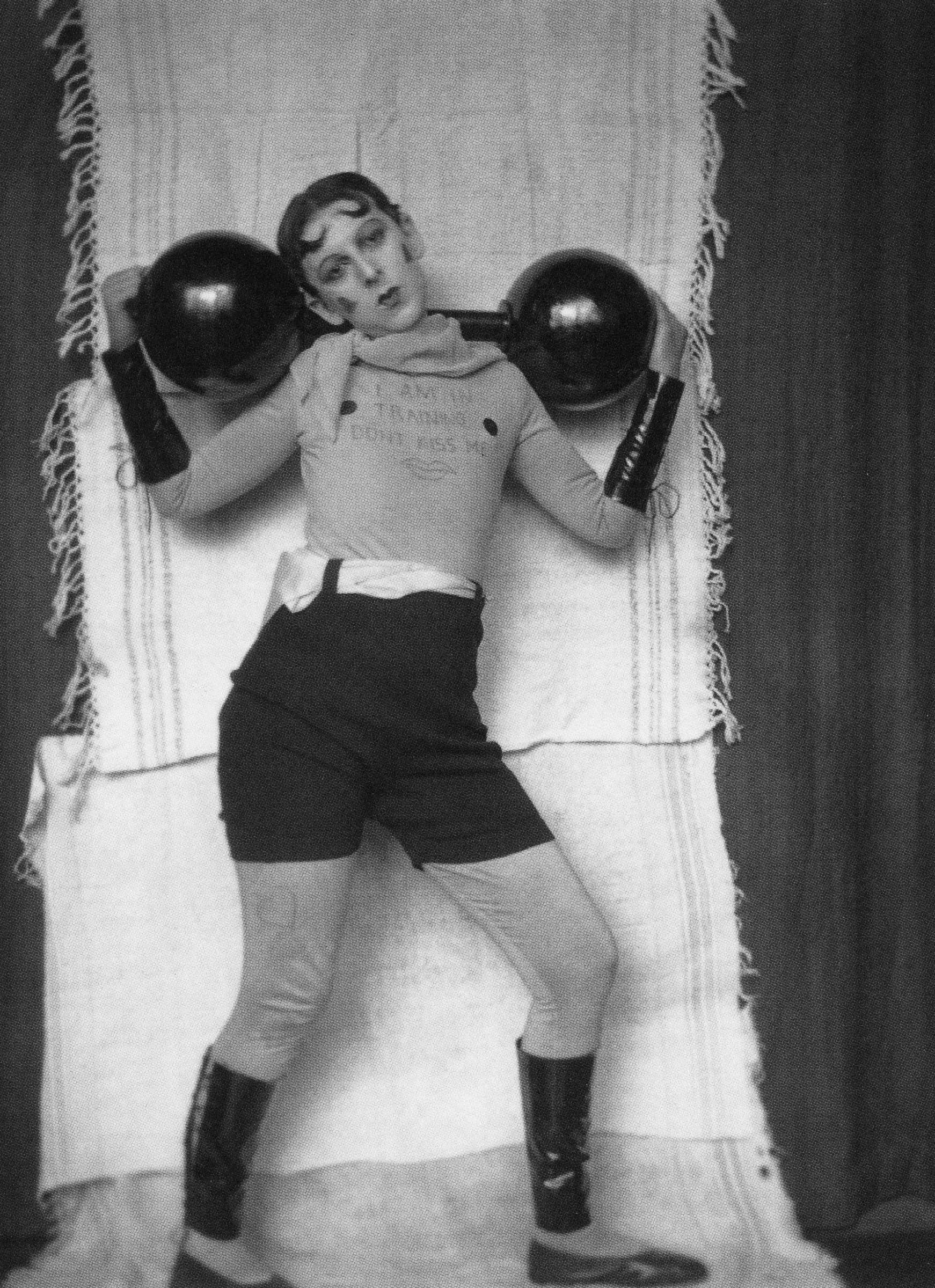
Untitled, black-and-white photograph, Claude Cahun (with Marcel Moore), 1927.

Cahun’s images as a body builder are some of my favorites. Assemblage artist Jensina Endreson (check out her fabulous work at https://www.bustleworshipdesigns.com/ ) has been helping me with my body-builder costume, complete with a T-shirt like Cahun’s, embroidered with the text, “I’m in training. Don’t kiss me.”

Untitled, black-and-white photograph, Claude Cahun, 1927.

Cahun and Moore were associated with several avant-garde theater groups in Paris in the twenties. The image of Cahun as the Buddha is thought to document her involvement with the theater group Les Amis des Arts Esoteriques. Luís and I reincarnated this Buddha image in Holland in 2022 and some curious images emerged.
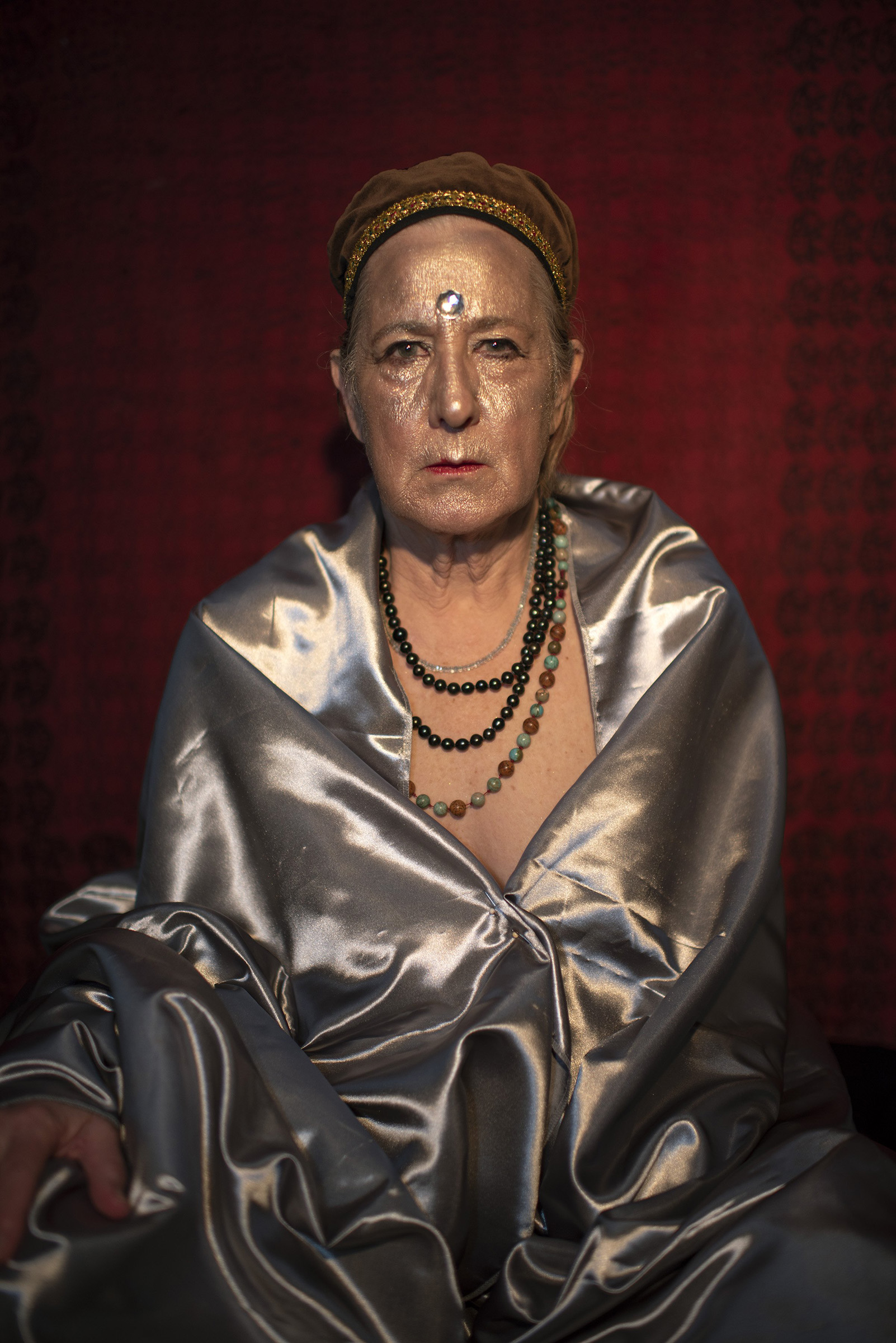
Claude Cahun Series (Buddha), color digital image, Sherry Wiggins and Luís Branco, 2022.

Claude Cahun Series (Buddha), color digital image, Sherry Wiggins and Luís Branco, 2022.

Que me veux tu? What do you want from me?,  black-and-white photograph, Claude Cahun (with Marcel Moore), 1927.

The composite photo above is one of Cahun’s few images with a title: Que me veux tu? What do you want from me?. The image and title reflect her lifelong questioning of self and identity in words and images.

Untitled, black-and-white photograph, Claude Cahun, 1929.

The image above documents Cahun’s performance as the Devil in a production of the medieval play The Mystery of Adam. I have enlisted seamstress Laura Simmons to make this fabulous art deco costume and Jamie to make the wings. Voilà!

Untitled, black-and-white photograph, Claude Cahun (with Marcel Moore), 1932.

Many of Cahun and Moore’s images, performed in domestic settings, project the idea of serious play, which they regularly enacted in their photographic practice.
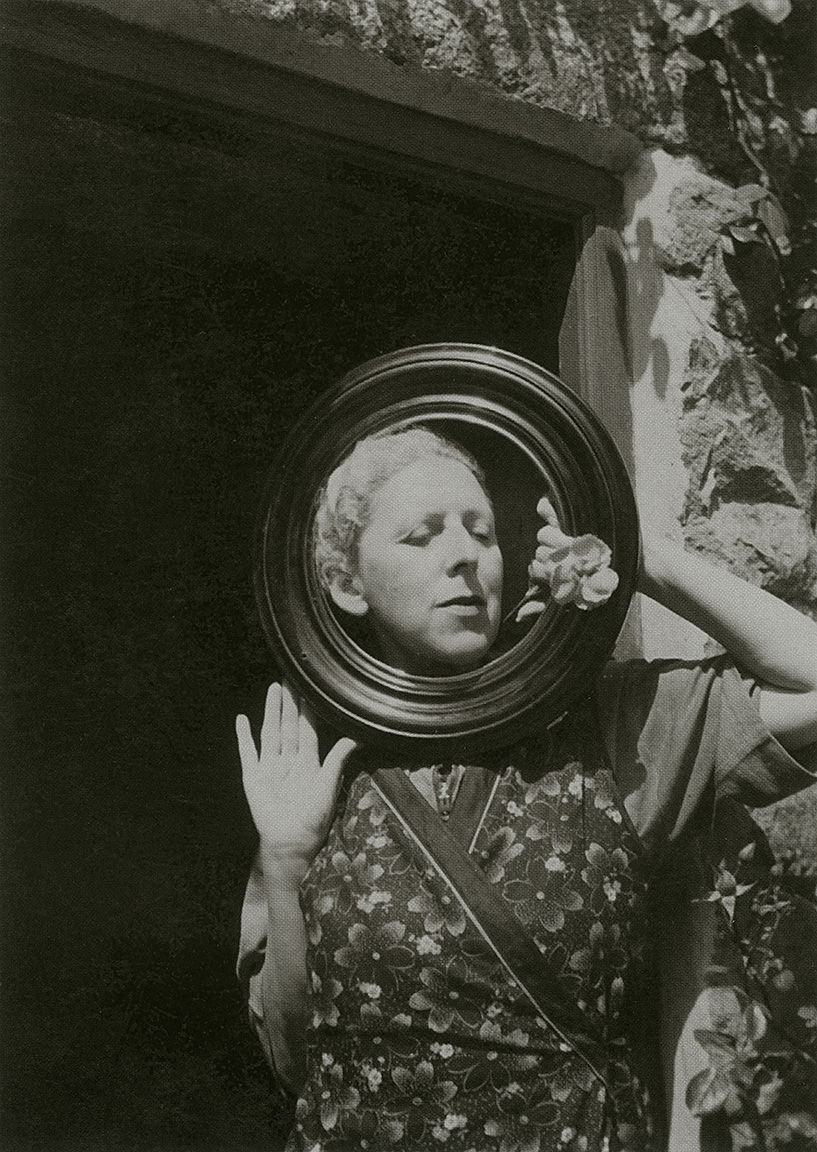
Untitled, black-and-white photograph, Claude Cahun (with Marcel Moore), 1938.
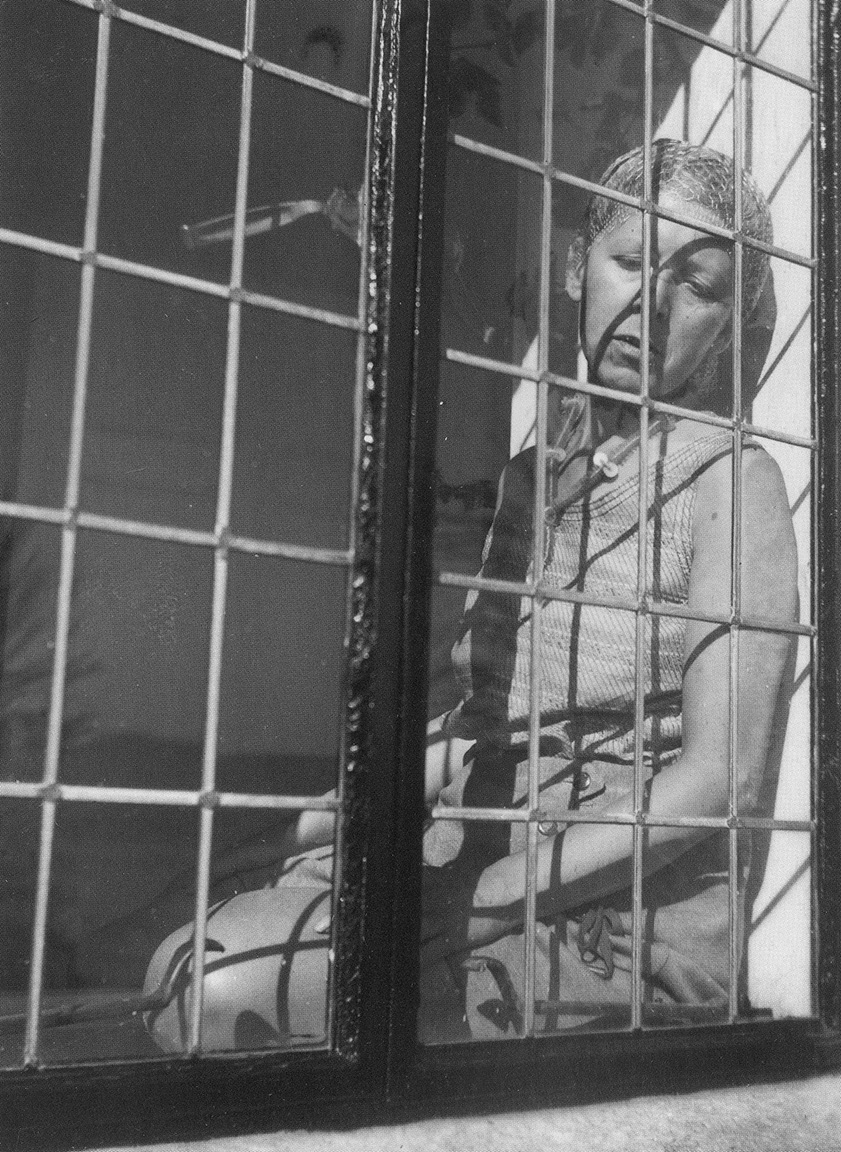
Untitled, black-and-white photograph, Claude Cahun (with Marcel Moore), 1938.
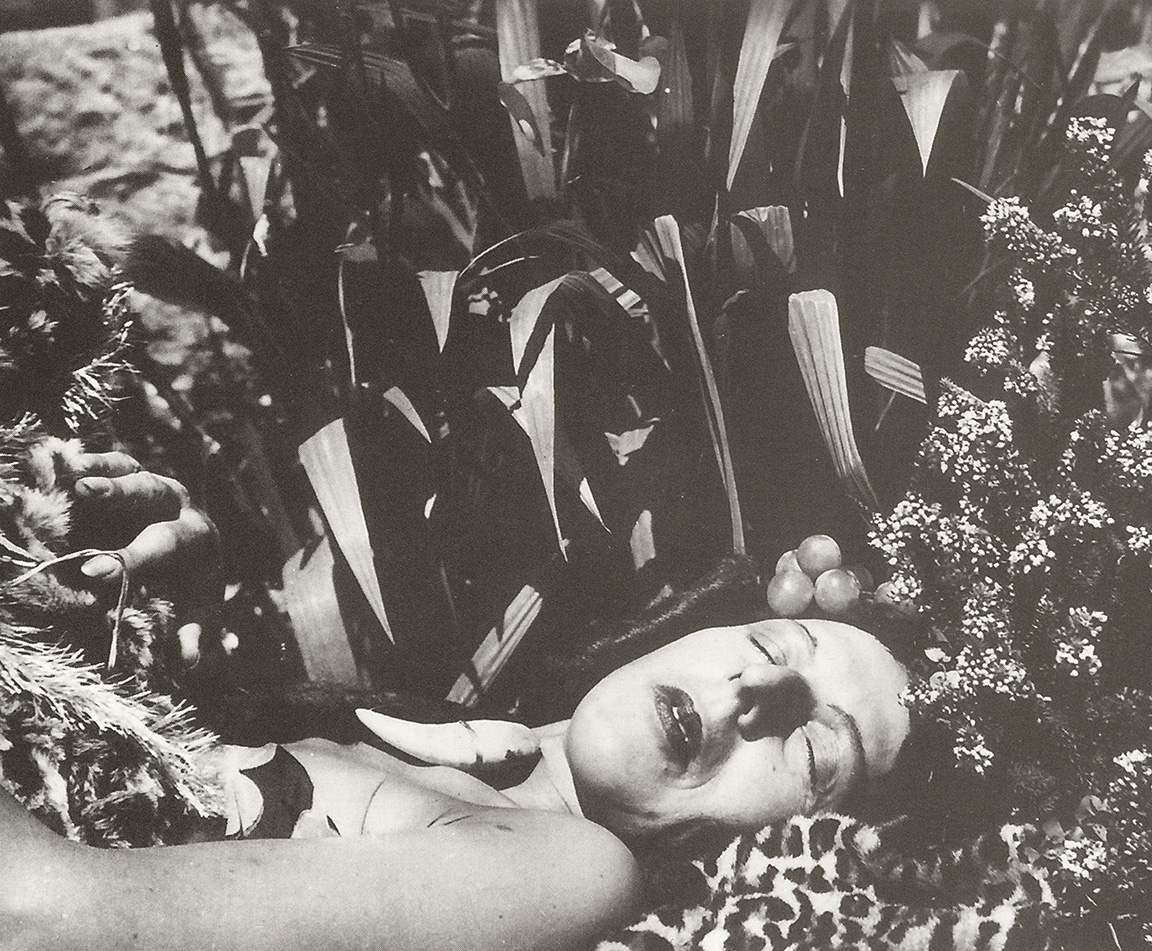
Untitled, black-and-white photograph, Claude Cahun (with Marcel Moore), 1939.

These images from the late thirties were taken after Cahun and Moore had moved permanently to Jersey island from Paris.

Untitled, black-and-white photograph, Claude Cahun (with Marcel Moore), May 1945.

The image above was taken days after Cahun and Moore were released from jail in Jersey in May of 1945. Cahun, ever resistant, bites down on the German Luftwaffe insignia. Fifty-one years old at the time, she appears much older. Few photographs have survived from the period during World War II, when Cahun and Moore were living under the occupation on Jersey and actively resisting the war and the occupation in covert actions. They were caught in 1944 and sentenced to death and were in jail for almost a year. Luckily, the war ended, and they were released. During their time in jail, their home was dismantled, their art and book collections stolen, their furniture possessed by the Germans. They lost so much. They gradually put their life and their home back together. Neither Claude nor Marcel ever returned to Paris—Claude’s health problems prohibited it.
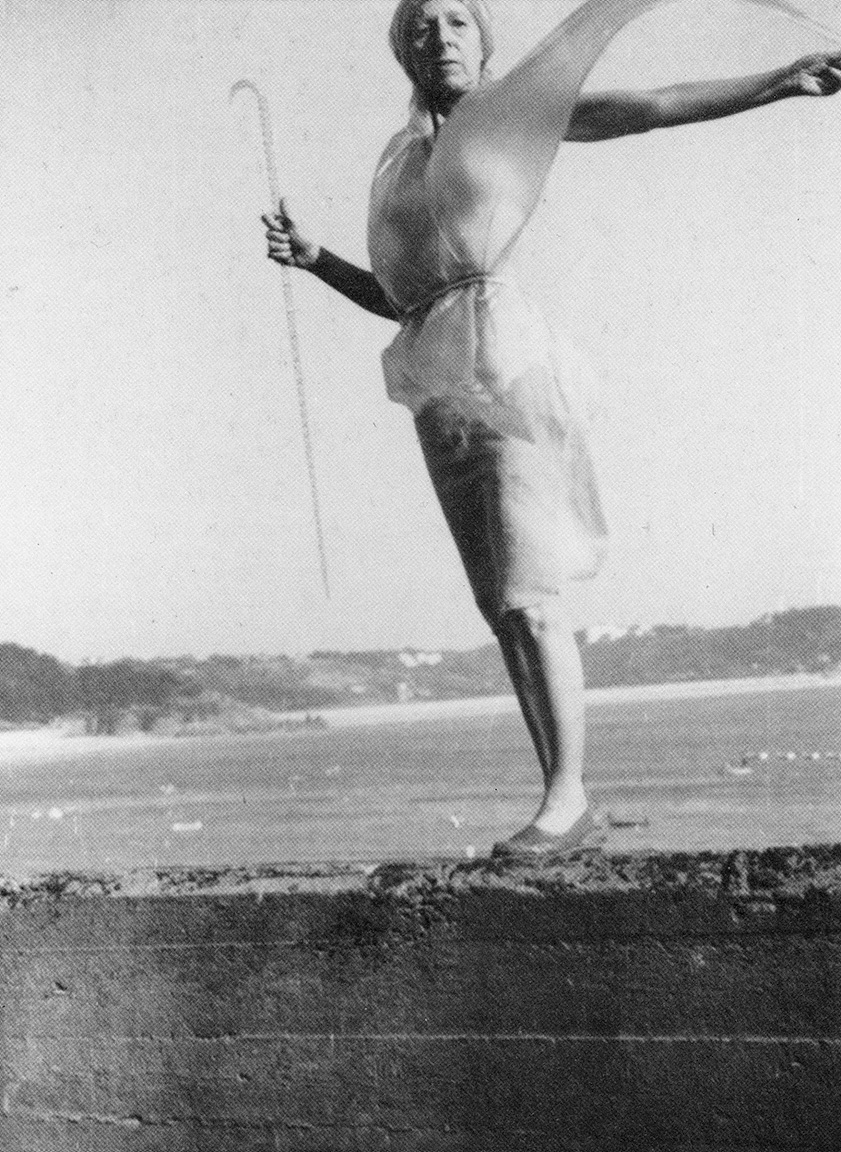
Untitled, black-and-white photograph, Claude Cahun (with Marcel Moore), 1947.

“If there is horror, it is for those who speak indifferently of the next war. If there is hate, it is for hateful qualities, not nations. If there is love, it is because this alone kept me alive.” – Claude Cahun

Cahun and Moore’s artworks, photographs, writings, texts and memoirs have been collected and archived in the Jersey Heritage Museum in St. Helier, Jersey.

For more information on Cahun’s life and practice, you can read “A Brief Biography of Claude Cahun” posted on this blog:

I also recommend these two books:

Paper Bullets, Jeffrey H. Jackson. Chapel Hill: Algonquin Books, 2020.

Historian Jeffrey Jackson focuses primarily on Cahun and Moore’s anti-Nazi activities during World War II. He includes lots of interesting details about their life on Jersey island, their activism and imprisonment.

Exist Otherwise: The Life and Works of Claude Cahun, Jennifer L. Shaw. London: Reaktion Books, 2017.

Art Historian Jennifer Shaw has written a comprehensive treatise on Cahun and Moore’s lives and works. This is a great book.
Slide Show Side Show – posted in Boulder, CO Dec 27, 2024

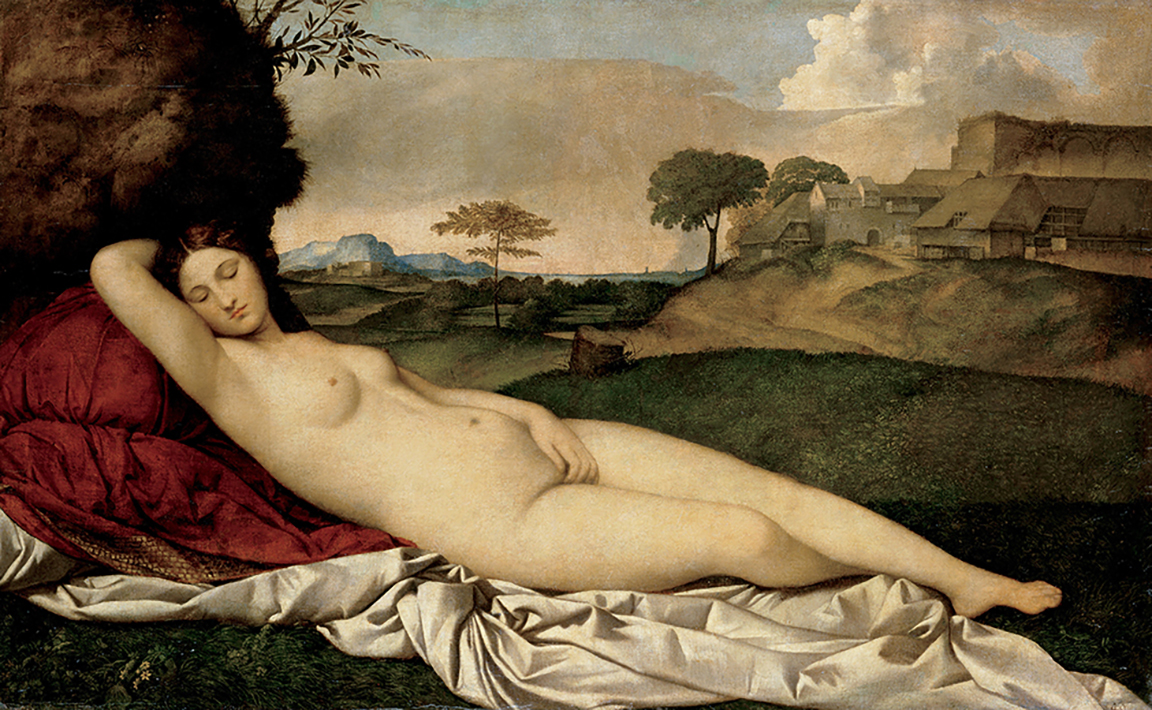
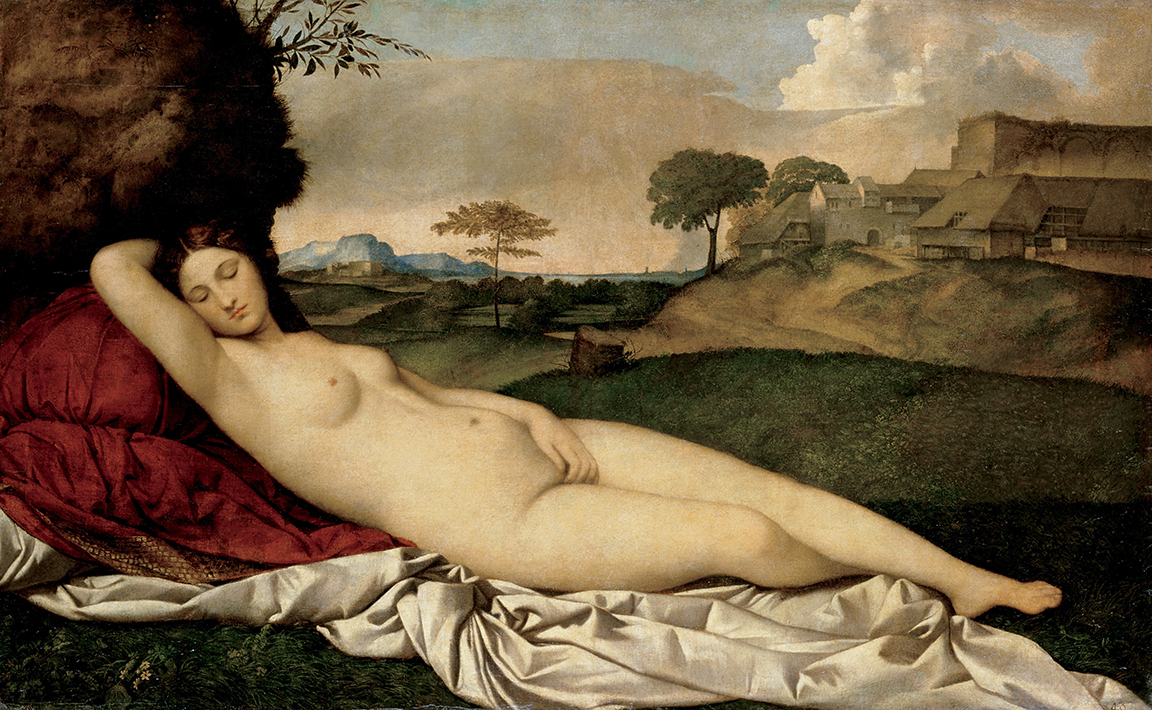
Sleeping Venus, presumably started by Giorgione and finished by Titian, c. 1510, Gemäldegalerie Alte Meister, Dresden, Germany.

let’s shoot by the small rock

horizontal landscape womanscape

last light first light works better

Giorgione or was it Titian? What were you thinking?

red satin resting, arm akimbo

eyes closed eyes open

naked, nude except the wig

cover crotch with hand

is she playing, sleeping?

focused, the relationship understood

Aphrodite / Venus series, Sherry Wiggins and Luís Branco, 2024.

Aphrodite / Venus series, Sherry Wiggins and Luís Branco, 2024.

my angels / my goddesses arrive

the studio prepared, black cloth

the mirror, always the mirror

a blond but really silver

no butt crack

except for Eros / Cupid / Marta

the slim curves of their buttocks

my broad curving backside

blond Venus in the mirror

or is it Aphrodite?

why do they call her Venus?

Venus is also Ishtar’s star

this image is important to me

he shoots over and over

changing the lights, the lens, his distance

I look in the mirror back at him, the lens

Aphrodite / Venus series, Sherry Wiggins and Luís Branco, 2024.

Aphrodite / Venus series, Sherry Wiggins and Luís Branco, 2024.

it’s raining

we move to the casa

coffee, wine, special cheese

we try shooting in the small bedroom

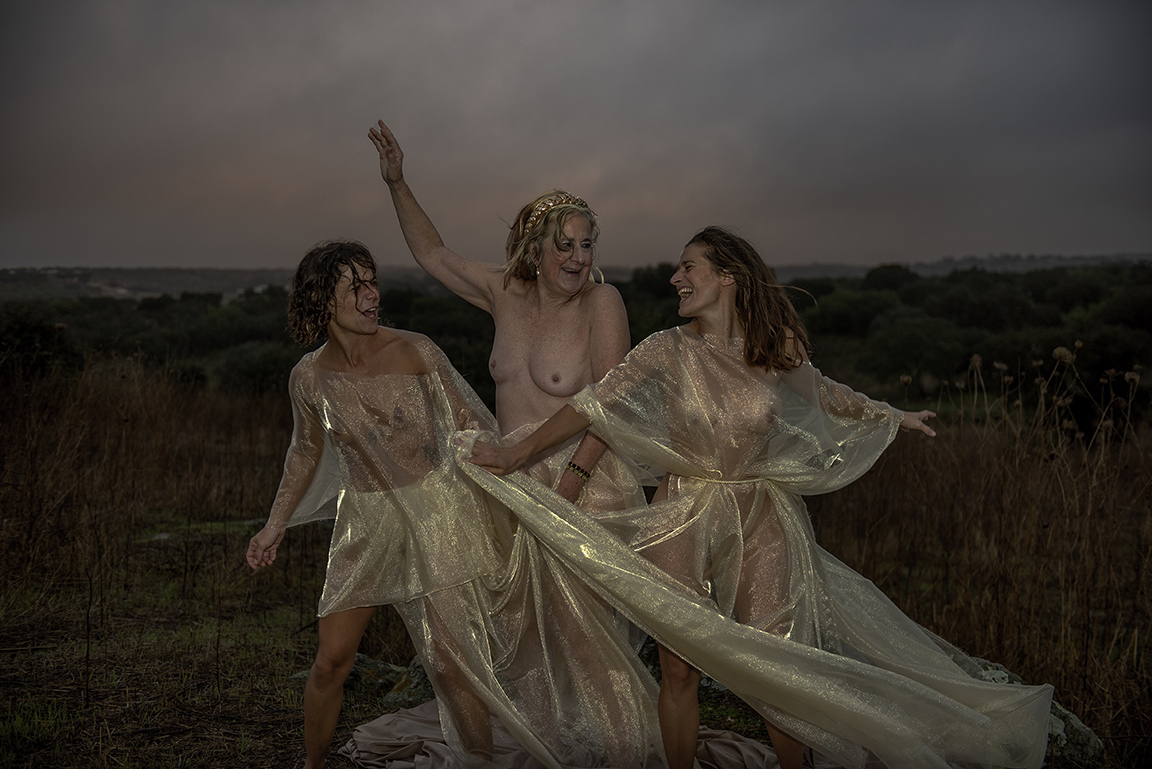
Aphrodite rising attended by the Horae,

it doesn’t really work

we end up together in the bed

enveloped by my goddesses

in the morning we return to the rock

we dance, sing, smoke cigarettes

he keeps shooting

maybe some good ones

the three goddesses

Aphrodite / Venus series, Sherry Wiggins and Luís Branco, 2024.

Aphrodite / Venus series, Sherry Wiggins and Luís Branco, 2024.

sun comes up, last shots

more coffee

my Horae / Angels / Goddesses depart

keep to the schedule

time for my other goddess Inanna / Ishtar

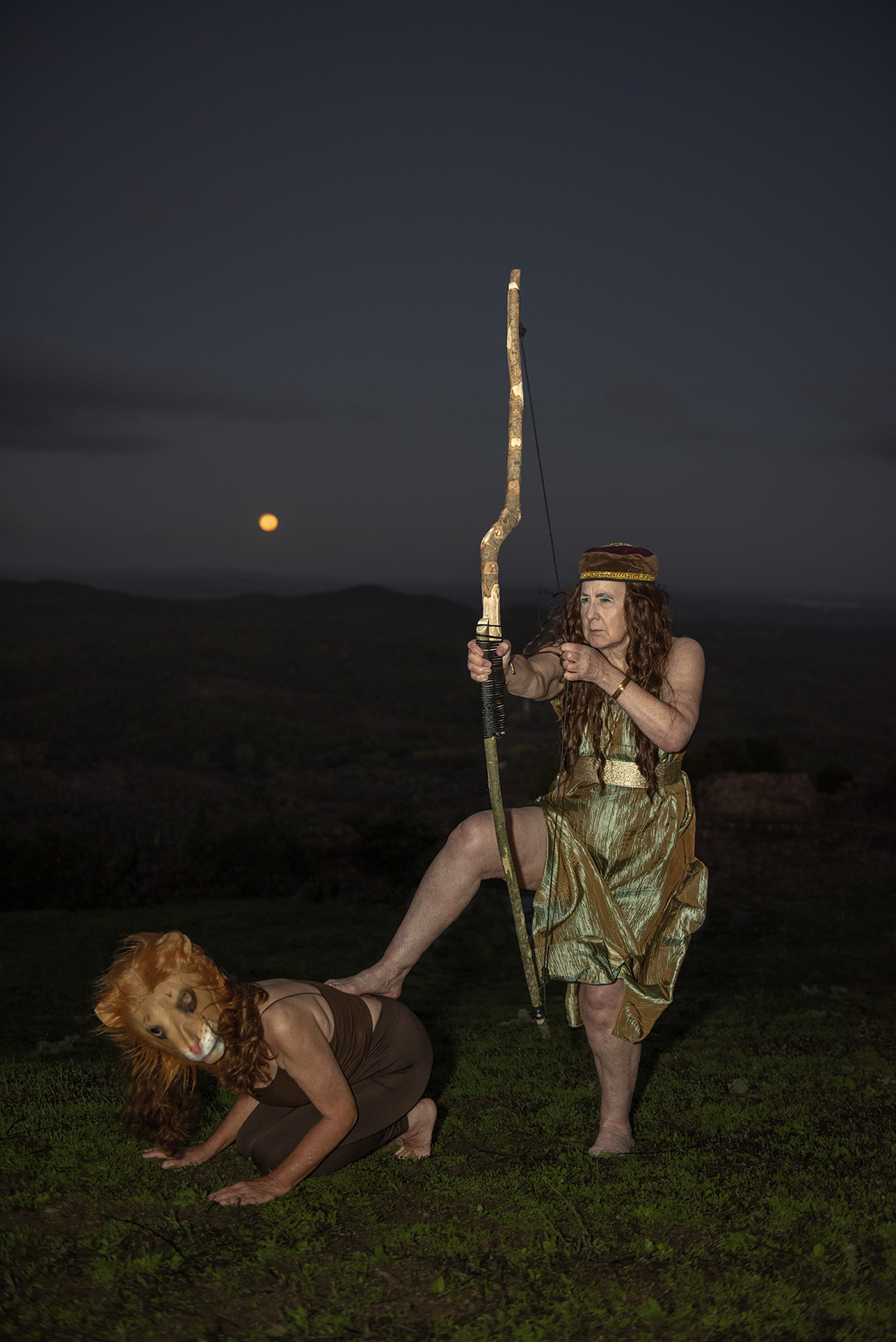
golden horns, the two lions, lapis necklace

Inanna / Ishtar series, Sherry Wiggins and Luís Branco, 2024.

early morning at Evoramonte

moon almost full

settling down

my lioness supports me

it’s fucking windy cold

Inanna / Ishtar series, Sherry Wiggins and Luís Branco, 2024.

dawn arrives

a rainbow vista from the top of the mountain

my lioness near

I / Inanna / Ishtar stand strong

Inanna / Ishtar series, Sherry Wiggins and Luís Branco, 2024.

last night

in the studio

Ishtar with our golden girdle

Angels of Light on repeat

I hold my breasts

full frontal don’t move

I am the goddess

the lights the lens

a meditation…

Inanna / Ishtar series, Sherry Wiggins and Luís Branco, 2024.

Inanna / Ishtar series, Sherry Wiggins and Luís Branco, 2024.

I wrote the text above, “Slide Show Side Show,” after returning from the OBRAS Artist Residency in Portugal in late October. The text describes a bit of the process (which can be both improvisational and painstaking) that Luís Branco and I go through during our photoshoots–this last time with my heroines Aphrodite / Venus and Inanna / Ishtar. Marta Leon and Marta Carocinho stood by as Aphrodite / Venus’ Horae (goddesses of the seasons and of time). Wilma Geldof and Jacinta Ganso assisted as Inanna / Ishtar’s lionesses. After returning from Portugal, I let the work “rest” for several weeks. During the last part of November and early December I went through the editing process (with Luís’ help). I looked through the hundreds of images we shot to select the images we want to produce. Ron Landucci has done the final corrections to the images and is currently printing the proofs. I am very happy with this last body of work and I am now preparing to embody Claude Cahun in February at the La Napoule Art Foundation in France with Luís.

Wishing you the best for the New Year.

Naked and Adorned Part I : Inanna and Ishtar – posted in Boulder, CO Nov 8, 2024

WIP—Inanna / Ishtar series, color digital image, Sherry Wiggins and Luís Branco, October 2024.

I almost retitled this blog post  “F__K THE PATRIARCHY: Part I: Inanna and Ishtar and Part II: Aprhodite and Venus”. I am posting this after the election… but I decided to go with my original title “Naked and Adorned Parts I and II.  I’ve been home from Portugal for more than a week and I have been looking over the images Luís Branco and I produced during our residency at OBRAS. No final edits—just a quick look through and a consideration of my most recent heroines, Inanna and Ishtar, and my long-term heroine, Aphrodite, and her reincarnation as Venus (they are considered in Part II).

For the HEROINES project I have researched and embodied several ancient goddesses and made performative photographs with Luís over the last four years. These goddesses include the Greek goddess / enchantress / sorceress Circe, from Homer’s The Odyssey, with her tamed lions and the men she transformed into swine; Isis, the great Egyptian goddess of motherhood, fertility and magic; and Aphrodite, Greek goddess of love and sexuality and more …, who morphs into the Roman goddess Venus. These goddesses fascinate me for their special powers and independence and agency. They are all sexy, badass goddesses.

These goddesses of ancient times were also syncretic: They merged into one another and through one another across time, cultures, wars, land and water. Aphrodite, my original favorite goddess, has pointed me backward in time to her early predecessor / sister goddesses of love and sexuality (and much more …) in ancient Mesopotamia—Inanna and Ishtar.

My preparation for embodying all of these goddesses includes an exploration of thousands of years of representations, descriptions and depictions of them. I am not a historian, an academic or an archeologist, but I do my own intuitive investigations and excavations of these archetypal heroines.

In this current inquiry and recent embodiments, I have ventured to the East (in my mind and in my research) to the lands and cultures of ancient Mesopotamia, the Fertile Crescent, to find ancient Sumerian goddess Inanna and Akkadian / Babylonian goddess Ishtar. These two goddesses merged over a period of a few thousand years (ca. 4000 BCE to 500 BCE) and are, at times, indistinguishable. Artifacts, texts and poems represent these amazing and powerful goddesses of love, sexuality, war (and much more …). Studying these ancient goddesses has been a revelation. Patriarchal Western European history has largely ignored them.

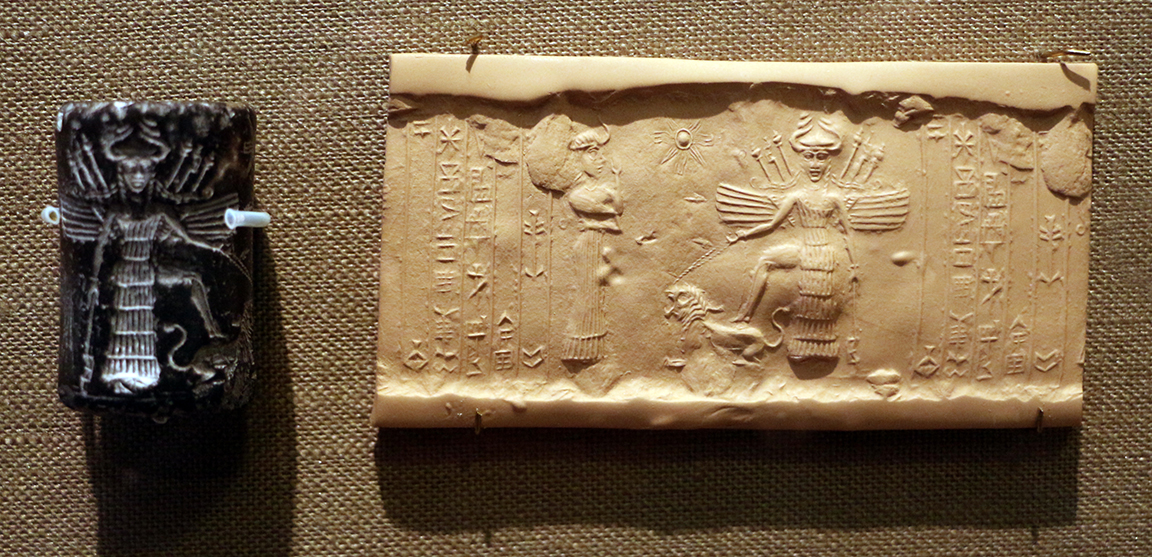
Radiant Inanna, cylinder seal, Mesopotamia, Akkadian period, ca. 2334 – 2154 BCE, h. 4 cm, d. 2 cm. The Oriental Institute Museum, University of Chicago.

In the two images of the ancient cylinder seal terracotta plate above, Inanna / Ishtar stands triumphantly in full regalia with one foot upon the back of her roaring lion. She wears a headdress of multiple horns. Weapons issue from her shoulders, while enormous wings appear from behind her back, suggesting both her martial and supernatural nature. An eight-pointed star, emblem of her manifestation as Venus, the morning and evening star, appears in the sky beside her.

WIP—Inanna / Ishtar series, black-and-white digital image, Sherry Wiggins and Luís Branco, October 2024.

Known as the “Queen of Heaven and Earth,” Inanna is the goddess of love, war, fertility, political power, sex (and much more …). She was worshipped as early as 4000 BCE in Sumer in southern Mesopotamia. In later Babylonian culture (2000 BCE to 500 BCE), Inanna becomes Ishtar and represents many of the same attributes and mythoi and is represented in many poems and hymns.

Terracotta plaque showing the goddess Ishtar (Inanna), 19th – 17th century BCE, from Iraq. Pergamon Museum, Berlin, Germany.

On the terracotta plaque above, Ishtar / Inanna stands on the back of a lion. She holds a bow in her left hand and a crook or a sickle in her right. The symbol of the god Shamash (Utu) appears in the upper right corner. The scene seems to take place in mountainous terrain.

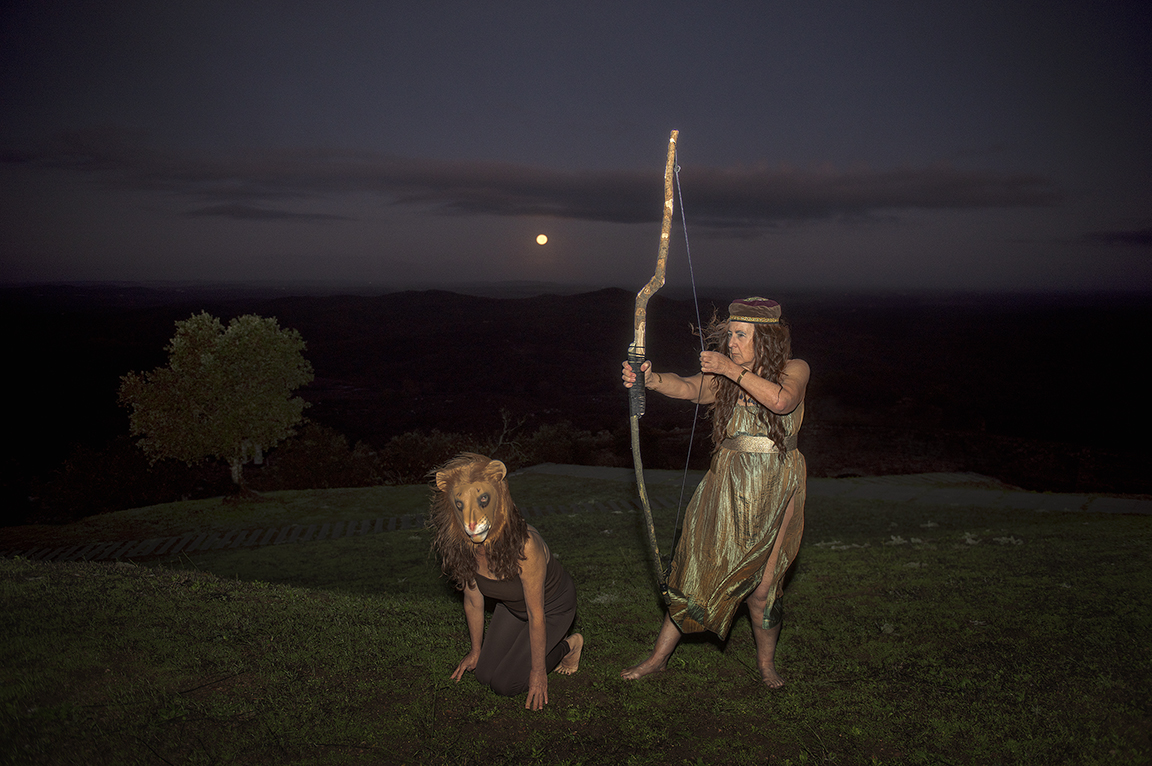
I constructed her gown and collected golden horns, a lapis necklace and a golden girdle for my embodiment of Inanna / Ishtar. My friend Antonio made a wooden bow for us. My lioness, Jacinta, accompanied Luís and me to the top of Evoramonte near dawn, just as the moon was setting.

WIP—Inanna / Ishtar series, color digital image, Sherry Wiggins and Luís Branco, October 2024.

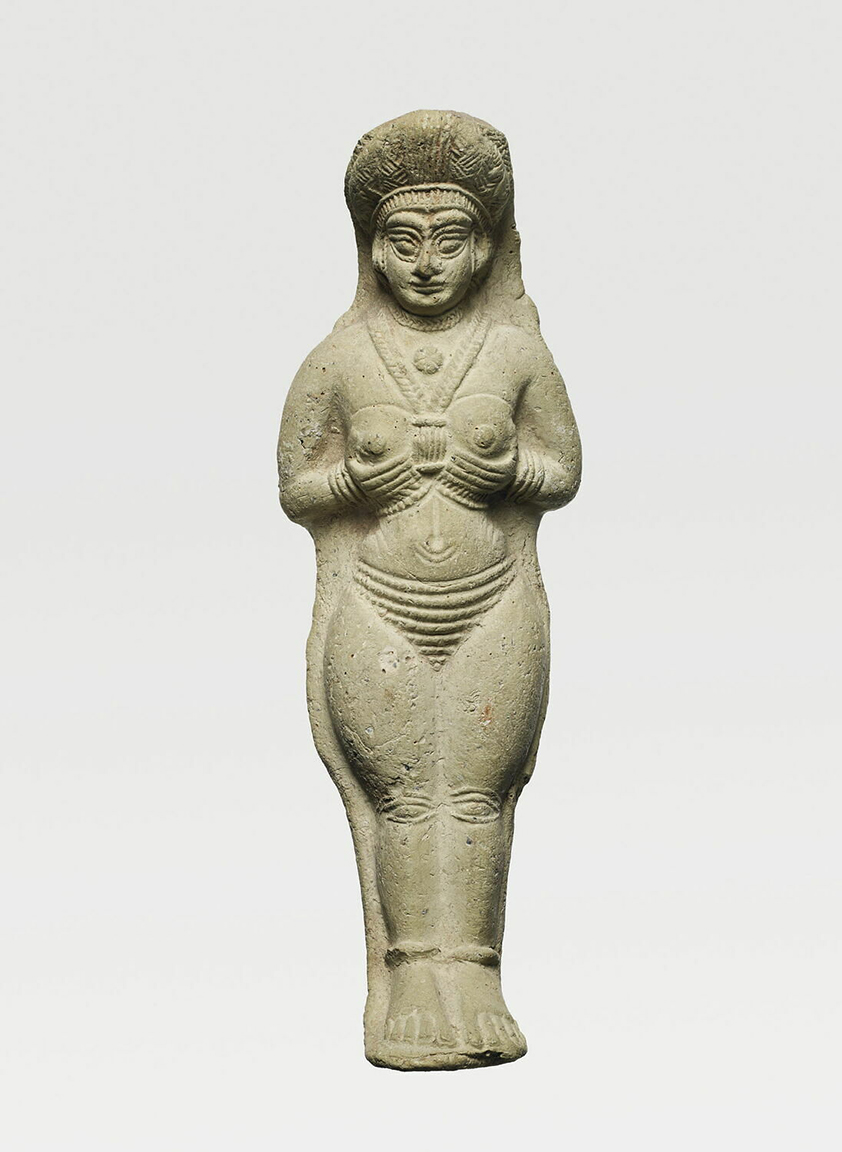
Both Inanna and Ishtar have been portrayed in various states of nakedness and adornment, all of which evoke their power and their sexuality. They are invincible goddesses and sexy, graced with elaborate crowns and jewels, often portrayed full-frontal in sculpture or other artifacts, whether nude or adorned. Their states of dress and undress reflect cultural ideas about female sexuality and female power, essentially equating the two. Which of course I love! Many Mesopotamian sculptures depict Inanna / Ishtar, as well as other women, holding their breasts—not as a statement of modesty, but, rather, referring to their potent and powerful sexuality.

Ishtar from Susa, 1500 – 1100 BCE. Louvre Museum, Paris, France.

WIP – Inanna / Ishtar series, color digital image, Sherry Wiggins and Luís Branco, October 2024.

In addition to sculptures and plaques, Inanna / Ishtar is depicted in texts and poems. I have been reading translations of these texts in Inanna, Queen of Heaven and Earth: Her Stories and Hymns from Sumer by Diane Wolkstein and Samuel Noah Kramer. “The Descent of Inanna” is the most famous text. Here, Inanna descends into the underworld through seven gates. At each gate, she must give up an article of clothing or an object that signifies one of her various powers—her horned crown, her scepter, her lapis jewelry, her robe. Finally, she is naked in the colorless underworld alongside her sister, Ereshkigal, who is the goddess of death and the underworld. Ultimately, Ereshkigal and the seven judges of the underworld kill Inanna. Her corpse is hung on a hook on the wall and left to decompose. Yet Inanna contrives a way to return to the living world: She consigns her husband, Dumuzi, the shepherd /king, and her faithful servant to spending half of every year in the underworld for eternity. Inanna is definitely a badass, but she has other sides as well; her sexual powers are prodigious.

Perhaps my favorite text about Inanna is the very sexy “The Courtship of Inanna and Dumuzi”:

Inanna spoke:

“What I tell you,

Let the singer weave into song.

What I tell you,

Let it flow from the ear to mouth,

Let it pass from old to young:

My vulva, the horn,

The Boat of Heaven,

Is full of eagerness like the young moon.

My untilled land lies fallow.

As for me, Inanna,

Who will plow my vulva?

Who will plow my high field?

Who will plow my wet ground?

As for me, the young woman,

Who will plow my vulva?

Who will station the ox there?

Who will plow my vulva?”

Dumuzi replied:

“Great Lady, the king will plow your vulva.

I, Dumuzi the King, will plow your vulva.”

Inanna:

“Then plow my vulva, man of my heart!

Plow my vulva!”

(From Inanna, Queen of Heaven and Earth: Her Stories and Hymns from Sumer, Diane Wolkstein and Samuel Noah Kramer, 1983, Harper Perennial: New York, NY, pp. 36 – 37.)

Terracotta Couple from Susa, 1500 – 1100 BCE. Louvre Museum, Paris, France.

Please read my blog post “Naked and Adorned Part II: Aphrodite and Venus” about our work made during the same time period at OBRAS, also part of the F__K the Patriarchy series…

Naked and Adorned Part II: Aphrodite and Venus – posted in Boulder, CO Nov 8 2024

The Birth of Venus, Alexandre Cabanel, 1863, Musée d’Orsay, Paris, France.

The 19th century painting above of the birth of Venus  by Cabanel in the Musée d’Orsay is monumental, 7 1/2 feet wide. I have not reincarnated this painting (yet). I know it is sexist but still fabulous. I am moving all around in time and geography from ancient Sumer and Babylonia (with the goddesses Inanna and Ishtar) to ancient Greece and the island of Cyprus, sometime around 1000 to 800 BCE, when the Greek goddess Aphrodite rose out of the Mediterranean as a fully formed and most beautiful goddess. Aphrodite, the goddess of beauty, love (ALL LOVE), passion, pleasure (and much more …), has been a favorite goddess of mine for years. She is a primal goddess. I choose the story of her birth out of the sea as portrayed in Hesiod’s Theogony (written 8th – 7th century BCE), and I have written about it on my blog. Here is an excerpt:

“This is quite the elemental image and idea—beautiful Aphrodite emerges fully formed, born of Ouranus’s castrated giant genitals. The ‘foam’ from which Aphrodite arises is the semen of her father, Ouranus the god of the Sky. Her half-brother Chronos is the perpetrator of this heinous deed, castrating his own father at the bequest of his Mother Earth (Gaia). Aphrodite is gestated in this matrix / fluid of her father’s testes. She arises from the sea foam / seminal fluid with her two companions: Eros, the primordial god of Love and Sex, and Himeros, god of uncontrollable and ravishing Desire. One of Aphrodite’s Greek names is Philommedes which means both ‘genital loving’ and ‘smile loving.’”

 So-called “Ludovisi Throne,” Thasian marble, Greek artwork, ca. 460 BC (authenticity disputed). Museo Nationale Romano of Palazzo Altemps, Rome.

The ancient sculpture above (perhaps) presents Aphrodite rising from the sea, this time assisted by the Horae, goddesses of time and the seasons who are said to have been the first to dress and adorn Aphrodite.

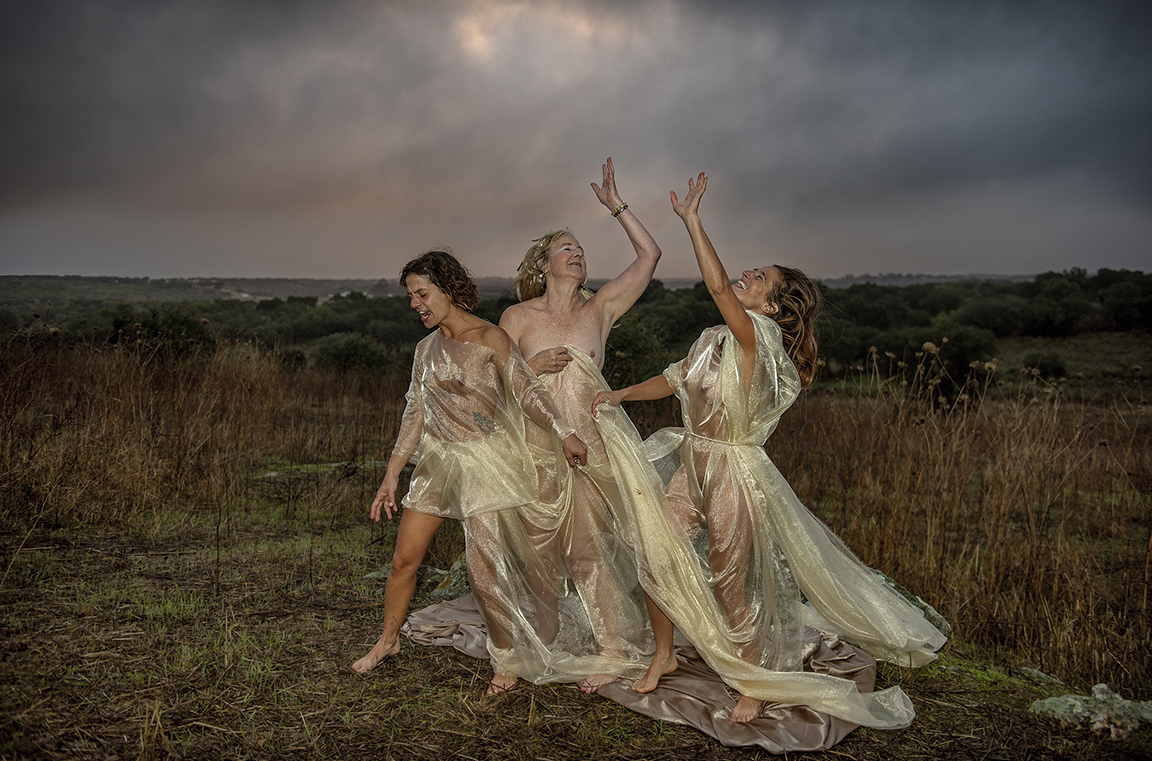
My goddesses met Luís and me at OBRAS a few weeks ago to assist us. Here are two of our early-morning shots. We danced, sang and smoked cigarettes, the fun goddesses.

Works in Progress – Aphrodite and the Horae series, color digital images, Sherry Wiggins and Luís Branco, October 2024.

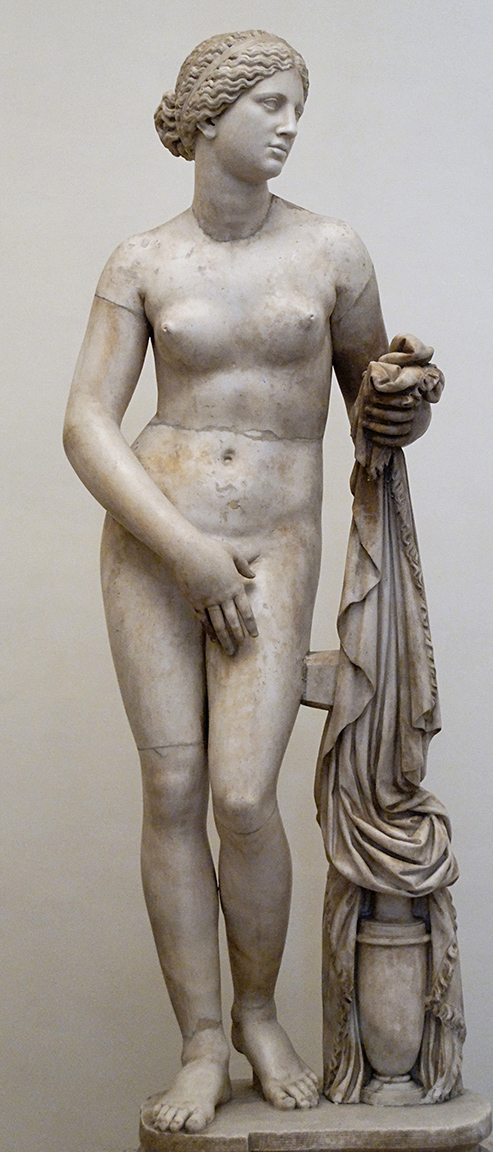
Cnidus Aphrodite, Roman copy after a Greek original of the 4th century BCE, marble. Original elements: torso and thighs; restored elements: head, arms, legs and support (drapery and jug). Museo Nazionale Romano di Palazzo Altemps, Rome.

While the Horae were the first to dress Aphrodite, the famed Greek sculptor Praxiteles (ca. 300 BCE) was the first to (almost) fully undress her. The Cnidus Aphrodite, also known as the Aphrodite of Knidos, above is one of the many Roman copies of the original statue made by Praxiteles around 350 BCE. Praxiteles’s sculpture of Aphrodite was the first fully nude Greek sculpture of a woman (or a goddess). Greek artists had been making nude sculptures of men for centuries before. This Aphrodite is monumental—more than six feet tall—and it was reproduced and copied for many centuries all over the Mediterranean and beyond in different sizes and shapes. Copies of this statue and its kin are displayed in museums and collections all over the world. This sculpture also marks the invention of the Venus Pudica gesture, where the figure covers her pubic area with her hand (apparently a gesture of modesty). This gesture has appeared throughout time in paintings and sculptures. Does it suggest modesty? Or is it an alluring gesture, a sign of welcome? This representation diverges markedly from the representations of our proud Mesopotamian goddesses of love and sexuality (and much more …) Inanna and Ishtar.

“Men say that there are two unrepresentable things: death and the feminine sex.” (Hélène Cixous, 1978: 255)

 “‘Alas! alas! Where did Praxiteles see me naked?’, Aphrodite is said to have exclaimed upon seeing her own image in Knidos. In antiquity just as today Praxiteles’ Knidian Aphrodite was celebrated as the first realistic depiction of the nude female body. It was this particular Aphrodite statue that first presented to us the ‘Classical female beauty’ or the aesthetically ideal form of the female body. Indeed, the image of nude Aphrodite has become equated with high art, and seen as a sign for aesthetics not only for ancient Greece but also for the rest of Western art and culture. This archetype of femininity has become so ingrained in Western aesthetics that it has been placed in the position of a paradigm against which images from earlier and later periods and cultures are evaluated with regard to the degree that they approach, resemble, or fail to follow this ideal.”

(From Women of Babylon: Gender and Representation in Mesopotamia by Zainab Bahrani,from the chapter “That Obscure Object of Desire: Nudity, fetishism, and the female body,” pg. 70)

Jumping forward to the Renaissance, the many paintings and representations of Aphrodite and Venus were influenced by Greek and Roman ideals and representations of the goddess and of the female nude. It was a Western European sexist racist fad that has lasted about 600 years and counting.

Sleeping Venus, perhaps begun by Giorgione and finished by Titian, ca. 1510. Gemäldegalerie Alte Meister, Dresden, Germany.

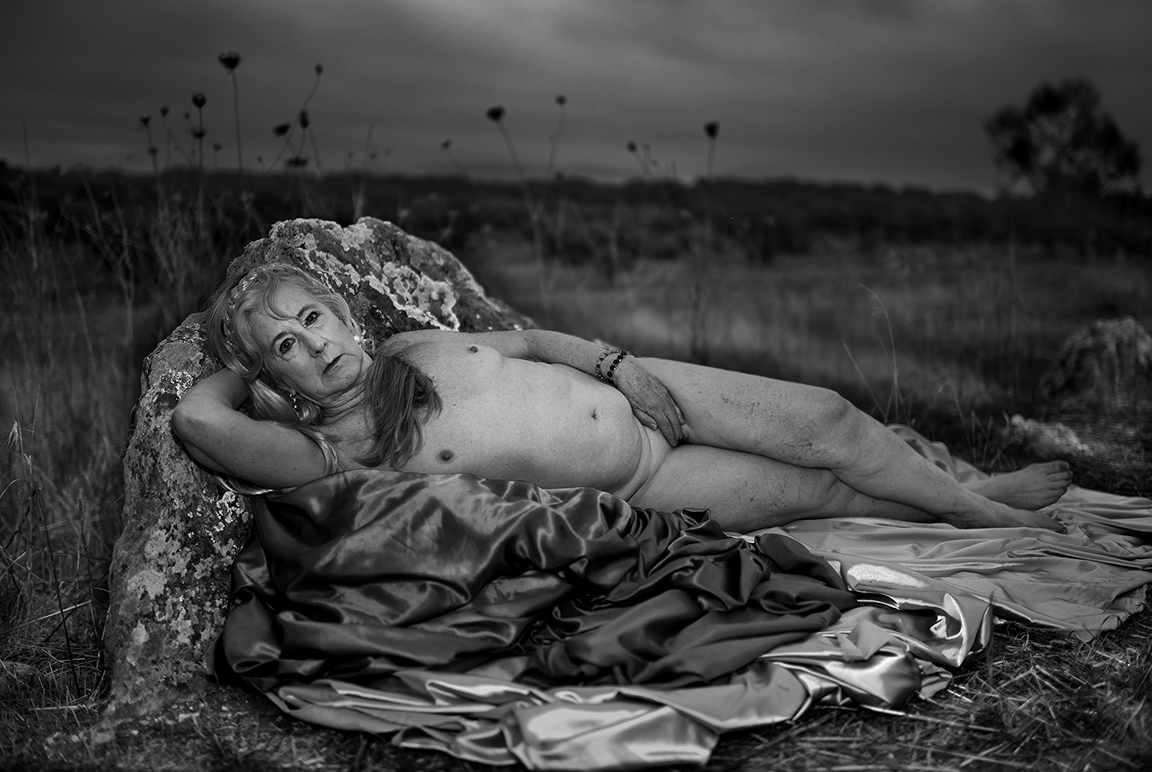
The “Sleeping Venus” is believed to have been started by Giorgione at the end of his life and completed by Titian. The landscape is very Titianesque. This was apparently the first reclining nude of the Renaissance, and it launched the genre of the semi-erotic mythological pastoral. Venus is apparently unaware of our gaze. Again, is she modestly covering herself, or is she stroking herself??

Works in Progress – Venus series, color digital images, Sherry Wiggins and Luís Branco, October 2024.

Luís and I made a series of images of Venus in the landscape at OBRAS-Portugal a few weeks ago, with the reclining nude (and the rock!). I haven’t chosen final versions (of any of our recent images). I like the crouching Venus above or maybe she’s a cougar Venus.

Venus in Front of the Mirror, Peter Paul Rubens, 1614-1615. Liechtenstein. The Princely Collection.

The Rubens painting above, “Venus in Front of the Mirror,” portrays a seventeenth-century Western European sensibility surrounding sex, gender, race and power. The very blond and white Venus is flanked by a black female servant, who tends her golden tresses, and Cupid, who holds up her mirror. The goddess of love and sexuality looks outward from the mirror, very much aware of the viewers who gaze upon her. Her power rests in her recognition of her own beauty and sexuality and the effect of both upon the viewer.

I both love and question Rubens’s “Venus in Front of the Mirror,” as it relates to the HEROINES project and my work in general. For months before leaving for Portugal, I had envisioned myself embodying this same Venus in a performative photograph. I bought a blond wig, and I arranged to have my friends / models / goddesses from the Cortiço Artist Residency come work with Luís and me at OBRAS to create this image. When I first arrived at OBRAS several weeks ago, I ventured to the Saturday market in Estremoz and found an almost-perfect antique mirror. I imagined myself looking out of the mirror of Venus, my late-sixty-something-year-old body (and face) exposed. In so doing, I am reflecting upon the ways in which women’s sexuality has been represented (and misrepresented) over time and how my own sexuality and body consciousness are expressed. Making this image was and is empowering. It’s also a little scary to expose myself in all these nude images. My friends and models, Marta and Marta, my beautiful (younger) goddesses, support me in my vulnerability. This is both a technical image and a poetic image. Luís did a beautiful job with the lighting and the composition.

WIP – Venus in Front of the Mirror, color digital image, Sherry Wiggins and Luís Branco, October 2024.

I am back at home now and posting this after the election. I have been writing and thinking about these goddesses and female power and our bodies and ALL of our rights that are now in great peril. F__K THE PATRIARCHY. We must mobilize, be warriors for the rights of ALL people.