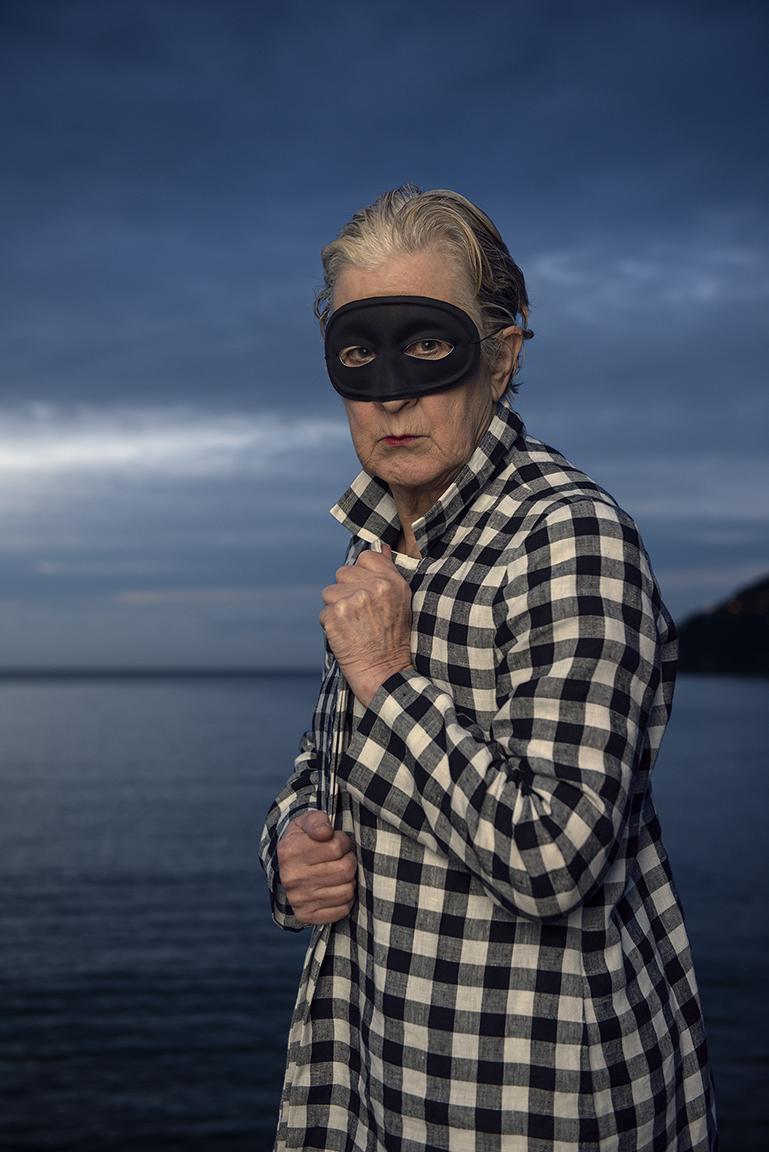
I’ve been thinking about Claude Cahun, Sherry Wiggins and LuÍs Branco, 2025.
Introduction
French artist, photographer and writer Claude Cahun (1894-1954) and her partner in art and life, artist Marcel Moore (1892 -1972), have been on my mind (and part of my art practice) for several years. Luís Branco and I shot the image above, as part of the series I’ve been thinking about Claude Cahun, while working at La Napoule Art Foundation on the French Riviera. I am thinking (again) about Claude Cahun and Marcel Moore as I prepare to make a pilgrimage to Jersey Island this February.
Claude Cahun (born Lucy Renée Mathilde Schwob) and Marcel Moore (born Suzanne Alberte Malherbe) lived out the last years of their lives on the island of Jersey, the largest of the Channel Islands, located in the English Channel between England and France. They moved from Paris to Jersey permanently in 1937. The Germans occupied Jersey (and the other Channel Islands) beginning in 1940; Cahun and Moore lived under German occupation from 1940 to 1945. During this period, Cahun and Moore undertook a valiant and creative campaign of resistance to the Nazis, the war and the occupation of Jersey. Four years into the occupation, they were discovered and arrested; they were jailed, tried and sentenced to death. Fortunately, the war ended, and the island was liberated before they were killed. They were released on May 8, 1945.
Jersey Heritage, an organization that protects the island’s culture and heritage, artifacts and archives, houses the largest collection of Cahun and Moore’s artworks, writings, and photographic works. Jersey Heritage also holds their letters and the records of their anti-Nazi, anti-fascist activities. https://www.jerseyheritage.org/history/claude-cahun-and-jersey/
St. Brelade’s Parish Church cemetery, beside the house where Cahun and Moore lived, is their burial ground. In my ongoing homage to and obsession with Cahun and Moore, I am making the trip to Jersey to explore the island where they lived and to make new photographs with my creative partner, photographer Luís Branco.
I will use feminine pronouns for Claude Cahun and Marcel Moore throughout this blog post. The gender-neutral pronouns we utilize today were not in use during their lifetimes. I will also stick, primarily, to the pseudonyms Claude Cahun and Marcel Moore that Lucy Schwob and Suzanne Malherbe adopted early in their lives.
In February of 2025, as artists in residence at La Napoule Art Foundation in France, Luís Branco and I created many new works in direct conversation with Cahun and Moore’s photographic works. These performative photographs reference works that Cahun and Moore made in the 1920s in Paris. Our combined images (both theirs and ours) are theatrical, sometimes campy, serious but not self-serious. I cut my hair short and acted out my more butch and thespian self. You can see many of these works on my website: https://www.sherrywiggins.com/work/m-in-training-with-claude-cahun
I shaved my head in an act of solidarity with Cahun. Cahun and Moore’s photographic portraits from roughly 100 years ago have been an inspiration for me and for many others. Cahun’s radical resistance to gender identification as either male or female, her fearless portrayal of the fluidity and theatricality of identity is so relevant today.
On a personal level, Cahun’s work has been a provocation to examine my own cisgender female identity. The haircut was liberating for me: through it I realized that I identify (in current terminology) as a straight femme living in a queer world.
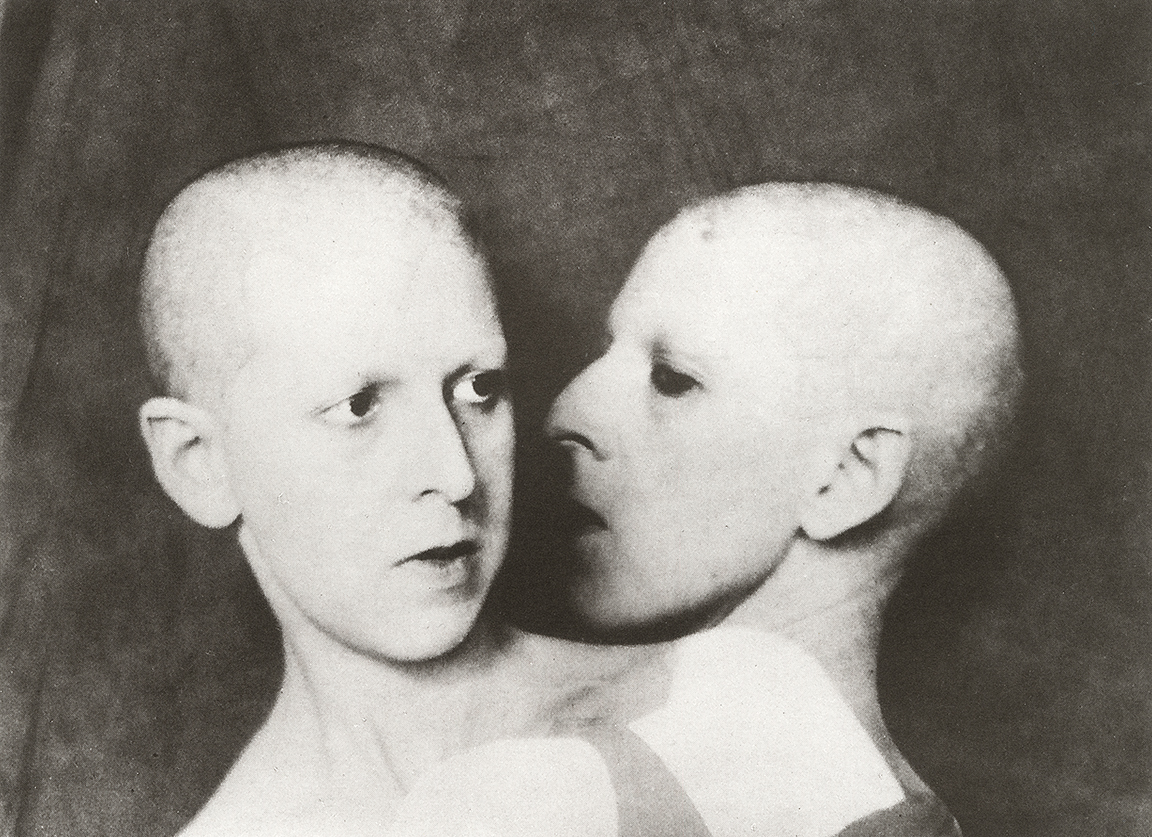
Que me veux tu?, Claude Cahun and Marcel Moore, 1929.

What do you want from me?, Wiggins and Branco, 2025.
A transmutation occurs in me (a reconfiguring of my own identity) in the act of reinterpreting and re-representing Cahun in photographs. This uneasy but welcome metamorphosis / transfiguration of self that I have established with Cahun has continued to be a catalyst for my work.
Jersey before the War
Cahun and Moore vacationed on Jersey during the years before 1937. In contrast to the theatricality and sophistication of the images they made in Paris, the images they made on Jersey communicate a profound connection to the elements and the natural surroundings of Jersey. We see Cahun occupying liminal spaces, between earth and water, body and environment, self and nature.
In the first image below, Cahun’s figure is doubled and reversed and swathed in gauzy fabric in waters that border a rocky ground. The profile of Cahun’s golden head is doubled and opposed as her face merges and emerges within the terrestrial surface she faces in the second image. Cahun’s figure is barely visible within the rippled waters in the image En Océanie. In these photographs, Cahun and Moore mirror, double, reverse, mask and reflect concepts of self and identity within the natural surroundings of Jersey. I love these images; they align with many of the photographs that Luís and I have made on land and waterscapes over the last several years.
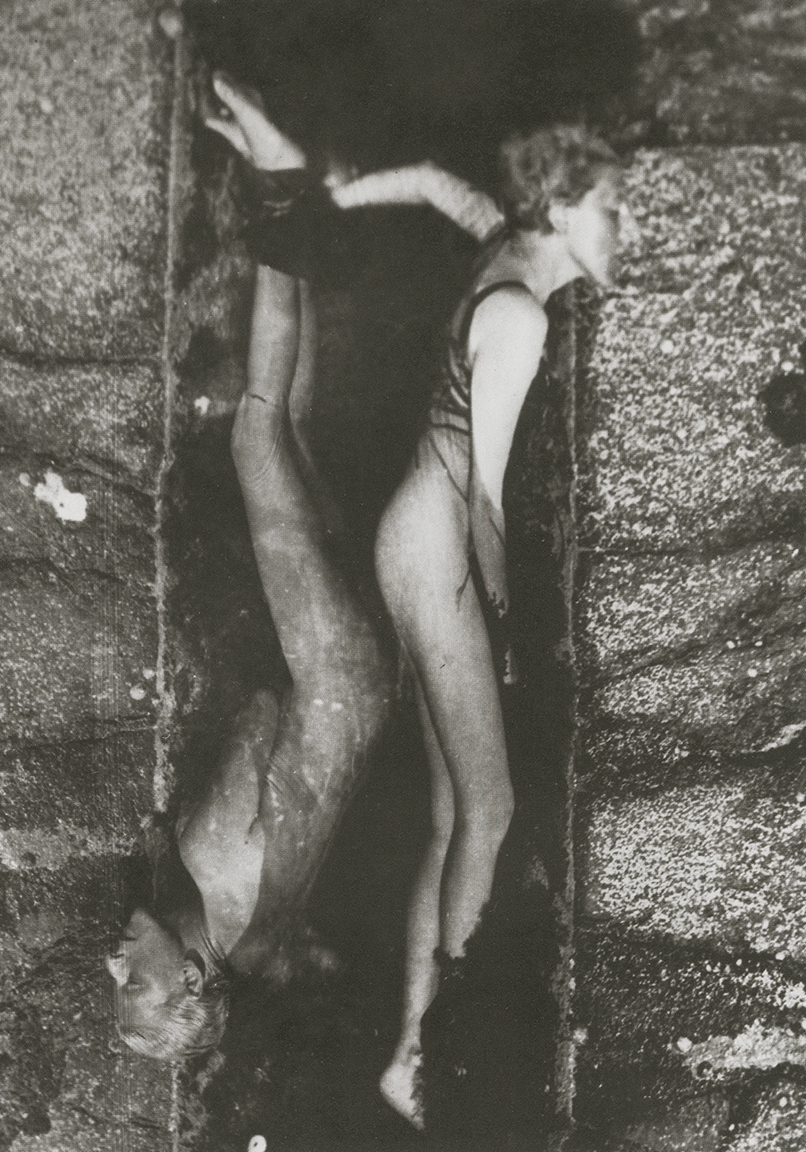
Untitled (Double Body), Claude Cahun and Marcel Moore, 1928.
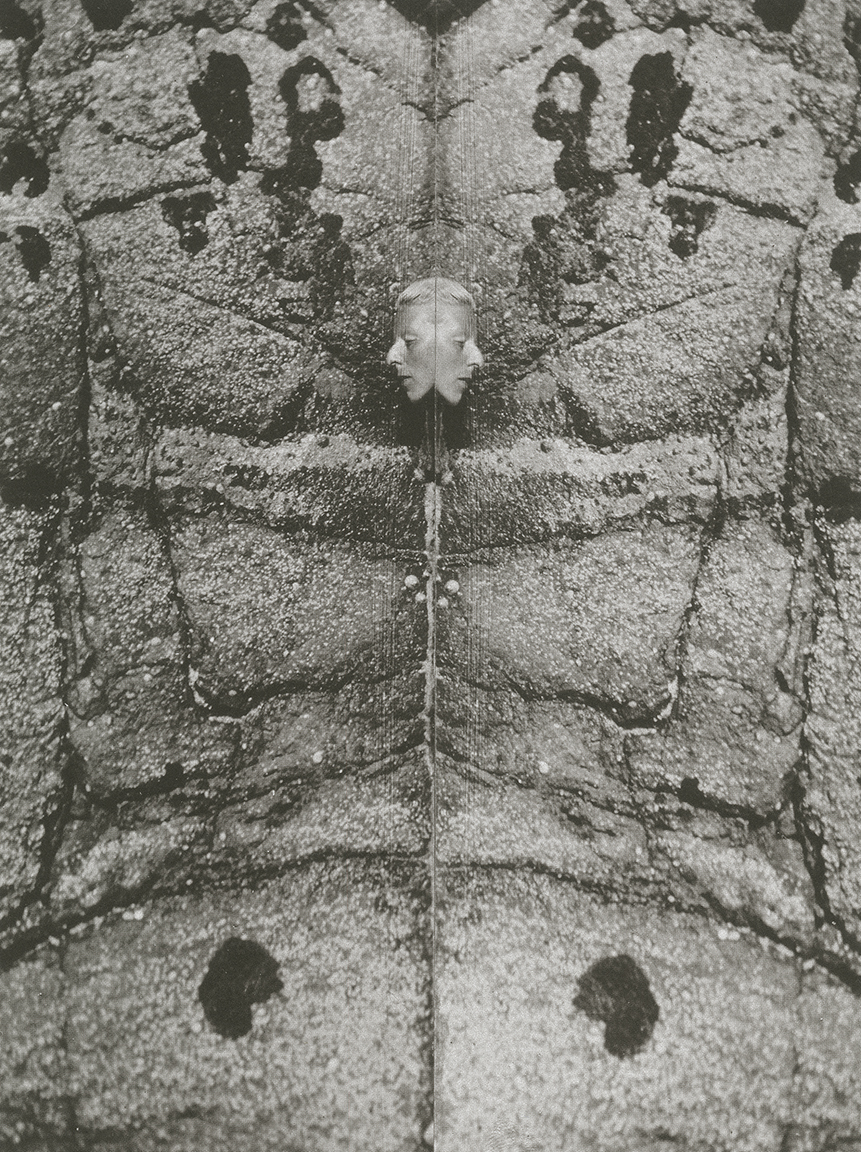
Untitled (Double Face), Claude Cahun and Marcel Moore, 1928.
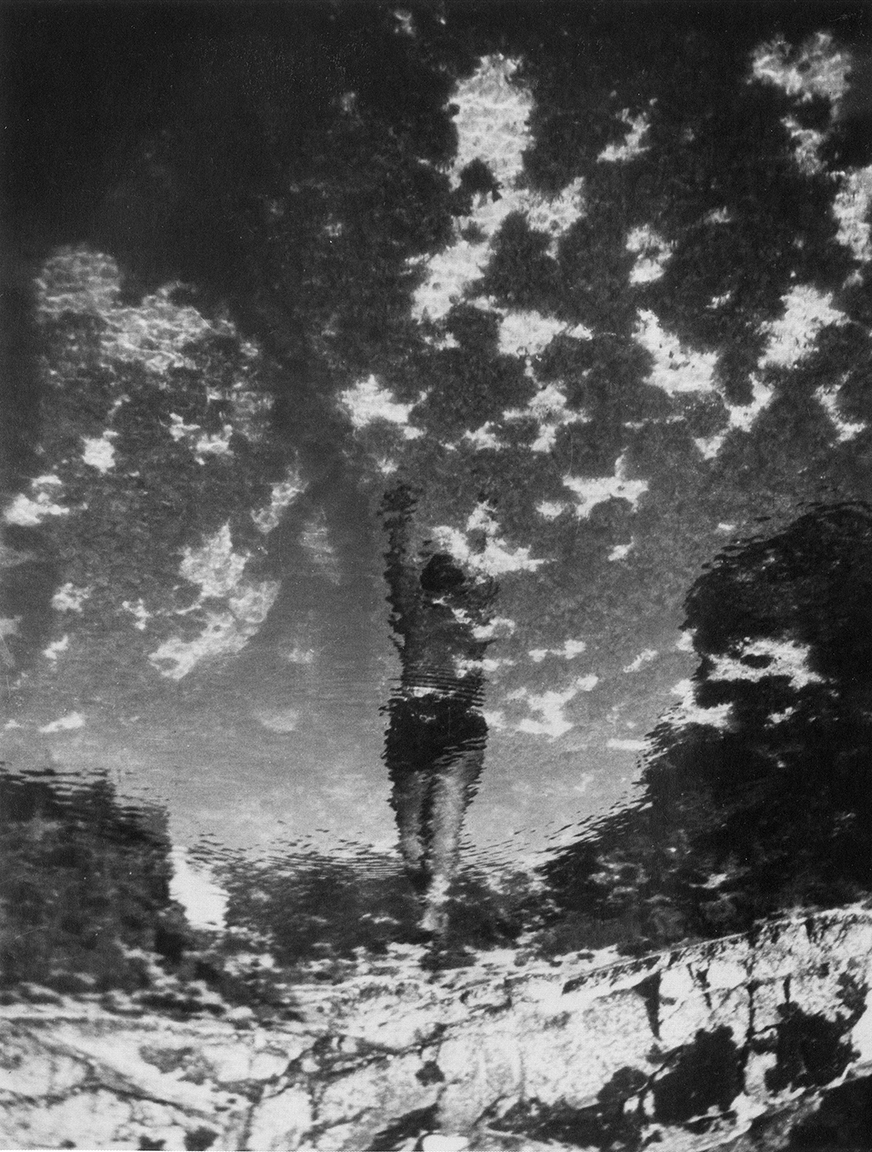
En Océanie, Claude Cahun and Marcel Moore, 1932.
I have recently discovered the work of feminist scholar Amelia Groom. Groom was in Jersey doing research on Cahun and Moore and wrote this:
Something I didn’t understand until I travelled here (Jersey) is that the Channel Islands sit in waters with an extremely dramatic tidal range—one of the most extreme in the world. The island of Jersey is said to double in size at low tide. I suppose you could also say that it halves in size at high tide. Or you could say, more accurately, that it has no fixed size or shape. Like Claude Cahun, this land mass is a continual shapeshifter, always spilling out from itself, and pulling veils up over itself, and calling its own edges into question.
Amelia Groom, In the ARMS of the SEA: CLAUDE CAHUN and MARCEL MOORE at the WATER’S EDGE, 2024.
An essential part of my art practice and process has been to study and research Cahun and Moore’s lives and works in books, catalogues and academic essays.

My Cahun/Moore library
I have been rereading Jennifer L. Shaw’s extensive (and fabulous) 2017 biography, Exist Otherwise: The Life and Works of Claude Cahun, focusing specifically on the chapter titled Spiritual Arms Instead of Firearms: Cahun and Moore on the Isle of Jersey, which describes Cahun and Moore’s lives on Jersey from the late 1930s onward. Around 1936, Cahun started talking about leaving Paris permanently. Her health was fragile and she was, of course, well aware of rising anti-Semitism in France (Cahun’s father was Jewish) and the onslaught of fascism in Germany and beyond. Here Shaw describes Cahun’s thinking during this time:
She began to talk about a ‘physical and primordial need to live in the countryside’, and wanted to leave Paris. It was as if she felt her work there was done. Their ties to the city were finally torn asunder when Moore’s mother (Cahun’s stepmother) finally passed away. In a letter of 1951, Cahun explained that she felt ‘an extreme malaise, the premonition of danger’ at the end of 1936.
Shaw quotes Cahun:
The idea formed in my head, as soon as the death of my stepmother cut the last family tie. We had friends . . . a stable, comfortable, happy life. Suzanne didn’t want to leave: she didn’t like moving and thought that life in the countryside wouldn’t suit me as well as I imagined. . . . I proposed Jersey, knowing full well that I wouldn’t be able to drag her any further.
Claude Cahun in François Leperlier, Claude Cahun: L’Exotisme Intérier (Paris, 2006), pp. 377-80, in Jennifer L. Shaw’s Exist Otherwise, pp. 199 -200.
In 1937, Cahun and Moore moved to Jersey permanently, leaving their high-profile lives in Paris. They reclaimed their given names, Lucy Schwob and Suzanne Malherbe. (I will continue to use the names Claude Cahun and Marcel Moore throughout this blog for consistency). The fact that they were stepsisters also gave them a ‘cover’ in this more provincial setting. With the death of Marcel’s mother, the Malherbe-Schwob family estate was settled, and they inherited enough money to buy a beautiful (and quite large) stone farmhouse, La Rocquaise, located right on St. Brelade’s Bay.

La Rocquaise, the home of Marcel Moore and Claude Cahun, c. 1938.
During these years prior to the German occupation in 1940, Claude and Marcel enjoyed the ocean, their garden and their lovely house full of artworks, books and family furniture. Several friends came from Paris to stay with them. However, as far as the local population was concerned, Cahun and Moore kept mostly to themselves. The islanders saw the ‘sisters’ as eccentric and bourgeois middle-aged women, who walked their cat, Kid, on a leash and sunbathed naked in their garden.
Cahun later wrote:
The illusion of holiday without end, a garden already in flower. It seemed that the only thing left to do was to become familiar with the trees, the birds, the doors, the windows and pulling from the clothing trunk the appropriate article, short or long, to dive into the sun and the sea.
Claude Cahun, ‘Letter à Gastone Ferdière,’ in Écrits, p. 665, in Jennifer L. Shaw’s Exist Otherwise, p. 203.
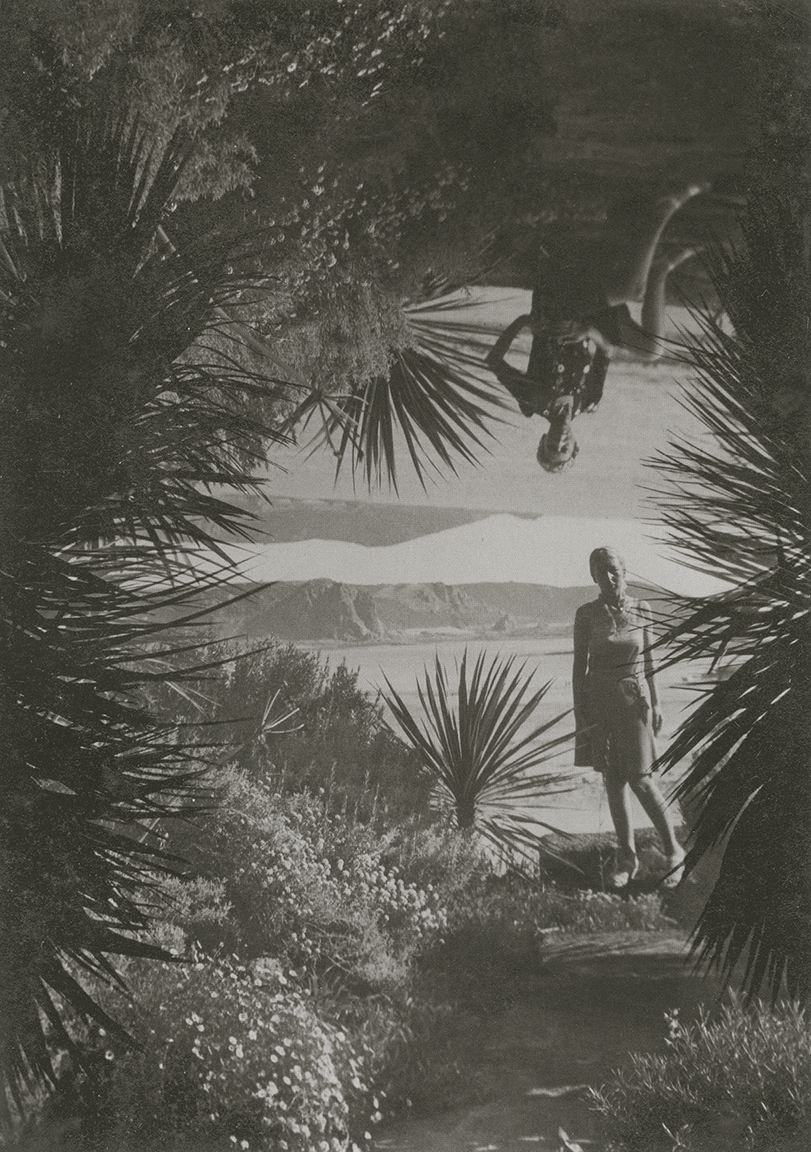
Untitled, Claude Cahun and Marcel Moore, 1939.
Cahun is doubled and reversed (again) on the horizon in the image above taken near La Rocquaise. They continued their photographic practice. Below are a few of my favorites from this period:
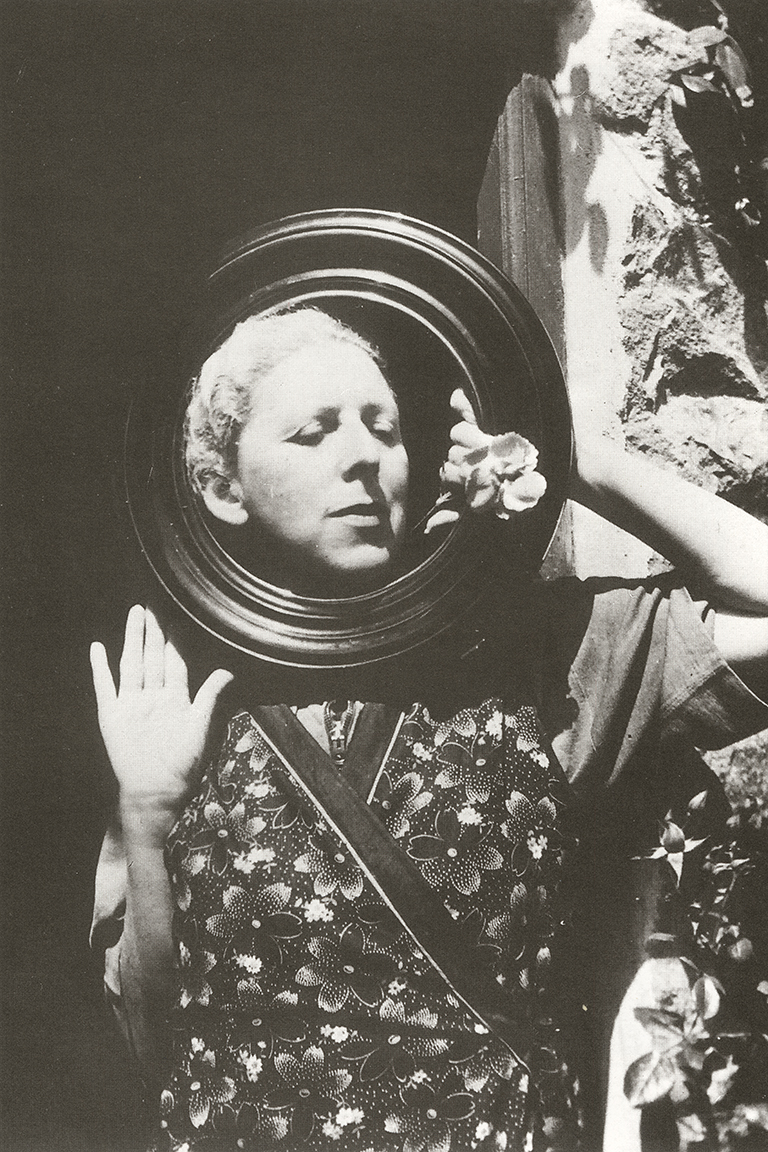
Untitled (Framed Face), Claude Cahun and Marcel Moore, 1938.
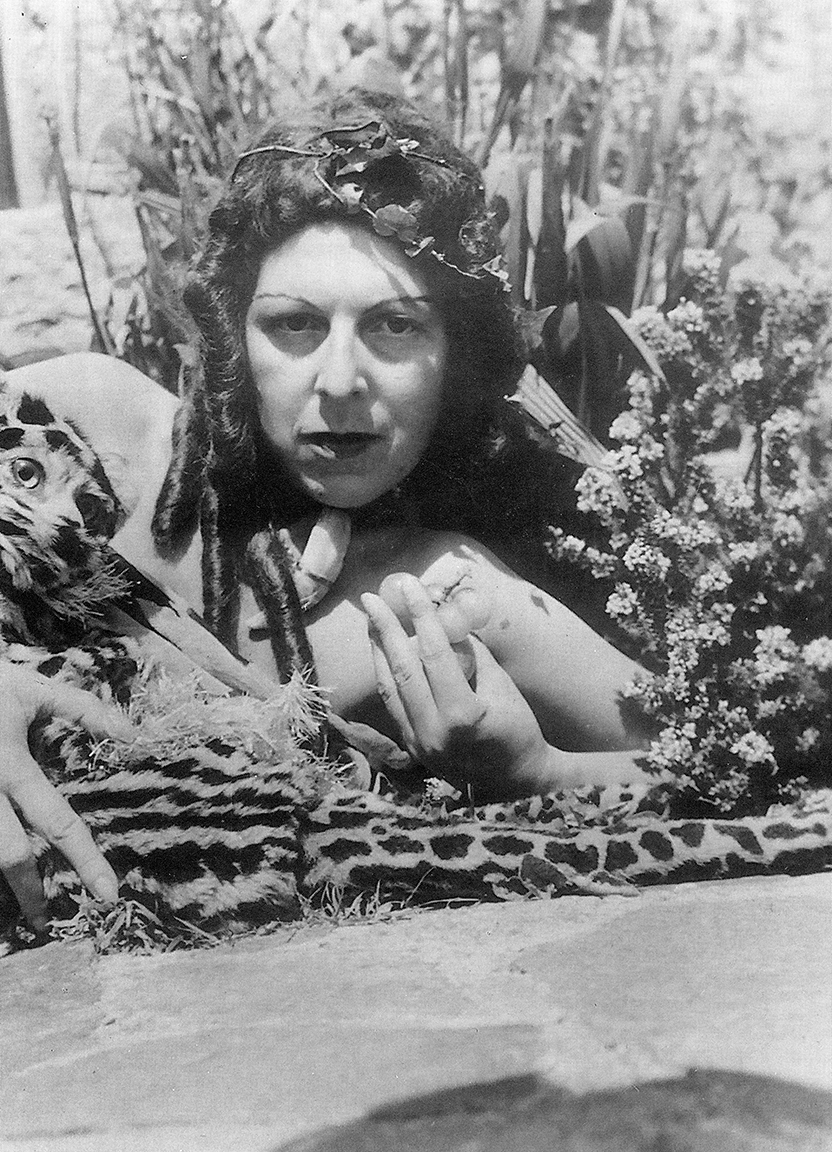
Untitled (Lying in the Garden), Claude Cahun and Marcel Moore, 1939.
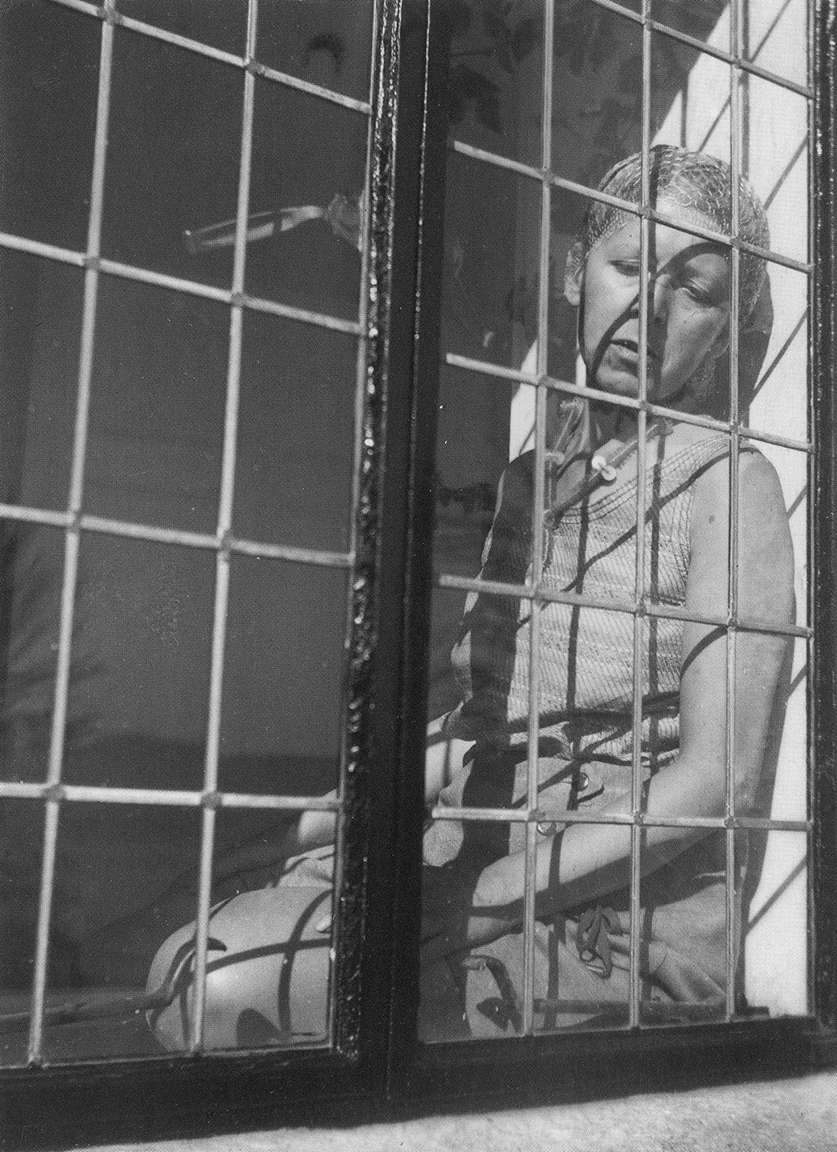
Untitled (the Window), Claude Cahun and Marcel Moore, 1938.
Within this seemingly idyllic life on Jersey, Cahun and Moore were well aware of Hitler’s relentless march across Europe. You can read about Cahun and Moore’s life during WWII and after the war in Part Two: Pilgrimage to Jersey (and to Claude Cahun and Marcel Moore) – Occupation and Resistance, Arrest and Jail, After the War in my blog post:
 sherrywigginsblog