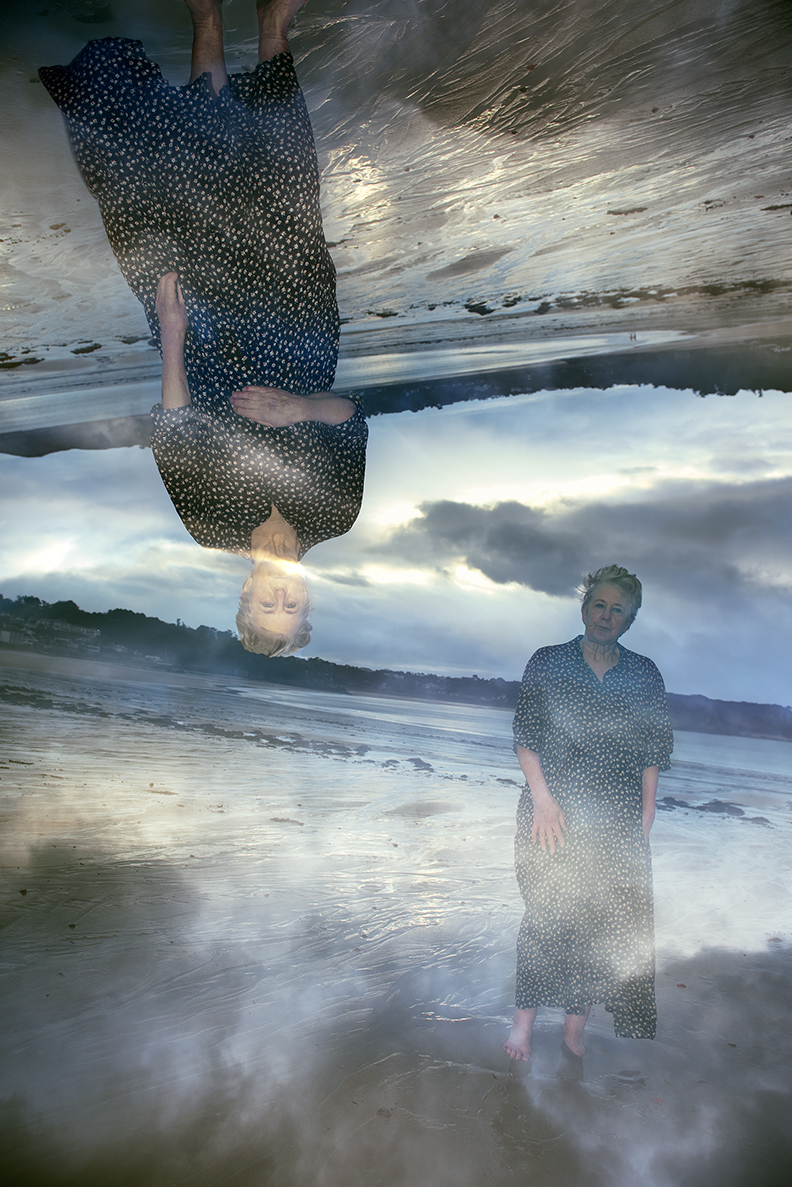
WIP, Sherry Wiggins and Luís Branco, 2026.
Luís Branco and I created the image above in Jersey on St. Brelade’s Bay in February of this year. We were working in conversation with the doubled and reversed horizon photograph that Claude Cahun and Marcel Moore made in the front yard of their home on St. Brelade’s Bay in 1939.
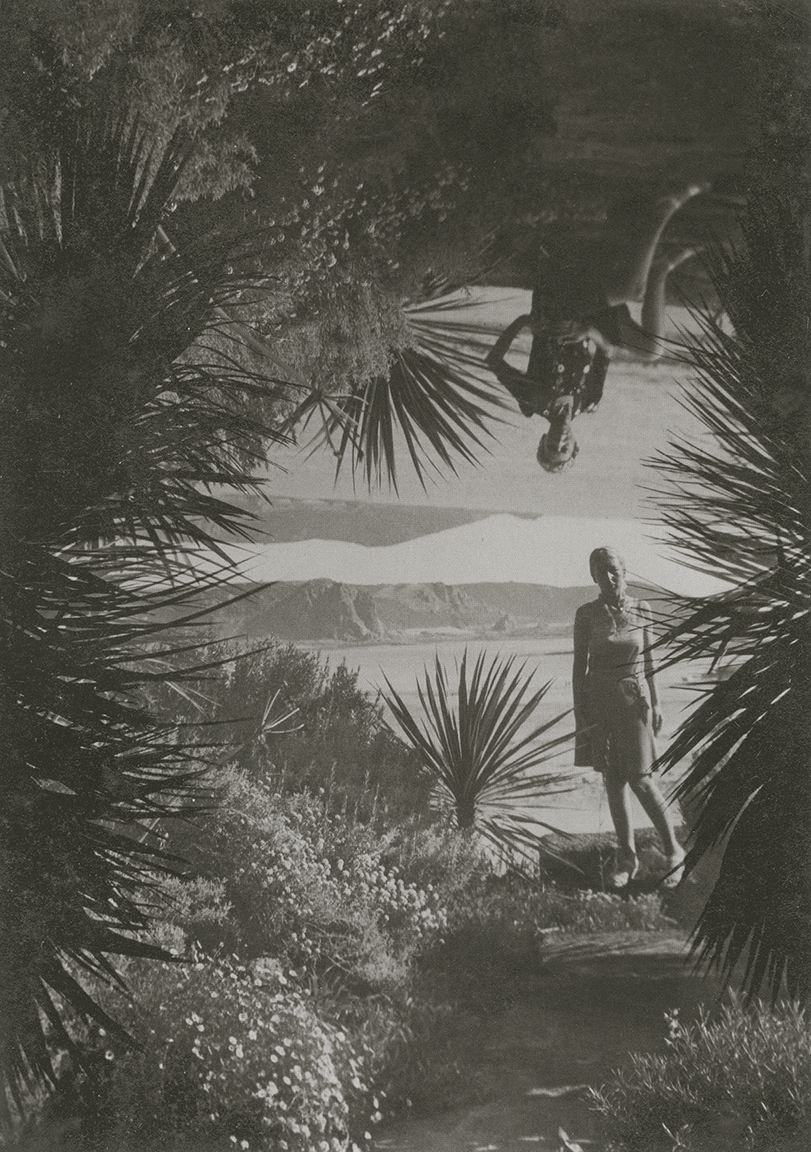
Untitled, Claude Cahun and Marcel Moore, 1939.
I have been back from Jersey for several weeks, sorting through, contemplating and editing the images that I made there with photographer Luís Branco. The photographs that French artist Claude Cahun (1894 – 1954) created with her partner in art and life, Marcel Moore (1892 – 1972), over their lifetime together, have possessed me for years now. They are my heroines. Since 2019, I have been researching their lives and works and making performative photographic works with Luís that are in dialogue with their practice.
Claude Cahun and Marcel Moore lived out their final years on Jersey, the largest of the Channel Islands located off the coast of Normandy. Luís and I made the trip to Jersey to retrace their lives and to reimagine and reconstruct the photographs they made there. We worked all around St. Brelade’s Bay, where Claude and Marcel lived: in the broad tidal beach, in the golden rocks nearby, in the cemetery where Cahun and Moore are buried and along the portion of Hitler’s Atlantic Wall that runs along St. Brelade’s Bay. We also spent time in the Jersey Museum and the Jersey Archive in St. Helier, which holds the largest collection and archive of Cahun and Moore’s photographs, artworks and written works anywhere.
Recap
But first, for those of you who don’t know about Cahun and Moore, I will do a recap of their complex, beautiful and fearless lives. Claude Cahun was born Lucy Renée Mathilde Schwob in Nantes, France in 1894 into a prominent, intellectual, Jewish family. Her father, Maurice Schwob, was a respected publisher. Marcel Moore was born Suzanne Alberte Malherbe in 1892, also to a well-to-do family in Nantes. Lucy and Suzanne became best friends at a young age. As it happens, Suzanne’s mother married Lucy’s father, and they became stepsisters. They started taking photographs together in their early teens, most always with Lucy as the subject and Suzanne behind the camera. Theirs was a primarily private practice that continued throughout their life together. Neither had any training in photography and both were talented artists in other mediums.
In their early twenties, Lucy took on the nom de plume Claude Cahun and Suzanne adopted the name Marcel Moore. Cahun was a surrealist writer as well as a journalist, translator and intellectual. Moore was a fine artist, painter and illustrator. They moved to Paris together in 1920 and became part of the vibrant cultural life that existed there during the twenties. Cahun performed in avant-garde theater, they attended films, and they were active in literary and intellectual circles. Cahun published her feminist text Héroïnes in 1925 and, in 1930, completed her opus, a surrealist anti-memoir called Aveux non Avenus, which included remarkable photomontages made in collaboration with Moore. Their photographs made in Paris during the twenties challenge stereotypes of the female ‘subject,’ identity, fixed gender, the ‘gaze’ and subjectivity. Their work challenged the fundamentals of how photographs were made. The image below is one of Cahun and Moore’s few titled images, Que me veux tu?. Luís and I made our own version, What do you want from me?, last year at La Napoule Art Foundation.
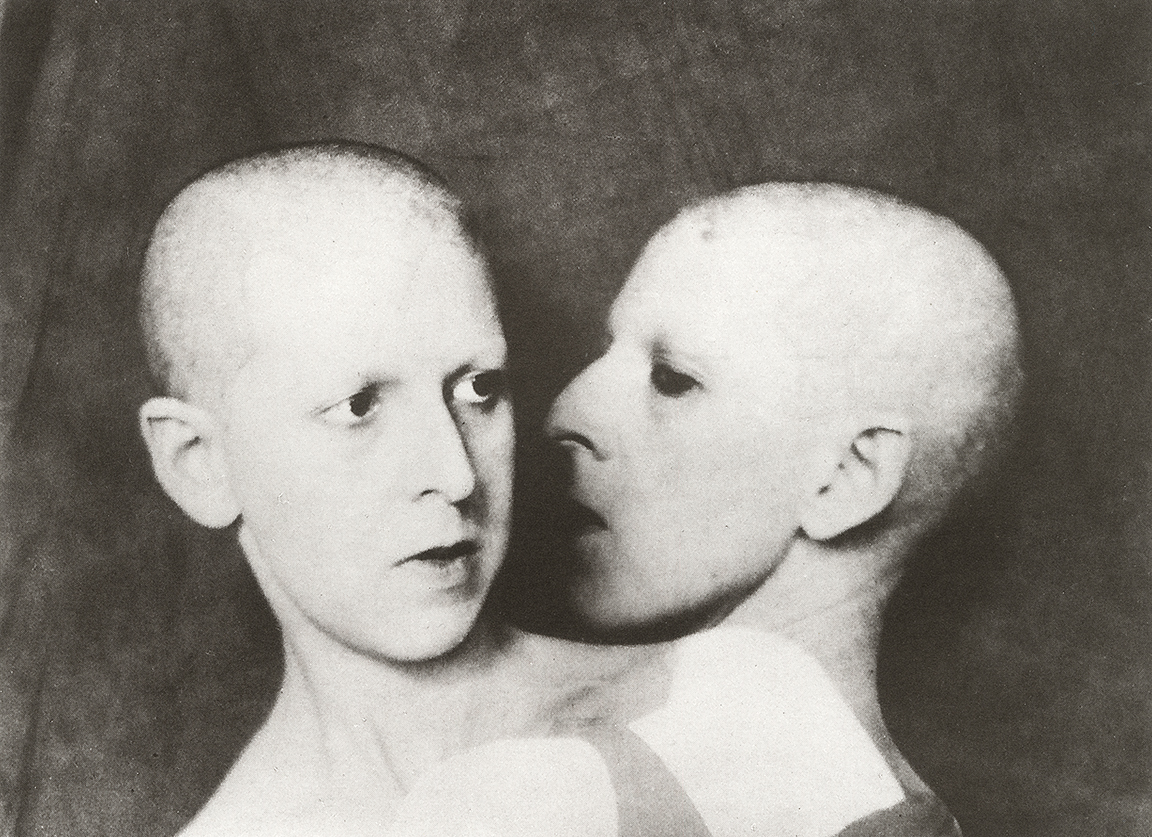
Que me veux tu?, Claude Cahun and Marcel Moore, 1928.
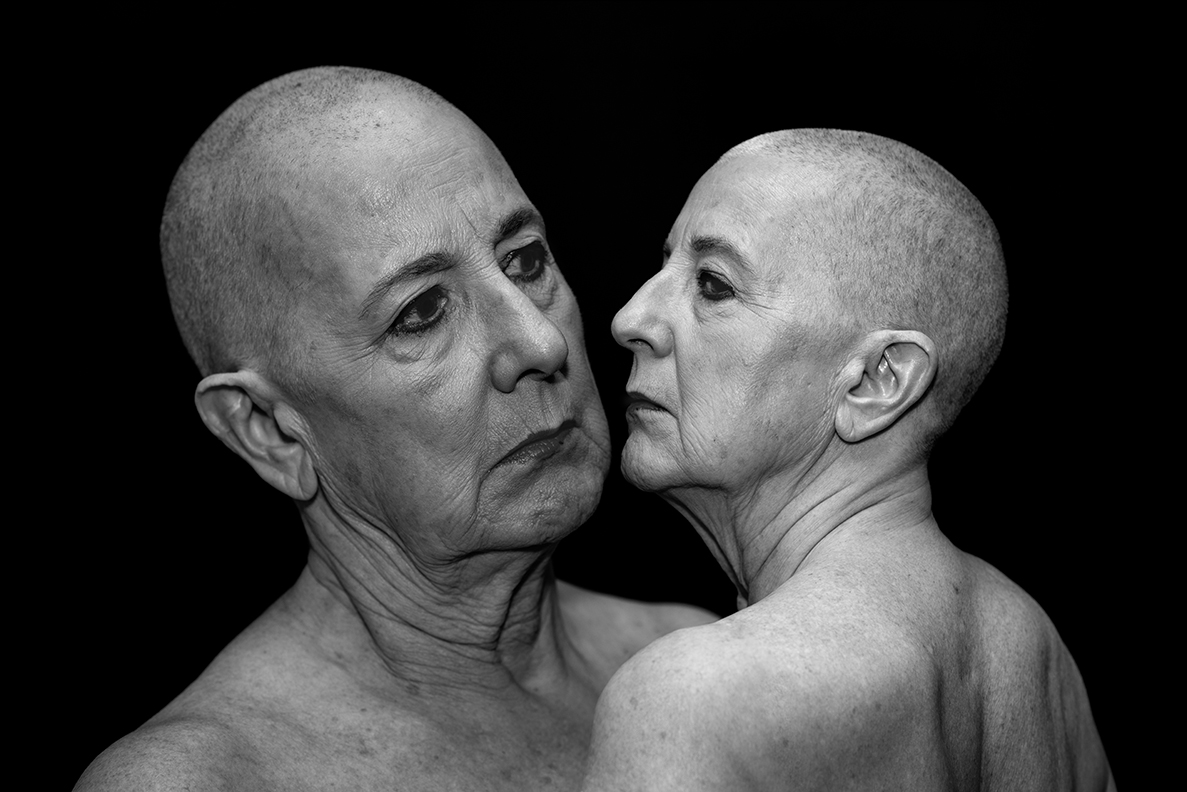
What do you want from me?, Sherry Wiggins and Luís Branco, 2025.
During the early- to mid-1930s, artmaking, writing and politics became necessarily connected for many artists and intellectuals due to the rise of totalitarianism, fascism and antisemitism. Cahun wrote for and was part of several of the more leftist groups, including the Surrealists, the Association of Revolutionary Artists and Writers and Contre-Attaque. Cahun and Moore also produced and exhibited surrealist objects and still life photographs during this time. However, by 1936, Cahun had become disillusioned with their lives in Paris, and she spoke of a “physical and primordial need to live in the countryside.”
Cahun and Moore decided on Jersey island, a place they both loved. They moved in 1938. Unfortunately for all, the Germans occupied Jersey and the other Channel Islands in 1940. Cahun and Moore made the decision to stay and actively (and courageously) resist the war and the Nazi occupation of Jersey, which they did for four long years. They were eventually discovered, jailed and sentenced to death. Luckily the war ended in 1945, and they were released. Their profound relationship and collaboration in art and life is alive and visible on Jersey Island.
Jersey Rocks
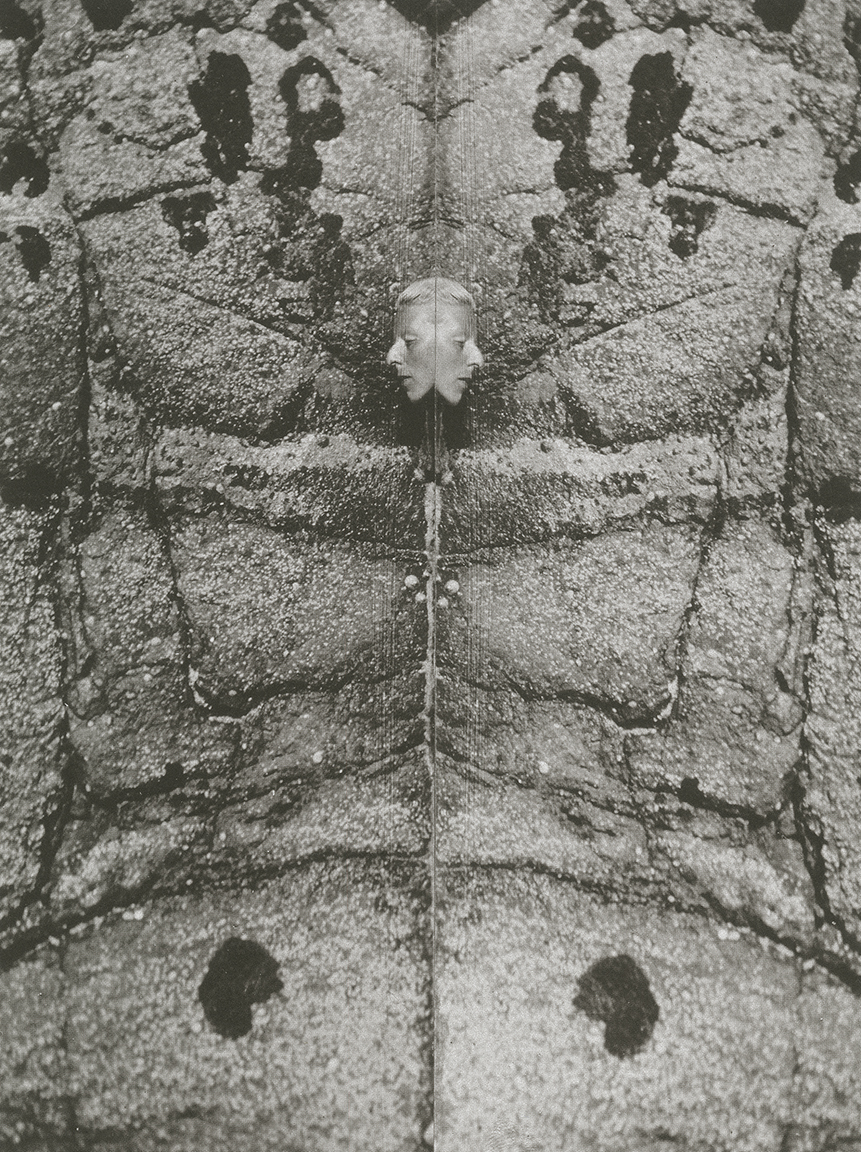
Untitled, Claude Cahun and Marcel Moore, 1928.
Jersey is an island of massive rocks, tidal waters and sandy beaches. Before they moved to Jersey permanently, Cahun and Moore spent summer holidays there in the 1920s and 30s, always at the St. Brelade’s Bay Hotel. The images they made during this time are very different from the more theatrical and performative photographs they were making in Paris. In Jersey, their photographs are grounded in this particular place, this island. Many of their images call into question the nature of the self and the body in relationship with the natural world. I particularly love the image of Cahun’s doubled profile against the rock formation that looks like a monumental stone body. I am pretty sure Cahun’s face is painted gold.
As you can see, Cahun and Moore frequently double images and/or reverse images vertically and horizontally, contradicting the concept that there is a singular ‘I’ or ‘self’ in place and time. There is a sense that Cahun’s bodies/selves have no boundaries or confines within space.
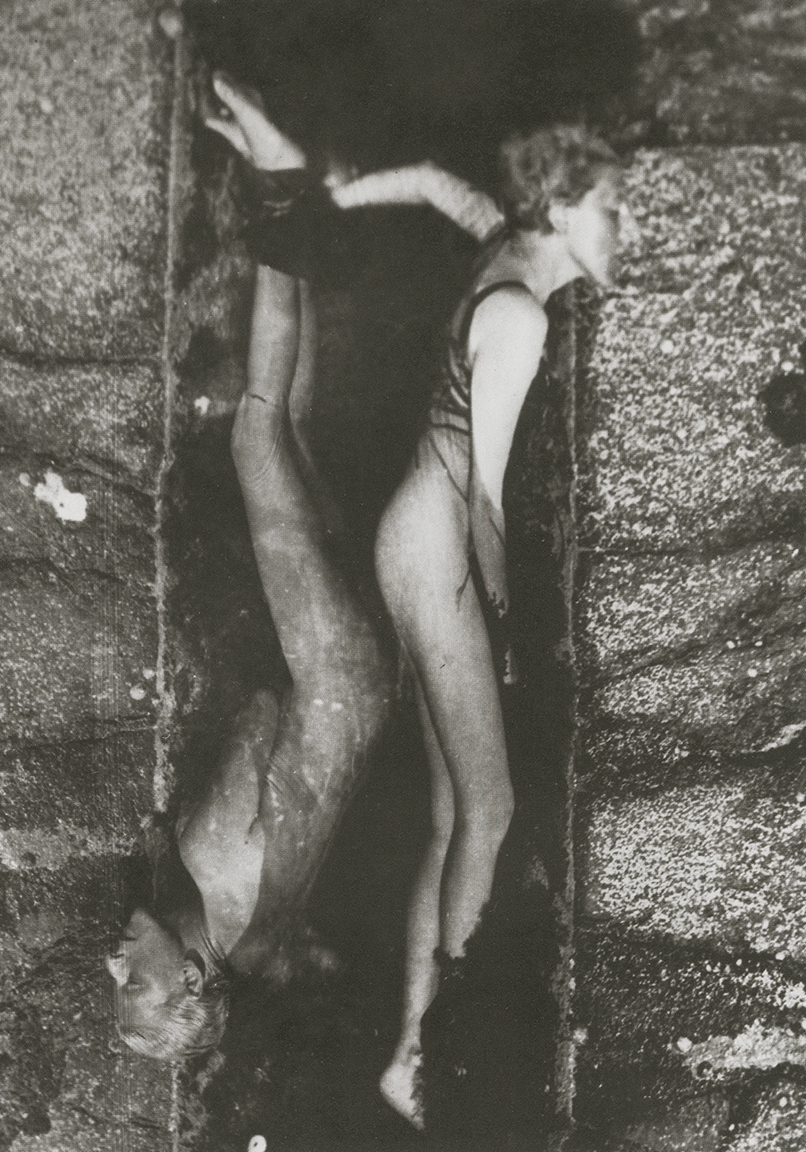
Untitled, Claude Cahun and Marcel Moore, 1928.
We did several photoshoots in the golden rock formations on St. Brelade’s Bay. I brought gold make-up and black gauzy cloth. Our images are informed by Cahun and Moore’s, but they also remind me of works Luís and I have created in the landscapes and waterscapes of Portugal. The figure with the golden face / me is emerging / merging within the multi-colored rocks and tidal waters and resting within the steep stones that reach to the sky. Working at low tide in cold and slippery conditions in February, sometimes barely clothed, was tricky.
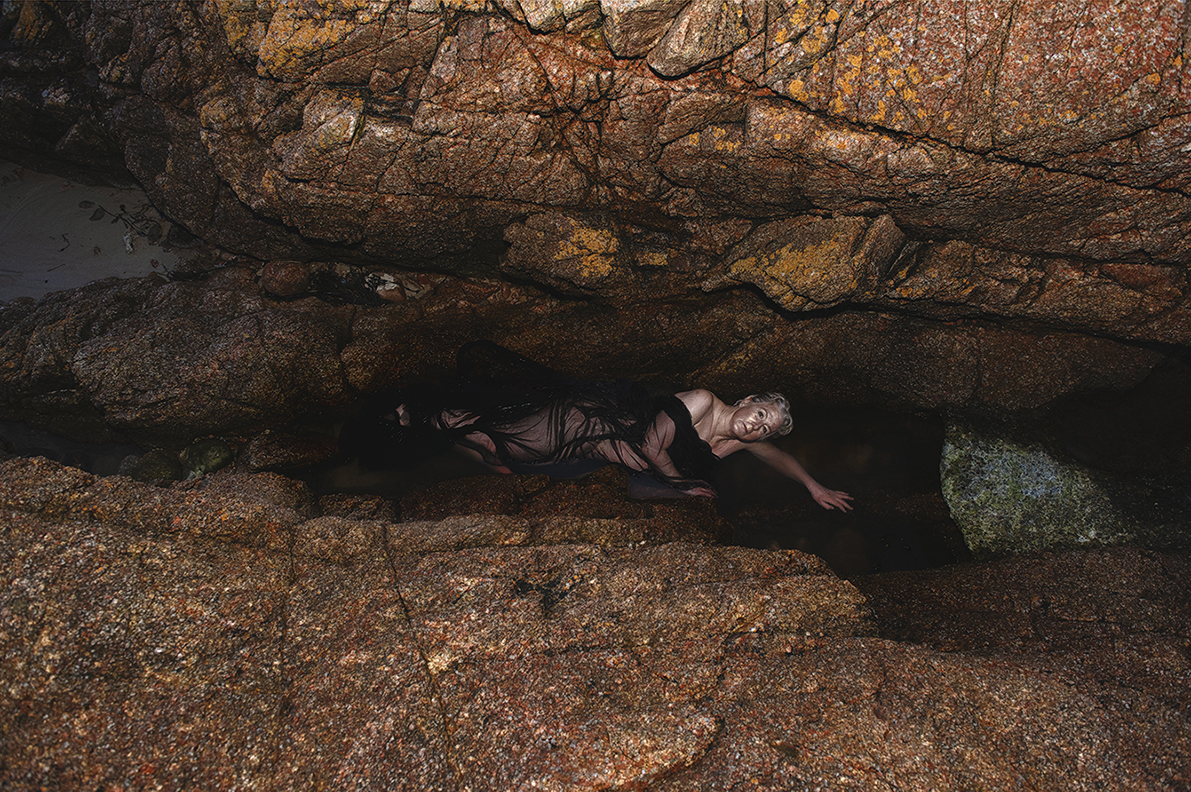
WIP, Sherry Wiggins and Luís Branco, 2026.
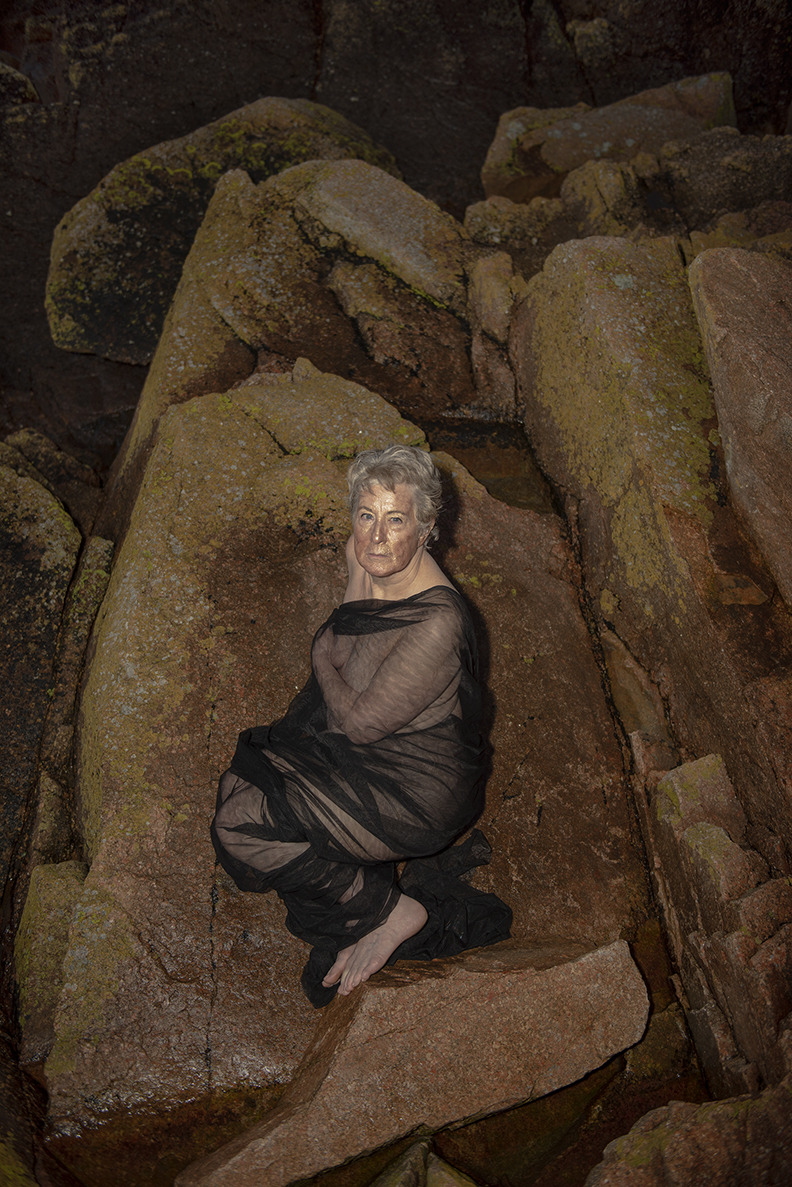
WIP, Sherry Wiggins and Luís Branco, 2026.
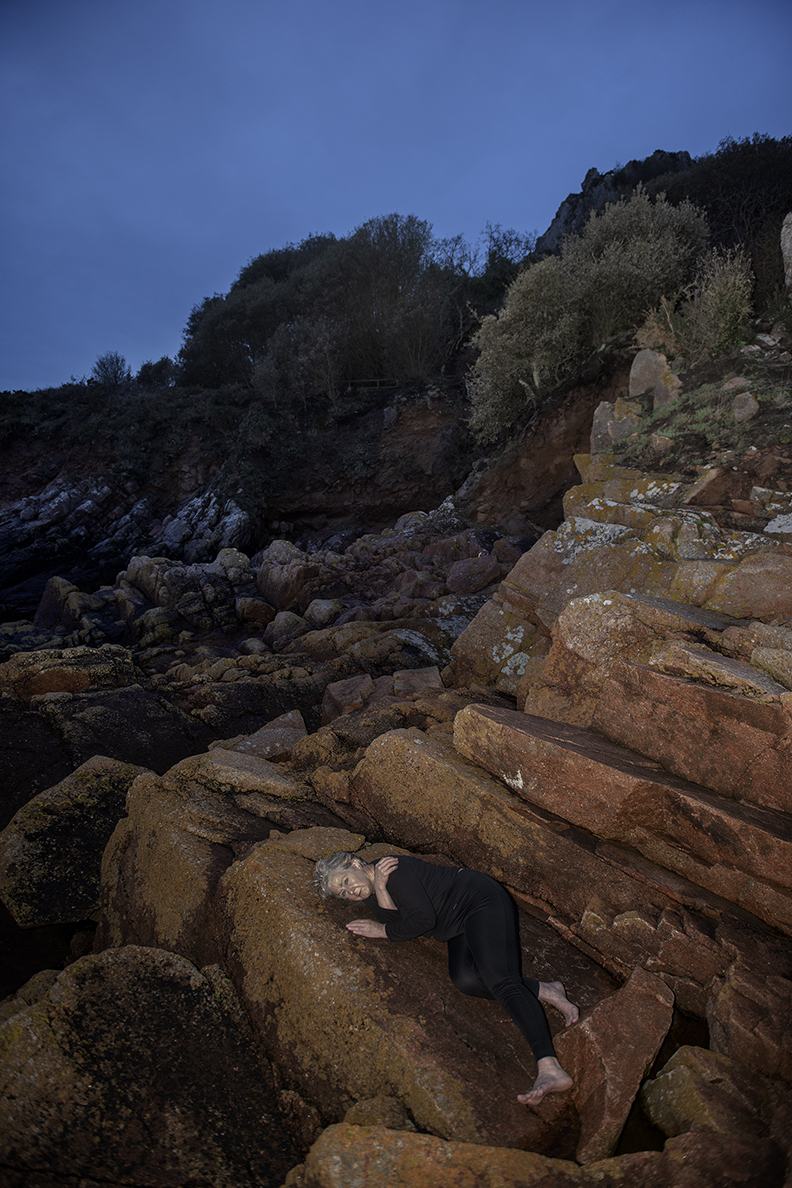
WIP, Sherry Wiggins and Luís Branco, 2026.
Permanent Move to Jersey
When Cahun and Moore moved, permanently, from Paris to Jersey in 1938, they reclaimed their given names, Lucy Schwob and Suzanne Malherbe. (For this blog, I will continue to refer to them as Claude Cahun and Marcel Moore.) They presented themselves to the local islanders as sisters (remember, they really were stepsisters). They bought a large stone house called La Rocquaise that sits on St. Brelade’s Bay with money from their family inheritance. They filled the house with artworks, family heirlooms, a fabulous library. A large garden surrounded the house, and the bay was like an extension of their front yard. Friends visited from Paris, but Claude and Marcel kept to themselves as far as the local islanders were concerned. The locals they encountered thought of them as eccentric French ladies who walked their cat on a lead and sunbathed naked in the garden.
The War, the Occupation and Resistance
Claude and Marcel’s peaceful lives changed quickly when the Germans invaded and occupied Jersey and the other Channel Islands in 1940. Many of the islanders evacuated before the occupation began. Claude and Marcel made the conscious decision to remain.
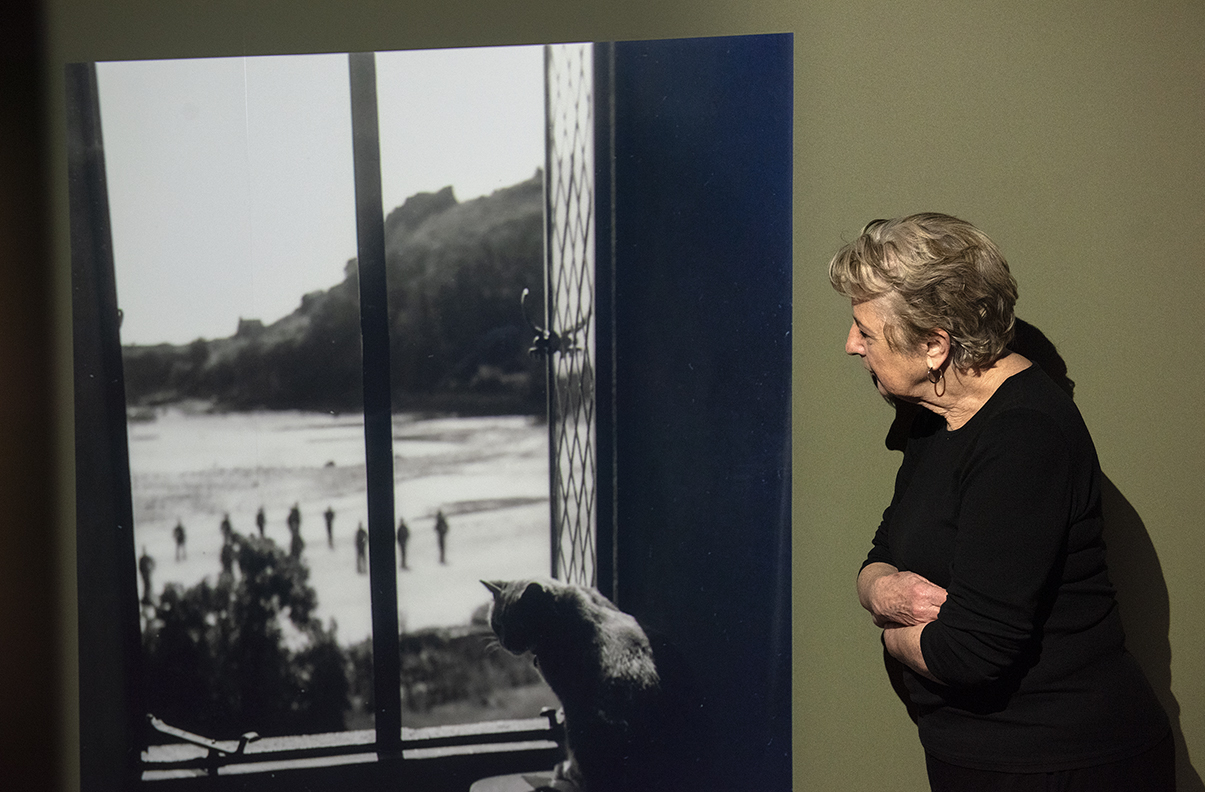
In the Jersey Museum with the projected image that Claude Cahun and Marcel Moore took from inside their home in 1940. Notice the German soldiers crossing the beach. Photograph by Luís Branco
In the image above I am standing in front of a projected photograph in the Jersey Museum. The image was taken from inside Claude and Marcel’s home in 1940. Their beloved cat, Kid, sits in the window as German soldiers cross the beach on St. Brelade’s Bay.
Cahun and Moore’s resistance to the war and the occupation took on its own unique form in text and action. Claude and Marcel created hundreds, perhaps thousands of anti-war, anti-fascist written tracts in German. Marcel was fluent in German. They wrote the texts in different literary forms and on various types of paper. They wrote these tracts, which were basically anti-Nazi, anti-war, anti-occupation propaganda, as if from the point of view of a dissident German soldier inciting his fellow soldiers to resist the war and lay down their arms. They signed many of these tracts as ‘der Soldat ohne Namen’ (the Soldier with no Name). I was able to view some of these tracts in the Jersey Museum and the Jersey Archive in St. Helier.
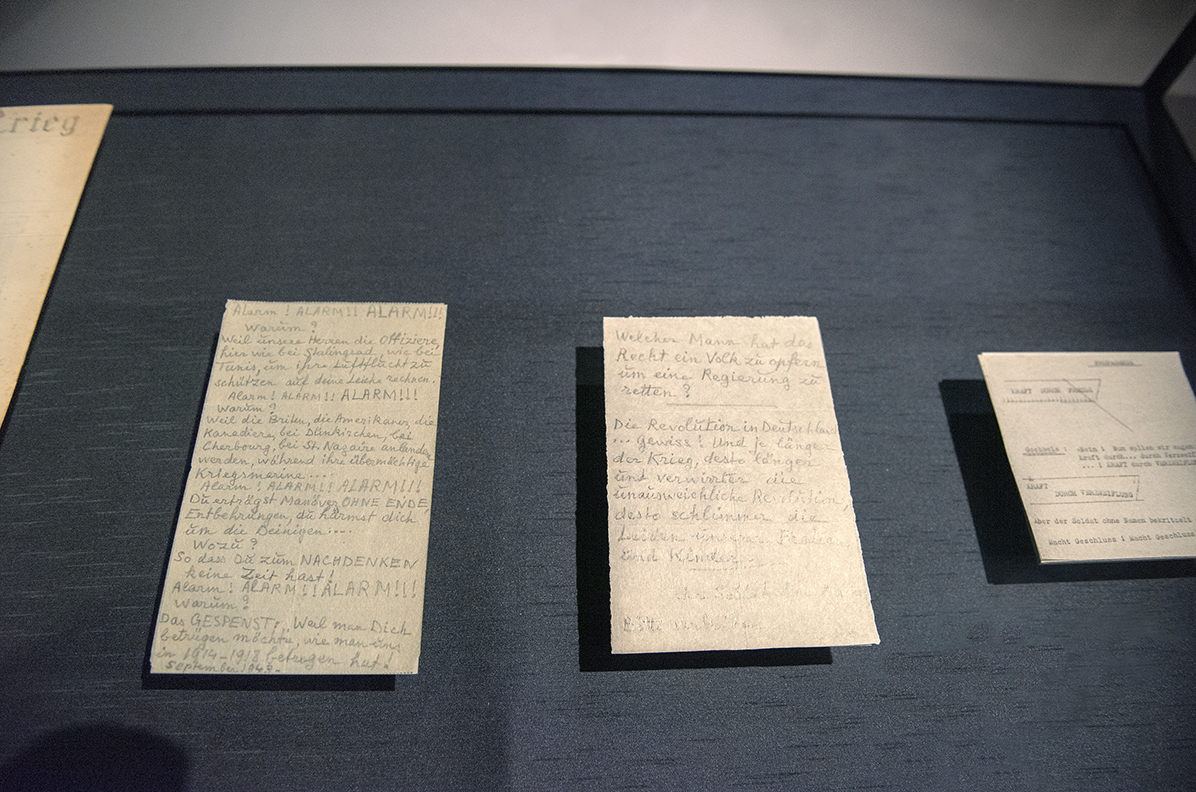
Cahun and Moore’s anti-Nazi tracts displayed at the Jersey Museum. Photograph by Luís Branco.
This was perhaps the most creative ‘performance’ and action (and certainly the most dangerous) of their lives. Cahun and Moore produced these texts together over a four-year period, unbeknownst to anyone. They distributed the texts all around the island where the soldiers congregated and would find them—in cafés, tucked between pages of German magazines, in newsstands, in cigarette packets, on the windshields of German vehicles and on the gravestones of German soldiers buried in the cemetery beside their home on St. Brelade’s Bay.
On July 25,1944, five Gestapo agents arrived at their home. They found their illegal radio, typewriter, camera and some of their documents. Cahun and Moore were arrested, jailed and eventually sentenced to death. Claude and Marcel spent nine and a half months in the Gloucester Street Prison in St. Helier, isolated from each other and under difficult conditions. Nevertheless, they found ways to communicate with each other and with other political prisoners and continued their resistance from within the jail. Luckily the Germans surrendered and the war in Europe ended before their execution. They were released on May 8, 1945, the day before Liberation Day on Jersey.
After the War
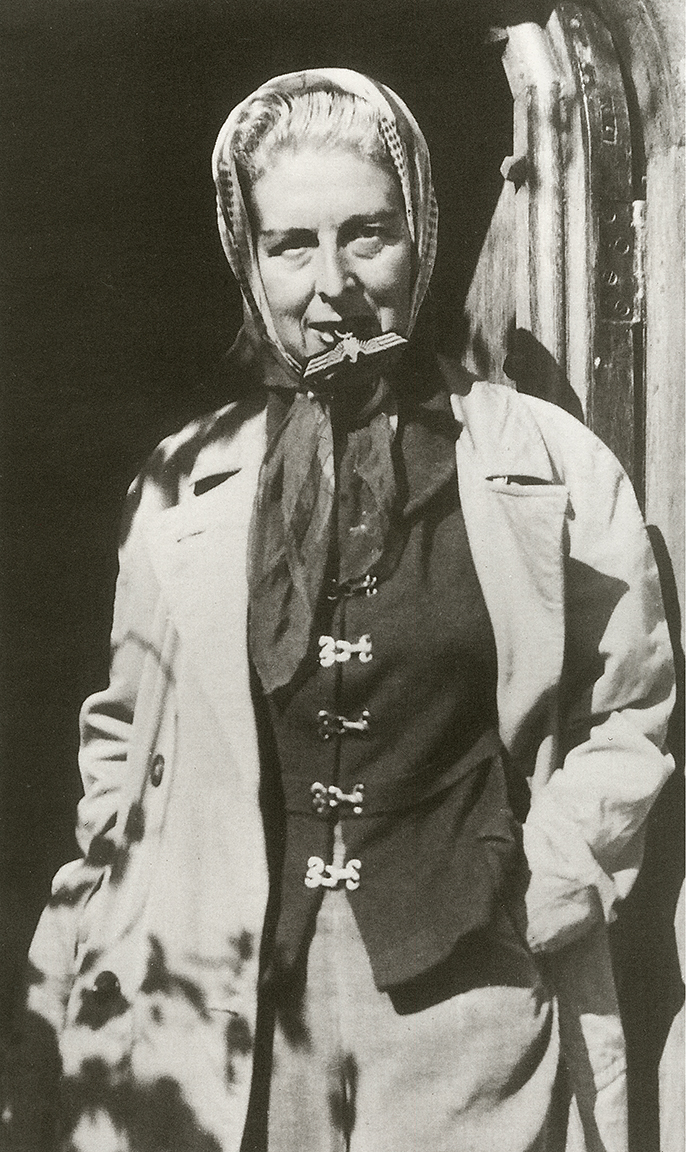
Untitled, Claude Cahun and Marcel Moore, 1945.
This photograph of Cahun above was taken by Moore just after their release in front of their home on St. Brelade’s Bay. Cahun holds in her mouth the Nazi Luftwaffe insignia given to them by a German soldier who was a fellow prisoner in jail. Cahun’s semi-ironic gaze and her quirky smile with the ‘dirty bird’ in her mouth has thrilled and haunted me since I first saw it. Cahun and Moore had resisted and survived this horrendous time on Jersey against all odds.
Assemblage artist Jensina Endresen embroidered the Luftwaffe insignia for me. I stood on St. Brelade’s Bay (again very near to Cahun and Moore’s home) in my corresponding old-lady trench coat and scarf, biting down on the Luftwaffe.
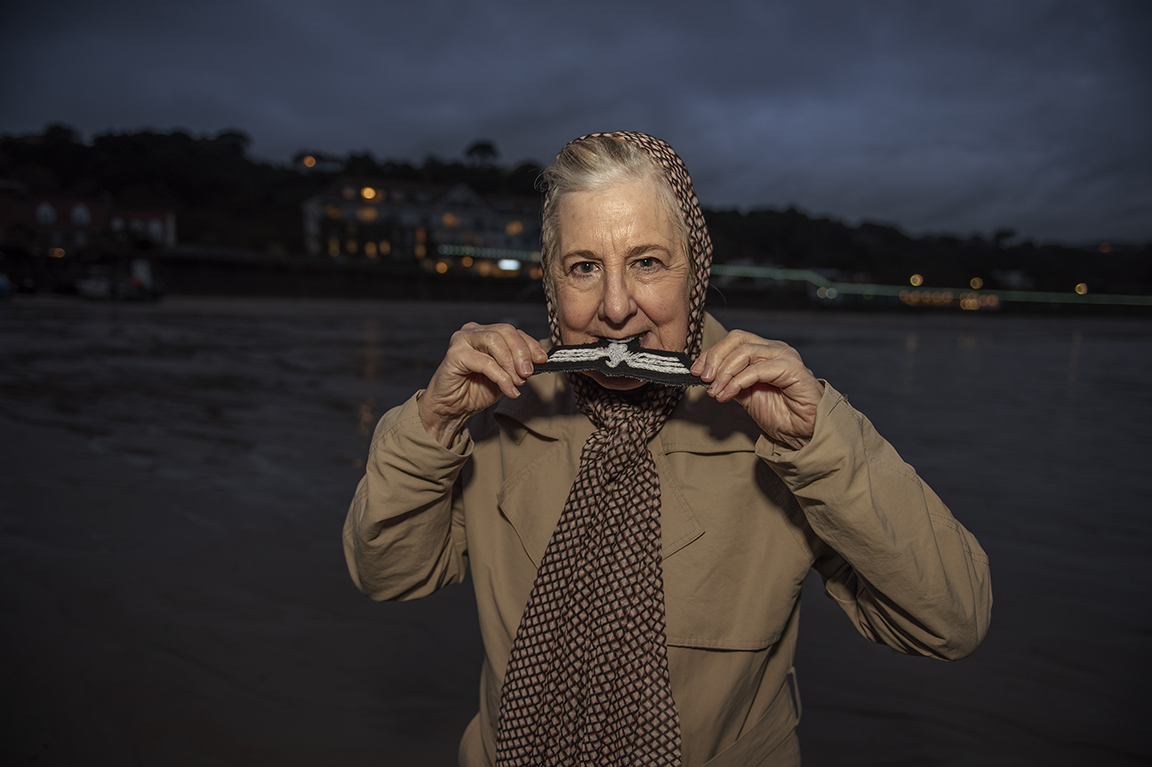
WIP, Sherry Wiggins and Luís Branco, 2026.
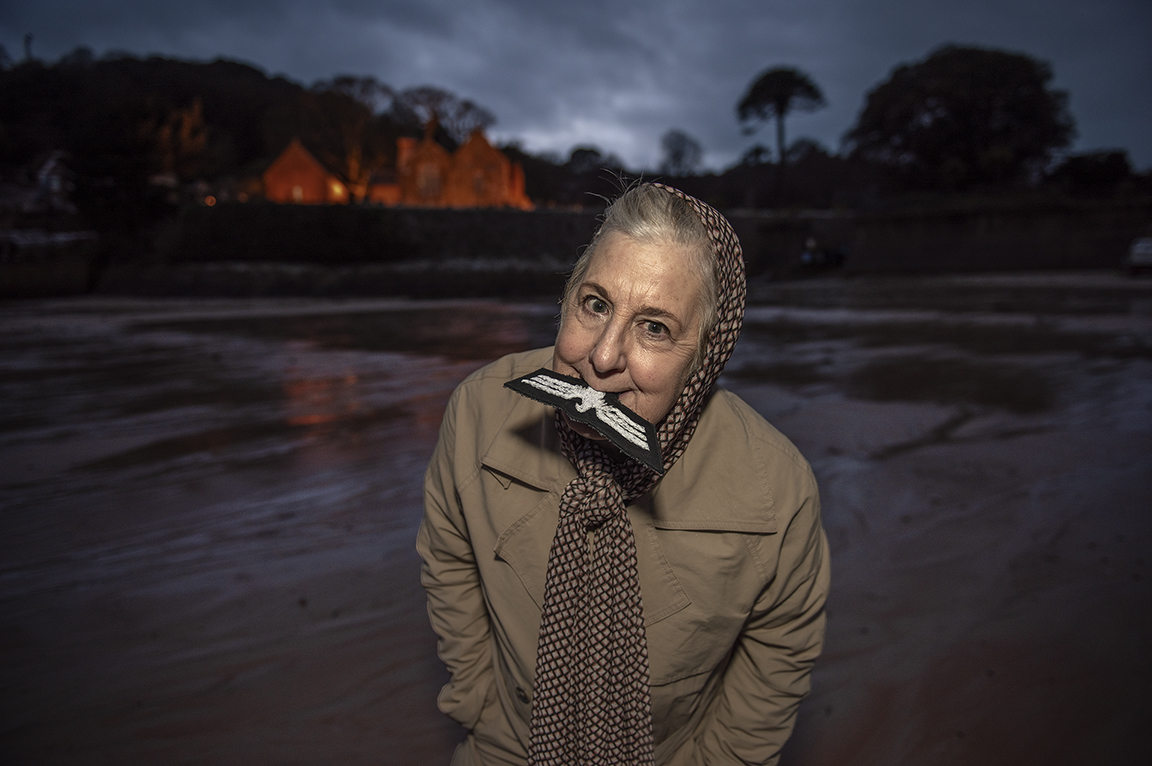
WIP, Sherry Wiggins and Luís Branco, 2026.
After the war, Cahun (and to a lesser extent Moore) continued to process the occupation, the war and their resistance. Cahun started a memoir recounting their resistance activities and jail time. Cahun and Moore continued their photographic practice as well. In 1947, Cahun and Moore created these images where Cahun embodies / performs ‘‘der Soldat ohne Namen’ (the Soldier with no Name), the resistant German soldier (whom Cahun and Moore invented) who signed the numerous anti-Nazi tracts throughout the occupation. Cahun stands in their front yard near the cemetery in a military outfit, with tall boots and a small skull, smoking a cigarette with their Kid between her legs.
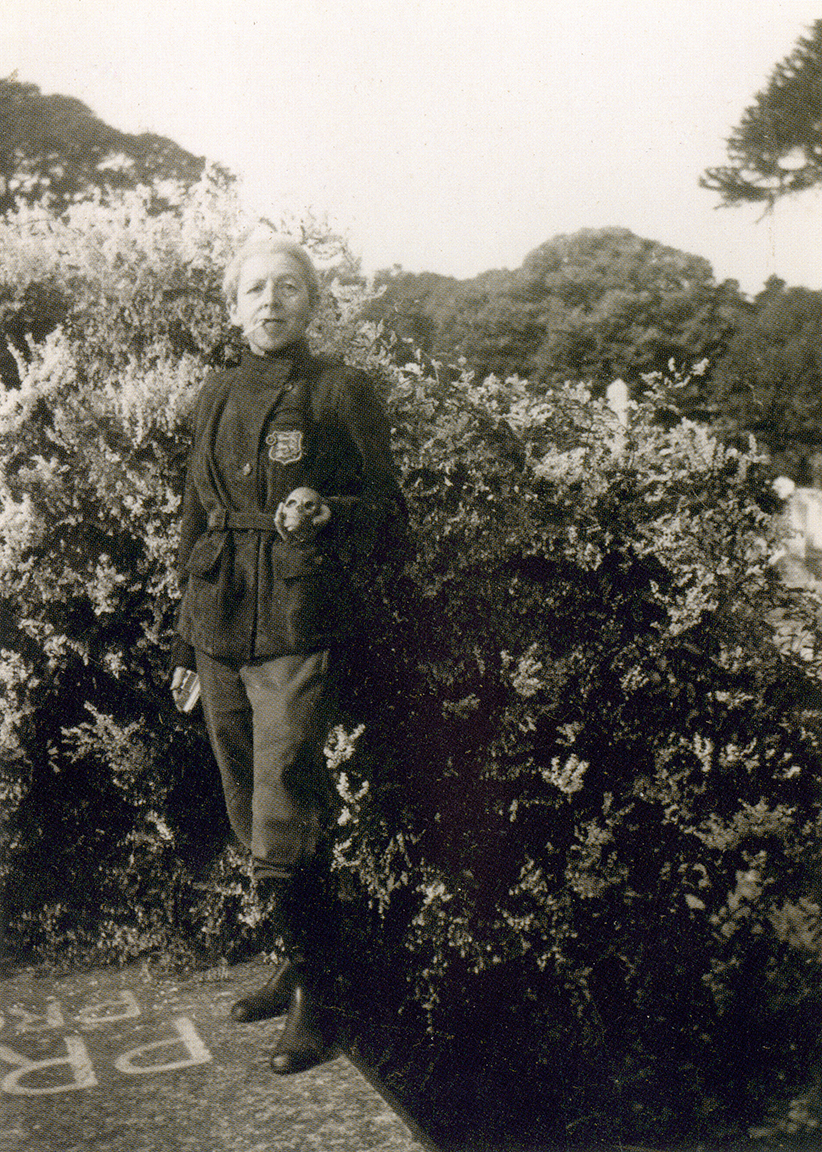
Untitled, Claude Cahun and Marcel Moore, 1947.
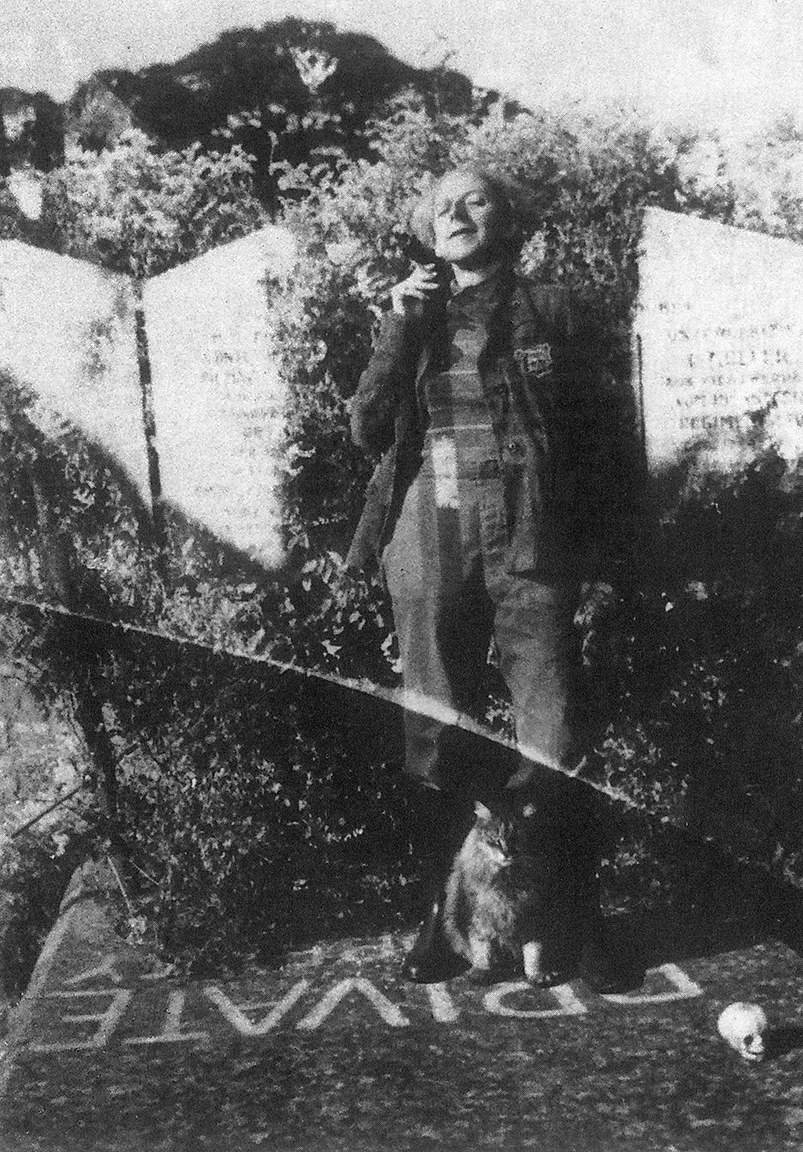
Untitled, Claude Cahun and Marcel Moore, 1947.
In the black-and-white images below, Luís and I reimage and reimagine Cahun and Moore’s ‘the Soldier with no Name.’ I am standing on the beach beneath Cahun and Moore’s home. Behind me is the large concrete wall built along St. Brelade’s Bay that was part of the extensive system of fortifications known as Hitler’s Atlantic Wall. These are two of my favorite images from our time in Jersey. I think I metamorphosized Cahun and ‘the Soldier with no Name.’
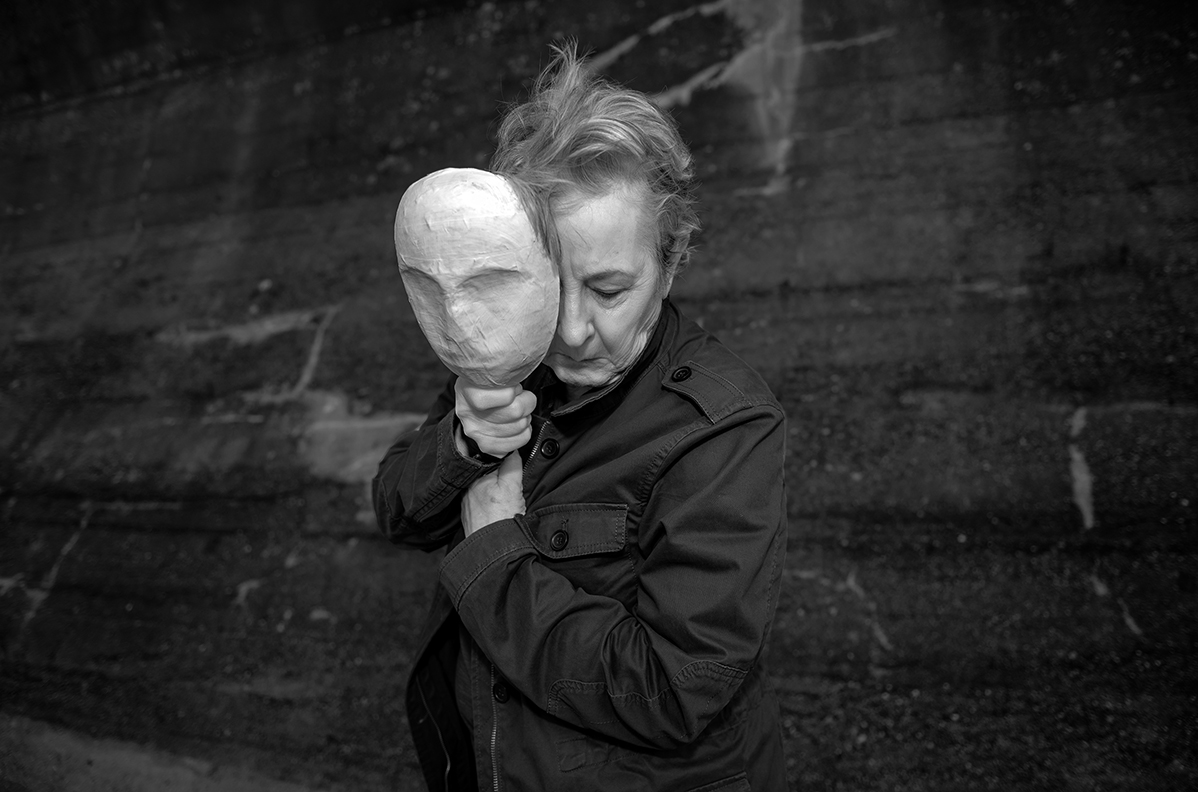
WIP, Sherry Wiggins and Luís Branco, 2026.
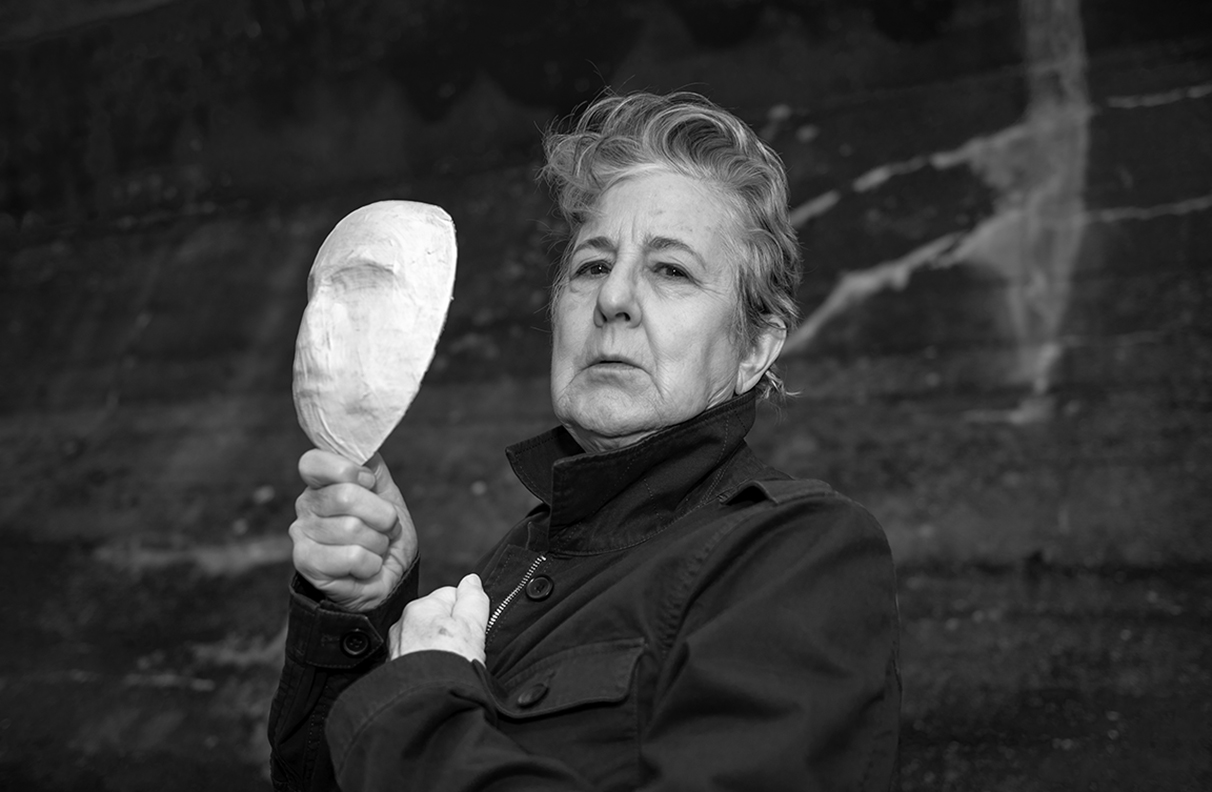
WIP, Sherry Wiggins and Luís Branco, 2026.
In the photograph below Cahun appears as a phantom or ghost in a white gown holding a blank mask to her face. Cahun and Moore shot this photograph with the headstones of St. Brelade’s Bay cemetery in the background. More than 300 German soldiers were buried in the cemetery on St. Brelade’s Bay during the occupation of Jersey. Cahun and Moore utilized the German cemetery (which was beside their home) as a site of resistance, placing their anti-Nazi propaganda materials on the German soldiers’ graves. After the war, the German soldiers’ remains were exhumed and buried in the Mont-de-Huisnes German war cemetery in France. This is also the cemetery where Moore buried Cahun upon her death in 1954 and where Moore was buried after her death in 1972.
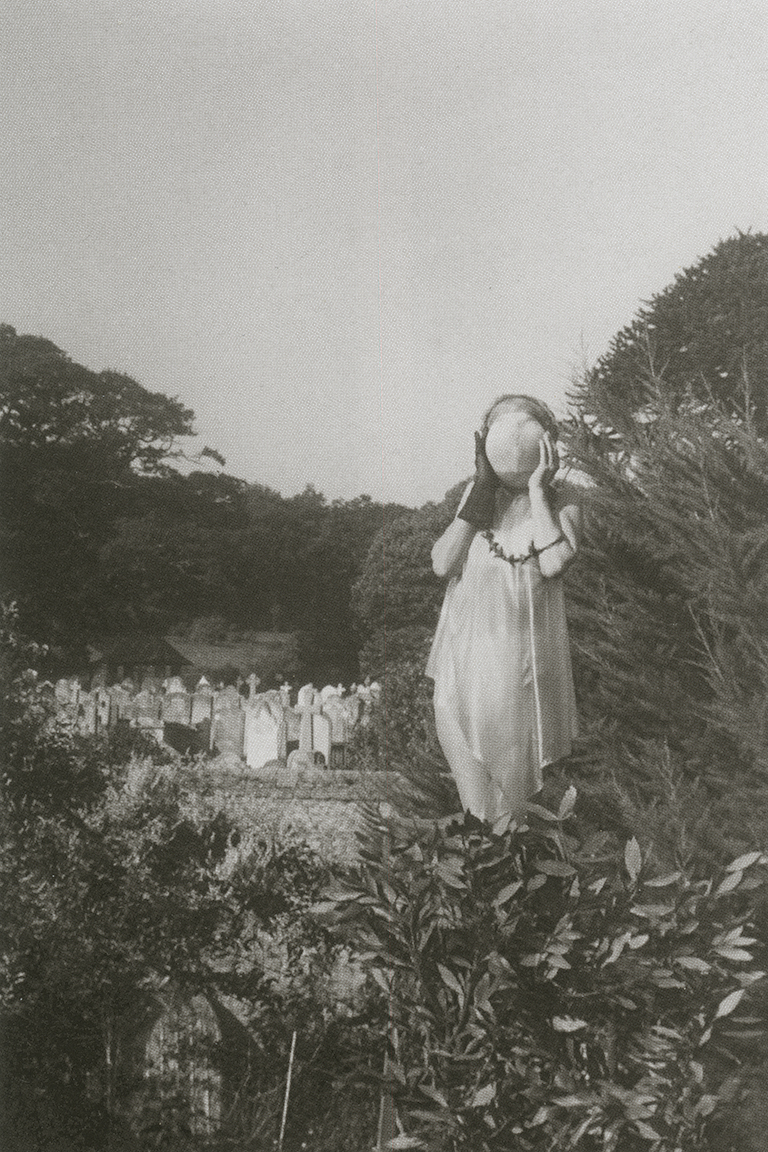
Untitled, Claude Cahun and Marcel Moore, 1947.
Luís and I did several photoshoots in and around the same cemetery and churchyard. Luís was hesitant at first, but acquiesced. It is not a creepy or pretentious place, though I have seen photographs of what it looked like in 1945 with a regiment of Nazi crosses standing on the German soldiers’ graves. Now it is a beautifully maintained garden of stones and greenery surrounding St. Brelade’s Parish Church, rising from the bay and proceeding up the hillside. I brought a white robe and black gloves, and we ended up using a funny mask that I had painted. We shot these images on Friday the 13th in February. In our time in Jersey, I felt Cahun and Moore’s presence perceptibly haunting me. This seemingly idyllic island still bears the traces of Cahun and Moore’s lives and experiences as well as those of the many others who suffered on Jersey during WWII.
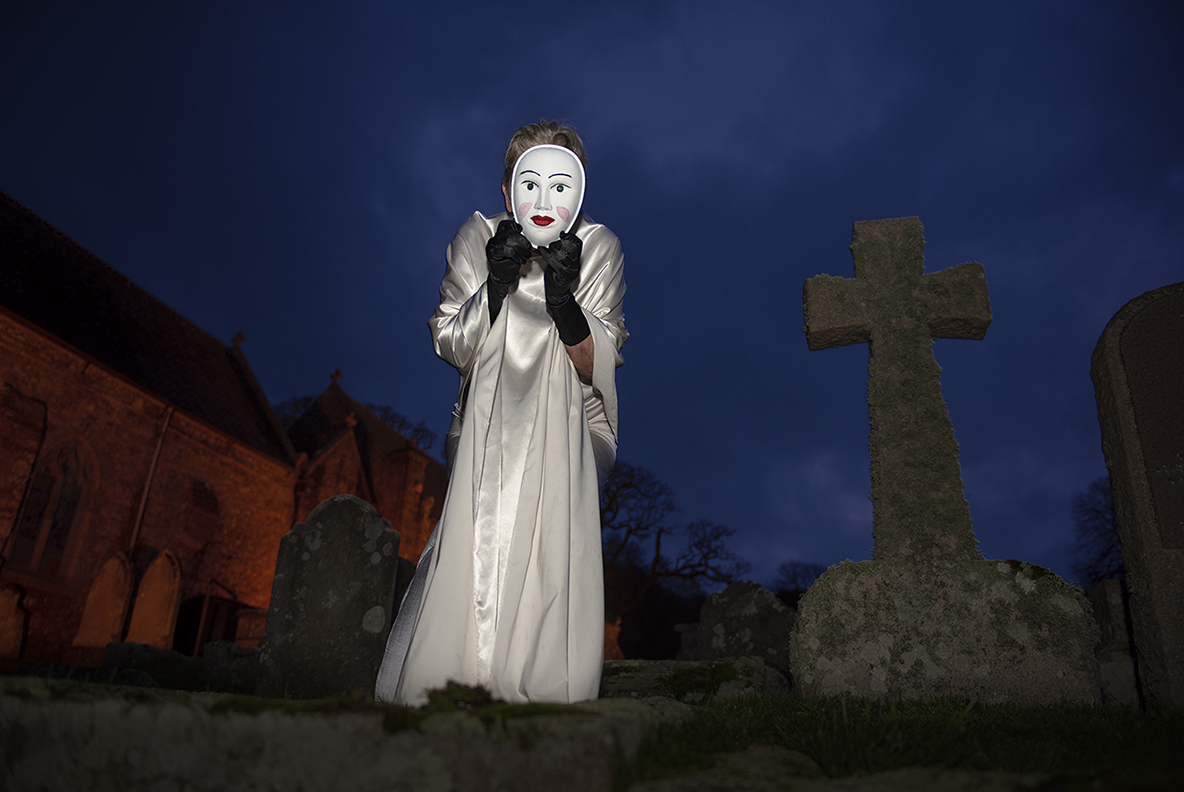
WIP, Sherry Wiggins and Luís Branco, 2026.
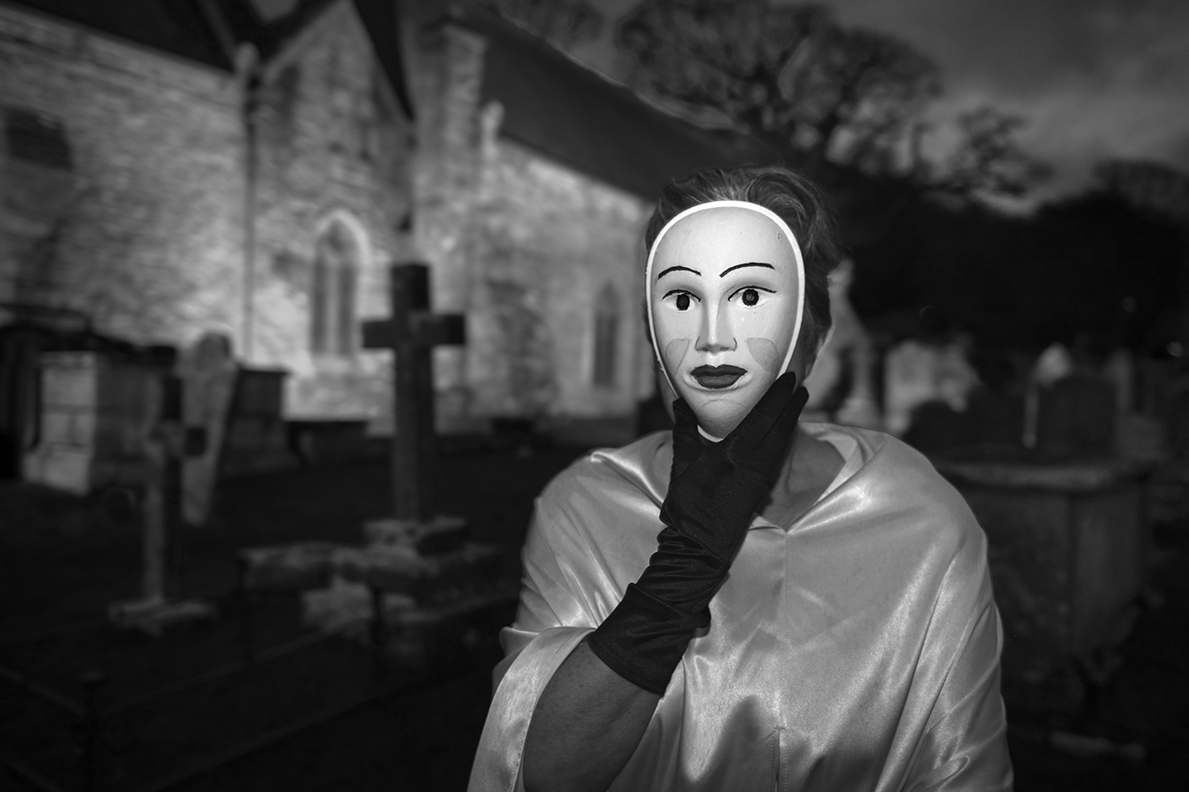
WIP, Sherry Wiggins and Luís Branco, 2026.
I have reproduced Cahun and Moore’s images as scans taken from various books for my blog posts. I hope to get permission to use high-resolution digital scans from the Jersey Archive for an exhibition and limited-edition artist’s book I am planning that will include a selection of Cahun and Moore’s images and works intermingling with my and Luís’s works.
I have written another blog post about my experiences in Jersey: “Projections and Revelations: In the Jersey Museum and the Jersey Archive.” Here is the link: https://sherrywigginsblog.com/2026/04/12/projections-and-revelations-in-the-jersey-museum-and-the-jersey-archive-posted-april-11-2026-in-boulder-colorado/
Discover more from sherrywigginsblog
Subscribe to get the latest posts sent to your email.
 sherrywigginsblog
One thought on “Double Take: Chasing the Specter of Claude Cahun – posted on April 11, 2026 in Boulder, Colorado”